
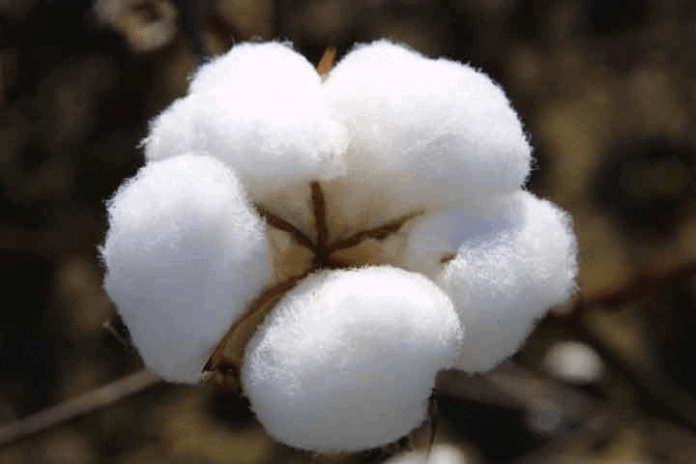
LAHORE — The Punjab Agriculture Department convened a meeting on Sunday at the Muhammad Nawaz Sharif University of Agriculture to assess various cotton varieties with the aim of increasing yield. This initiative follows directives from Punjab Agriculture Secretary Iftikhar Ali Sahu, underscoring the importance of boosting cotton production in the region.
What Happened
The meeting marked the first gathering of the committee established to monitor and evaluate the performance of different cotton varieties cultivated across Punjab. The committee’s primary objective is to identify high-yielding and pest-resistant varieties that can be recommended to farmers. During the session, experts and officials discussed the current challenges faced by cotton growers, including pest infestations and climate-related issues, which have adversely affected production levels in recent years.
Secretary Iftikhar Ali Sahu emphasized the need for scientific research and innovation in agriculture to tackle these challenges. “We must focus on developing and promoting cotton varieties that are not only high-yielding but also resilient to pests and changing climate conditions,” he stated. The committee is tasked with conducting field trials and gathering data on the performance of various cotton strains under different environmental conditions.
The meeting also highlighted the role of modern agricultural practices and technologies in enhancing productivity. The committee plans to collaborate with local universities and research institutions to leverage their expertise in agricultural sciences. This collaborative approach aims to ensure that the selected cotton varieties are well-suited to the specific needs and conditions of Punjab’s agricultural landscape.
Background
Cotton is a crucial crop for Pakistan’s economy, contributing significantly to the textile industry, which is a major export sector. However, cotton production has faced numerous challenges over the years, including pest attacks, water scarcity, and outdated farming techniques. The government has periodically launched initiatives to support cotton growers, including subsidies and training programs aimed at improving farming practices.
In recent years, there has been a concerted effort to introduce genetically modified cotton varieties that promise higher yields and better resistance to pests. These efforts are part of a broader strategy to revitalize the cotton sector and ensure its sustainability in the face of global competition and environmental challenges.
Why It Matters
The success of this initiative is vital for Pakistan’s agricultural sector and the economy at large. Cotton is not only a key cash crop but also a source of livelihood for millions of farmers and workers in the textile industry. Enhancing cotton yield can significantly boost the country’s export earnings and reduce reliance on cotton imports, which have been necessary to meet the demands of the domestic textile industry.
Moreover, improving cotton production aligns with the government’s broader agricultural policy goals, which include increasing food security, promoting sustainable farming practices, and enhancing rural livelihoods. By focusing on research and development, the Punjab Agriculture Department aims to create a more resilient agricultural sector capable of withstanding environmental and market pressures.
The initiative also holds social implications, as increased cotton production can lead to job creation in rural areas, thus contributing to poverty alleviation and economic development. Additionally, by adopting environmentally sustainable practices, the initiative supports efforts to mitigate the impact of climate change on agriculture.
Key Takeaways
- The Punjab Agriculture Department is evaluating cotton varieties to boost yield and resilience.
- The initiative aims to address challenges such as pest infestations and climate change.
- Collaboration with universities and research institutions is a key component of the strategy.
- Improved cotton production is crucial for Pakistan’s economy and export sector.
- The initiative supports broader goals of sustainable agriculture and rural development.
Source Attribution
This article is based on official government statements, press releases, and public communications from relevant authorities.














