
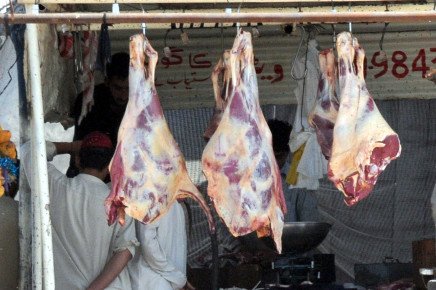
MUZAFFARGARH — The Punjab Food Authority (PFA) has taken decisive action against a slaughterhouse in Basti Bhattian, sealing the facility and discarding over six maunds of contaminated meat. This move comes as part of the PFA’s ongoing efforts to ensure food safety and public health across the region.
What Happened
On Wednesday, the PFA conducted an inspection of a slaughterhouse in Basti Bhattian, Muzaffargarh, following reports of unsanitary conditions. During the inspection, officials discovered hundreds of kilograms of meat stored in unhygienic conditions, emitting a foul odor and showing signs of discoloration. The meat was found on the ground under ice, which raised significant health concerns.
A veterinary doctor accompanying the PFA team examined the meat and declared it highly hazardous to human health. Consequently, the authority discarded more than six maunds of the contaminated meat to prevent it from reaching consumers.
Following the inspection, legal action was initiated against the owner of the slaughterhouse. The PFA lodged a case, and the owner was subsequently arrested, highlighting the authority’s commitment to enforcing food safety regulations.
Punjab Food Authority Director General Raja Mansoor Ahmed emphasized that PFA teams are actively conducting field operations to combat practices that compromise public health. He encouraged citizens to report any instances of unsafe or adulterated food through social media platforms or by contacting the PFA helpline at 1223.
Background
The Punjab Food Authority, established under the Punjab Food Authority Act 2011, is tasked with regulating and monitoring the food industry in Punjab to ensure compliance with food safety standards. The authority conducts regular inspections of food establishments, including restaurants, slaughterhouses, and food processing units, to ensure that they adhere to hygiene and safety regulations.
In recent years, the PFA has intensified its efforts to crack down on food adulteration and unhygienic practices. This includes sealing facilities that fail to meet safety standards and taking legal action against violators. The authority’s actions are part of a broader strategy to improve food safety and protect consumers from health hazards.
Why It Matters
The PFA’s actions are significant for several reasons. Firstly, they underscore the importance of food safety in a region where foodborne illnesses can have severe public health implications. Contaminated meat poses a direct threat to consumers, potentially leading to outbreaks of food poisoning and other health issues.
Economically, the crackdown on unhygienic practices helps maintain consumer confidence in the food industry, which is vital for local businesses. By ensuring that food products meet safety standards, the PFA supports the integrity of the food supply chain and protects the livelihoods of those who depend on it.
Politically, the PFA’s proactive stance reinforces the government’s commitment to public health and safety. It demonstrates a willingness to enforce regulations and hold violators accountable, which can enhance public trust in regulatory bodies and government institutions.
On an international level, maintaining high food safety standards is crucial for Pakistan’s export markets. Ensuring that domestic food products are safe and hygienic can bolster the country’s reputation and open up opportunities for trade with countries that have stringent food safety requirements.
Key Takeaways
- The Punjab Food Authority sealed a slaughterhouse in Basti Bhattian and discarded over six maunds of contaminated meat.
- Unhygienic conditions and hazardous meat were discovered during a routine inspection by the PFA.
- Legal action was taken against the slaughterhouse owner, who was arrested following the inspection.
- The PFA is committed to ensuring food safety and encourages public reporting of unsafe food practices.
- These actions have significant public health, economic, and political implications for the region.
Source Attribution
This article is based on official government statements, press releases, and public communications from relevant authorities.














