
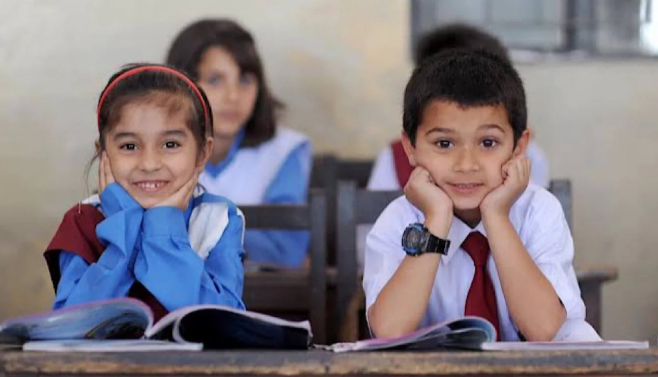
LAHORE — A new concept-based curriculum is set to be introduced for primary school students in Punjab, aiming to enhance their academic skills and creativity, according to District Education Officer (Primary Women) Dr Hajra Shaheen. This initiative targets students from Grades 1 to 5 and is part of a broader effort to improve educational outcomes in the province.
What Happened
The Punjab government has announced the development of a concept-based curriculum designed to foster better academic abilities and practical understanding among primary school students. Dr Hajra Shaheen, the District Education Officer for Primary Women, revealed that this curriculum is being meticulously crafted to address the educational needs of young learners in the region. The initiative is expected to roll out in the coming academic year, impacting thousands of students across the province.
Dr Shaheen emphasized that the new curriculum would focus on enhancing creativity and critical thinking skills, moving away from rote learning methods that have traditionally dominated the educational landscape in Pakistan. “Our goal is to equip students with the skills they need to succeed in a rapidly changing world,” she stated. The curriculum will include interactive and practical learning modules, aiming to make education more engaging and effective.
Education experts and curriculum developers are actively involved in the design process to ensure that the new curriculum meets international educational standards while being tailored to the local context. This approach is expected to provide a more holistic education to students, preparing them for future academic and professional challenges.
Background
Education reform has been a significant focus for the Punjab government in recent years, with various initiatives aimed at improving the quality of education across the province. The introduction of a concept-based curriculum is part of these ongoing efforts to modernize the educational system and align it with global standards.
Historically, the education system in Pakistan has been criticized for its reliance on memorization and lack of emphasis on critical thinking and problem-solving skills. Previous attempts to reform the curriculum have faced challenges, including resource constraints and resistance to change. However, recent policy shifts have demonstrated a commitment to overcoming these obstacles and providing quality education to all students.
Why It Matters
The introduction of a concept-based curriculum in Punjab’s primary schools is a significant step towards modernizing the education system and improving learning outcomes for students. By focusing on concept-based learning, the curriculum aims to foster critical thinking, creativity, and practical skills, which are essential for success in the 21st century.
This initiative has the potential to transform the educational landscape in Punjab, setting a precedent for other provinces to follow. By moving away from rote learning, students will be better equipped to understand and apply knowledge in real-world situations, ultimately contributing to a more skilled and innovative workforce.
The economic implications of this educational reform are substantial. A better-educated population can drive economic growth by attracting foreign investment and improving productivity. Furthermore, the emphasis on creativity and critical thinking aligns with global trends in education, ensuring that Pakistani students are competitive on the international stage.
Key Takeaways
- The Punjab government is introducing a concept-based curriculum for Grades 1 to 5.
- The initiative aims to enhance creativity, critical thinking, and practical understanding among students.
- Education experts are involved in designing the curriculum to meet international standards.
- This reform is part of broader efforts to modernize education in Punjab.
- The initiative could have significant economic and social impacts by improving educational outcomes.
Source Attribution
This article is based on official statements and public communications from the Punjab Education Department.














