
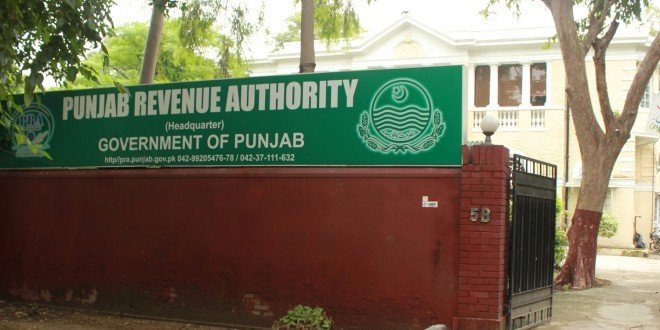
LAHORE — The Punjab Revenue Authority (PRA) is set to intensify its enforcement actions against businesses that fail to comply with the Electronic Invoice Monitoring System (EIMS). This decision was announced by PRA Chairman Moazzam Iqbal Sipra during a recent meeting held to evaluate the authority’s performance in business registration, EIMS implementation, and tax collection.
What Happened
On Wednesday, PRA Chairman Moazzam Iqbal Sipra convened a meeting to scrutinize the divisional performance of the authority concerning business registration and tax collection. During this meeting, he emphasized the need for strict enforcement against businesses not adhering to the EIMS. The system, which is crucial for monitoring sales and ensuring tax compliance, has faced resistance from some sectors, prompting the PRA to take decisive steps.
The Chairman instructed field officers to expedite their efforts in ensuring that businesses across Punjab are registered and compliant with the EIMS. He stated, “The integrity of our tax system relies on the full implementation of the EIMS. Non-compliance will not be tolerated, and strict actions will be taken against violators.” The meeting underscored the importance of the EIMS in enhancing transparency and accountability within the business sector.
The PRA’s initiative is part of a broader strategy to increase tax revenues by ensuring that all taxable transactions are accurately reported. The meeting also reviewed the progress of ongoing campaigns aimed at increasing business registration and compliance rates.
Background
The Electronic Invoice Monitoring System was introduced as a part of the government’s efforts to modernize the tax collection process and curb tax evasion. The system requires businesses to issue electronic invoices for every transaction, thereby creating a digital record that can be monitored by tax authorities. This initiative aligns with global practices where digital invoicing is used to enhance tax compliance and reduce the informal economy.
Historically, tax evasion has been a significant challenge in Pakistan, with a large portion of the economy operating informally. The introduction of systems like EIMS is seen as a crucial step towards formalizing the economy and broadening the tax base. The PRA has been actively working to integrate technology into its operations, aiming to improve efficiency and transparency.
Why It Matters
The enforcement of EIMS is pivotal for Pakistan’s economic stability and growth. By ensuring that businesses comply with electronic invoicing, the government can significantly increase its tax revenues, which are essential for funding public services and infrastructure projects. This move is expected to reduce the tax gap, which is the difference between the taxes owed and the taxes collected.
For businesses, compliance with the EIMS means adapting to new technological requirements, which may initially pose challenges, especially for smaller enterprises. However, in the long run, it is anticipated to streamline operations and reduce the burden of manual record-keeping. The increased transparency and accountability could also enhance the business environment, attracting more investment into the region.
On a broader scale, the successful implementation of the EIMS could serve as a model for other provinces in Pakistan, encouraging nationwide adoption of similar systems. This could lead to a more uniform and efficient tax system across the country, contributing to economic growth and development.
Key Takeaways
- The Punjab Revenue Authority is enforcing strict compliance with the Electronic Invoice Monitoring System.
- PRA Chairman Moazzam Iqbal Sipra has directed field officers to accelerate enforcement efforts.
- The EIMS aims to enhance tax compliance and transparency in business transactions.
- Successful implementation could significantly increase tax revenues and reduce the informal economy.
- This initiative aligns with global practices and could serve as a model for other regions in Pakistan.
Source Attribution
This article is based on official government statements and public communications from relevant authorities.














