
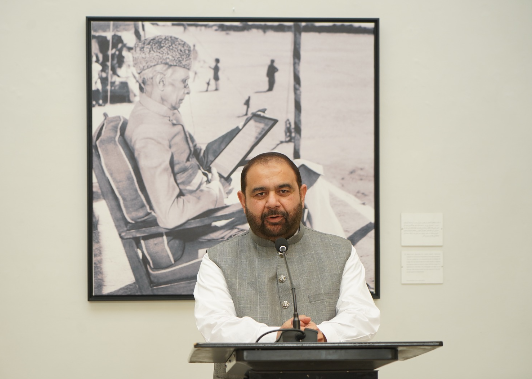
ISLAMABAD — Federal Minister for National Heritage and Culture Division, Aurangzeb Khan Khichi, emphasized the importance of rare photographs of Quaid-i-Azam Muhammad Ali Jinnah as a reminder of Pakistan’s historical struggle and sacrifices. Speaking on Thursday, he noted that these images serve not only as historical records but also as powerful messages for the younger generation about the dedication and sacrifices involved in the creation of Pakistan.
What Happened
The Federal Minister highlighted the significance of these rare photographs during a recent event aimed at educating the youth about Pakistan’s history. Aurangzeb Khichi stated that the photographs of Jinnah, the founding father of Pakistan, offer a visual narrative of the country’s arduous journey to independence. “These images are not just about the past; they are a call to the youth to remember and honor the sacrifices made for our nation,” he said.
The event showcased a collection of photographs depicting Jinnah in various pivotal moments leading up to the independence of Pakistan in 1947. The images were displayed as part of an exhibition organized by the National Heritage and Culture Division, drawing attention to the personal and political challenges faced by Jinnah and his contemporaries during the struggle for a separate homeland for Muslims in the Indian subcontinent.
Aurangzeb Khichi further explained that the exhibition aims to instill a sense of pride and responsibility among young Pakistanis. “Understanding our history is crucial for shaping our future. These photographs are a testament to the vision and resilience of our leaders,” he added.
Background
Quaid-i-Azam Muhammad Ali Jinnah played a crucial role in the creation of Pakistan. As the leader of the All-India Muslim League, he advocated for the rights of Muslims in British India and was instrumental in the partition that led to the formation of Pakistan on August 14, 1947. Jinnah’s leadership and vision were pivotal in navigating the complex political landscape of the time, which involved negotiations with the British and the Indian National Congress.
The struggle for Pakistan’s independence was marked by significant sacrifices, including communal violence, mass migrations, and the loss of countless lives. Jinnah’s efforts are commemorated in various forms, including educational programs and exhibitions, to keep the spirit of his leadership alive in the nation’s consciousness.
Why It Matters
The exhibition of Jinnah’s photographs holds profound significance for Pakistan, particularly in the current socio-political climate. By revisiting the history of Pakistan’s formation, the nation can draw lessons on unity, resilience, and leadership. As Pakistan continues to face challenges such as political instability, economic pressures, and social issues, the legacy of Jinnah serves as a guiding light for overcoming adversity.
For the younger generation, these photographs provide a tangible connection to the past, fostering a deeper understanding of the values and principles upon which Pakistan was founded. This historical awareness is crucial for nurturing informed and responsible citizens who can contribute positively to the country’s future.
Moreover, the exhibition underscores the role of cultural heritage in national identity. By preserving and promoting historical artifacts, Pakistan can strengthen its cultural narrative and promote a sense of pride among its citizens.
Key Takeaways
- Federal Minister Aurangzeb Khichi emphasized the educational value of rare photographs of Quaid-i-Azam Muhammad Ali Jinnah.
- The exhibition aims to remind the youth of the sacrifices and struggles behind Pakistan’s independence.
- Jinnah’s leadership is highlighted as a source of inspiration for overcoming contemporary challenges.
- The event seeks to instill pride and responsibility among young Pakistanis through historical awareness.
- Preserving cultural heritage is crucial for strengthening national identity and unity.
Source Attribution
This article is based on official government statements and public communications from the National Heritage and Culture Division.














