
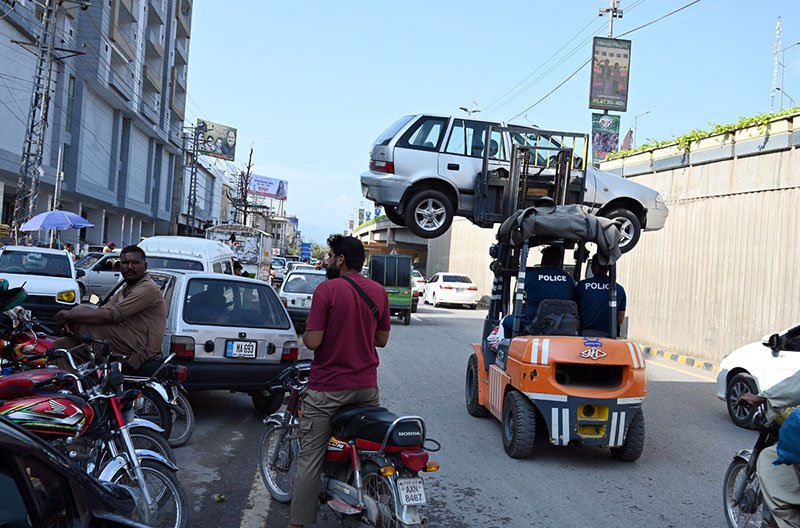
RAWALPINDI — The Rawalpindi traffic police have deployed a forklift to remove an illegally parked vehicle from the roadside as part of their ongoing anti-encroachment operation. This initiative, aimed at ensuring smoother traffic flow and reclaiming public spaces, took place on Monday along one of the city’s busy thoroughfares.
What Happened
In an effort to address the persistent issue of illegal parking and encroachments, the Rawalpindi traffic police conducted an operation using a forklift to remove a vehicle that was obstructing the road. The operation is part of a broader campaign to clear encroachments that have been contributing to traffic congestion in the city. According to officials, the use of heavy machinery like forklifts is necessary to efficiently manage the removal of vehicles that cannot be easily towed away.
A senior traffic police official stated, “The operation is crucial for maintaining order on the roads and ensuring that public spaces are not misused. We are committed to continuing these efforts to improve the traffic situation in Rawalpindi.” The official further emphasized that such operations would be conducted regularly to deter illegal parking and encroachments.
The operation was conducted in collaboration with the municipal authorities, who are responsible for maintaining public order and cleanliness. The authorities have been actively involved in identifying and removing illegal structures and vehicles that contribute to urban congestion.
Background
Encroachments and illegal parking have long been a challenge in Rawalpindi, a city known for its bustling markets and narrow streets. The local government has been under pressure to address these issues, which have been exacerbated by the increasing number of vehicles and the lack of adequate parking facilities. In recent years, the city has seen a rise in anti-encroachment drives aimed at reclaiming public spaces and ensuring smoother traffic flow.
The Rawalpindi Development Authority (RDA) has been actively involved in these operations, working alongside the traffic police to identify areas where encroachments are most prevalent. Previous efforts have included the removal of illegal stalls, signboards, and other structures that impede pedestrian and vehicular movement.
Why It Matters
The removal of illegally parked vehicles and encroachments is critical for improving the quality of life in Rawalpindi. Traffic congestion not only causes delays but also contributes to pollution and stress among commuters. By reclaiming public spaces, the authorities aim to enhance the urban environment, making it more accessible and pleasant for residents and visitors alike.
Economically, reducing congestion can lead to increased productivity as people spend less time stuck in traffic. This can also attract more businesses to the area, boosting local commerce. Socially, such initiatives can improve public safety by ensuring that emergency vehicles have clear access to all parts of the city.
From a governance perspective, these operations reflect the authorities’ commitment to enforcing laws and regulations designed to maintain order and public welfare. The use of heavy machinery like forklifts indicates a more assertive approach to tackling the issue, signaling to the public that illegal parking and encroachments will not be tolerated.
Key Takeaways
- The Rawalpindi traffic police used a forklift to remove an illegally parked vehicle as part of an anti-encroachment operation.
- This initiative is part of ongoing efforts to combat traffic congestion and reclaim public spaces in the city.
- Encroachments and illegal parking have been persistent issues, exacerbated by increasing vehicle numbers and inadequate parking facilities.
- Removing encroachments can improve traffic flow, reduce pollution, and enhance public safety.
- The operation reflects a commitment from local authorities to enforce regulations and maintain urban order.
Source Attribution
This article is based on official government statements, press releases, and public communications from relevant authorities.














