
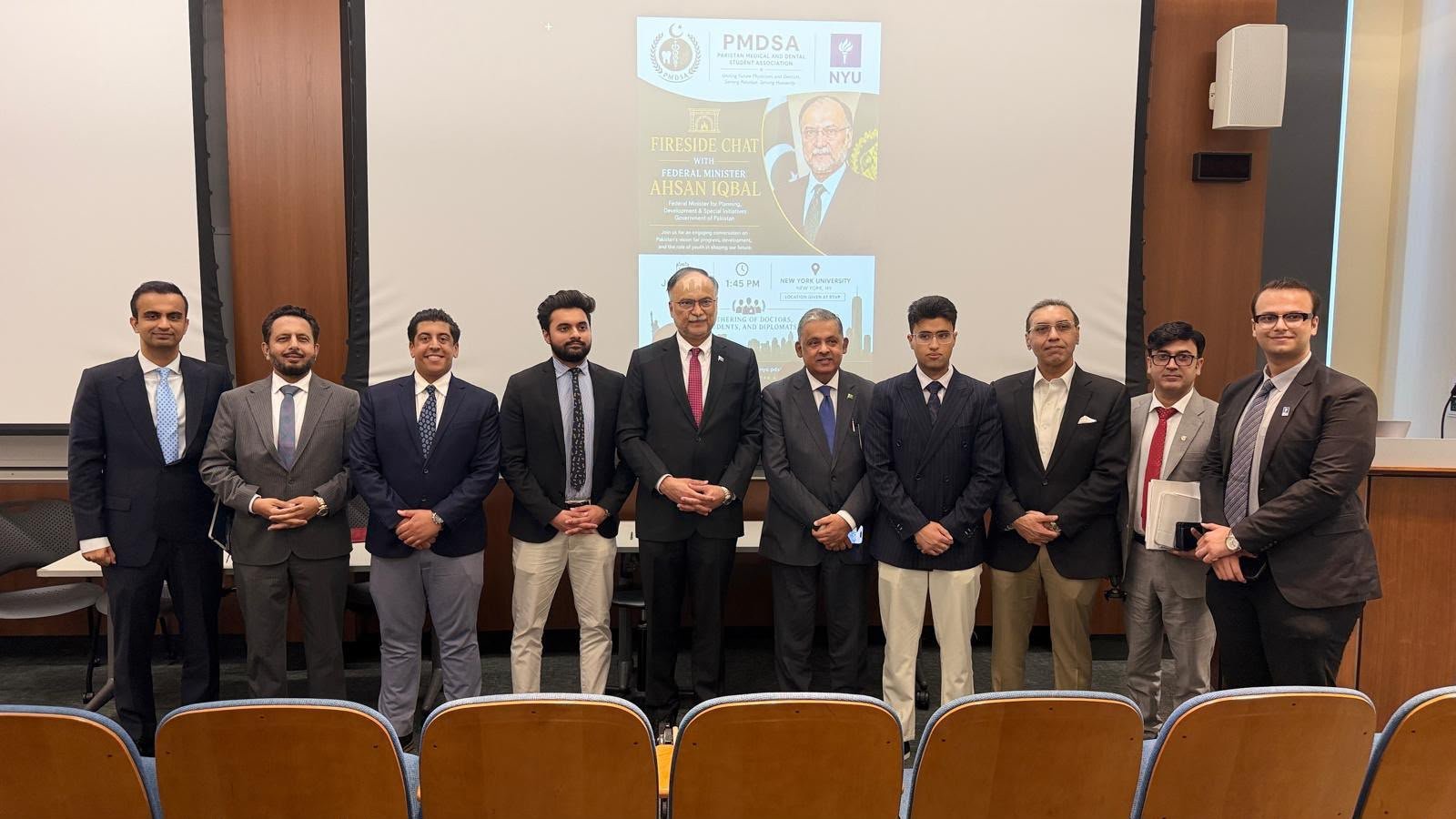
NEW YORK — The President of the Rawalpindi Chamber of Commerce and Industry (RCCI), Usman Shaukat, has emphasized the need for stronger collaboration between industry and academia to foster a knowledge-based economy. This call was made during a high-level interactive session at New York University (NYU), attended by Federal Minister for Planning, Development & Special Initiatives, Professor Ahsan Iqbal, and Pakistan’s Ambassador to the United States, Rizwan Saeed Sheikh.
What Happened
During the session at NYU, Usman Shaukat highlighted the pivotal role that industry-academia partnerships play in driving economic growth and innovation. He stated, “A robust collaboration between industry and academia is essential for creating a knowledge-based economy that can meet the challenges of the modern world.” The session was part of a broader initiative to strengthen Pakistan’s economic ties with international institutions and to explore opportunities for educational and technological exchanges.
Professor Ahsan Iqbal, in his address, underscored the government’s commitment to enhancing educational infrastructure and fostering innovation through strategic partnerships. “Our goal is to transform Pakistan into a hub of knowledge and innovation,” he said. Rizwan Saeed Sheikh also echoed these sentiments, emphasizing the importance of international collaboration in achieving sustainable economic development.
The event served as a platform for discussing potential avenues for cooperation between Pakistani institutions and international universities, particularly in areas of research and development, technology transfer, and entrepreneurship. The discussions aimed at identifying key sectors where such collaborations could yield significant benefits for Pakistan’s economy.
Background
Historically, Pakistan has faced challenges in integrating its educational institutions with the industrial sector, often resulting in a skills gap that affects economic productivity. The RCCI has been at the forefront of advocating for stronger ties between these sectors to bridge this gap. Previous initiatives have included partnerships with local universities to develop curricula that align with industry needs and the establishment of internship programs that provide students with practical experience.
Globally, countries that have successfully transitioned to knowledge-based economies have demonstrated strong linkages between their educational institutions and industries. These collaborations have been instrumental in fostering innovation, enhancing competitiveness, and driving economic growth.
Why It Matters
The push for stronger industry-academia collaboration is crucial for Pakistan as it seeks to transition from a traditional economy to one that is driven by knowledge and innovation. Such a transition is expected to have far-reaching implications for the country’s economic landscape, including increased competitiveness, job creation, and improved quality of life for its citizens.
Economically, a knowledge-based economy can lead to the development of high-value industries, reduce dependency on traditional sectors, and enhance export potential. Socially, it can result in a more educated workforce, capable of adapting to technological changes and contributing to societal advancement.
Politically, strengthening educational and industrial ties can enhance Pakistan’s global standing, making it an attractive destination for foreign investment and partnerships. This can lead to increased economic stability and a stronger position in international negotiations.
Internationally, such collaborations can open doors to new markets and technologies, facilitating the exchange of ideas and innovation. This can help Pakistan keep pace with global economic trends and ensure its long-term economic sustainability.
Key Takeaways
- RCCI President Usman Shaukat calls for stronger industry-academia collaboration to drive a knowledge-based economy.
- The session at NYU focused on enhancing Pakistan’s educational and economic ties with international institutions.
- Federal Minister Ahsan Iqbal emphasized the government’s commitment to fostering innovation through strategic partnerships.
- Stronger industry-academia ties are expected to boost economic growth, job creation, and international competitiveness.
- Such collaborations are crucial for Pakistan’s transition to a knowledge-based economy and its global economic positioning.
Source Attribution
This article is based on official government statements, press releases, and public communications from relevant authorities.














