
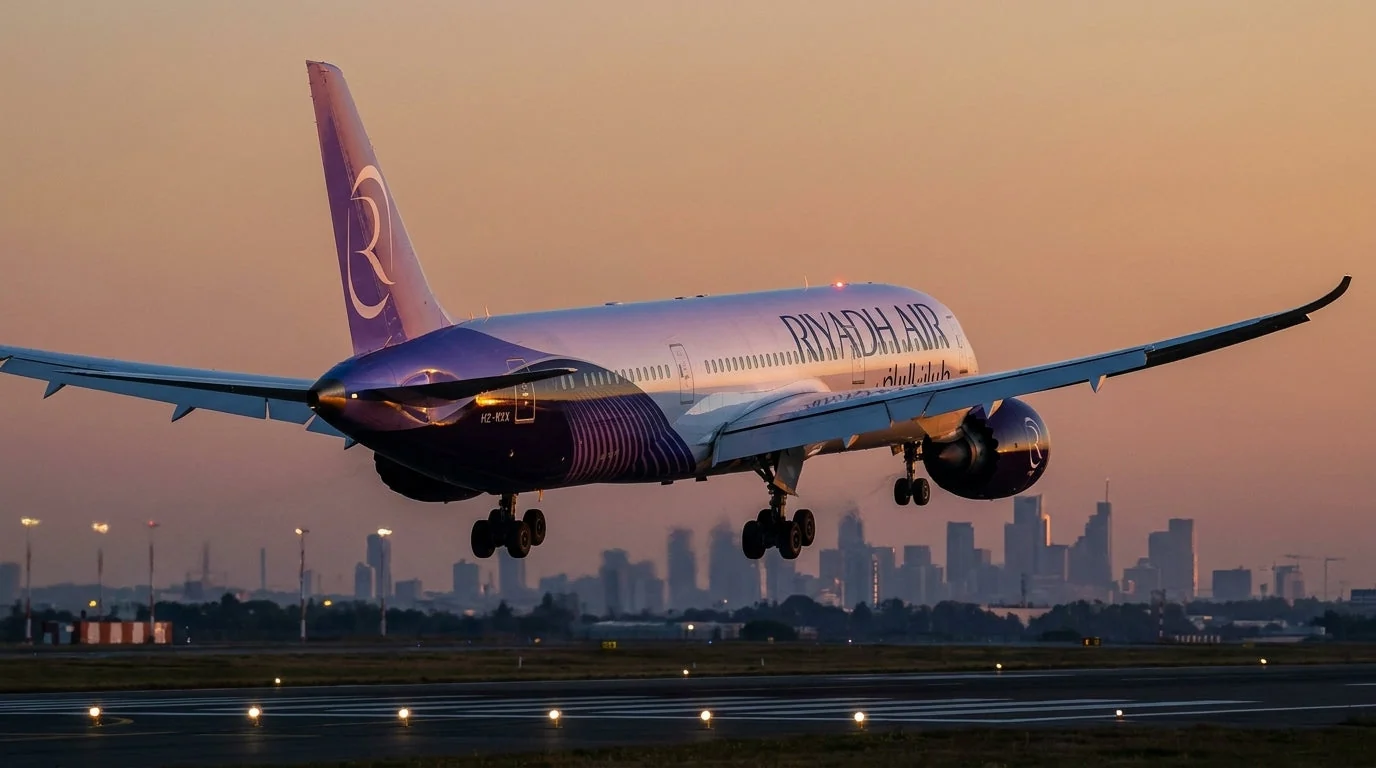
LAHORE — Riyadh Air has inaugurated a new air route connecting Saudi Arabia’s capital, Riyadh, to Lahore with three weekly flights. The inaugural flight, RX-676, landed at Lahore’s Allama Iqbal International Airport on Tuesday, marking a significant expansion in air connectivity between the two nations.
What Happened
The launch of Riyadh Air’s new route was marked by the arrival of flight RX-676 at Lahore’s Allama Iqbal International Airport. This event signifies the airline’s first venture into the Pakistani market, aiming to enhance travel options between Saudi Arabia and Pakistan. The service will operate three times a week, providing a regular link for passengers traveling for business, religious, or personal reasons.
Riyadh Air’s entry into Lahore is part of a broader strategy to expand its network and strengthen ties with key international destinations. The airline’s management expressed optimism about the new route, anticipating it will cater to the growing demand for air travel between the two countries. The flights are expected to facilitate not only passenger travel but also boost trade and tourism.
According to Riyadh Air officials, the decision to launch flights to Lahore was driven by the city’s strategic importance and the significant number of Pakistani expatriates residing in Saudi Arabia. “We are delighted to connect Lahore with Riyadh, offering our passengers more travel options and convenience,” said a spokesperson for Riyadh Air.
Background
Historically, air travel between Pakistan and Saudi Arabia has been robust, primarily due to the large Pakistani diaspora in Saudi Arabia and the religious significance of the country for Pakistani Muslims. Saudi Arabia is home to millions of Pakistani workers, and many Pakistanis travel annually for Hajj and Umrah pilgrimages.
In recent years, both countries have sought to enhance bilateral relations, with air connectivity being a critical component of this strategy. The launch of new routes by airlines such as Riyadh Air reflects ongoing efforts to strengthen these ties. Previously, Pakistan International Airlines (PIA) and Saudi Arabian Airlines have been the primary carriers operating between the two nations.
Why It Matters
The introduction of Riyadh Air’s Lahore route is significant for several reasons. Economically, it provides a new avenue for trade and business exchanges, potentially boosting economic activities between Pakistan and Saudi Arabia. The increased connectivity is likely to attract more business travelers and investors, enhancing economic cooperation.
Socially, the route offers greater convenience for the Pakistani expatriate community in Saudi Arabia, facilitating easier travel for family visits and personal engagements. It also supports religious tourism, as many Pakistanis travel to Saudi Arabia for pilgrimage purposes.
Politically, the move underscores the strengthening bilateral relations between Pakistan and Saudi Arabia. Enhanced air connectivity is often a reflection of strong diplomatic ties, and the new route could pave the way for further collaboration in other sectors such as tourism, education, and cultural exchange.
Internationally, the expansion of Riyadh Air’s network to include Lahore highlights the growing importance of Pakistan as a key destination in the region. It also reflects the competitive dynamics of the aviation industry, where airlines are continuously seeking to expand their networks and capture new markets.
Key Takeaways
- Riyadh Air has launched a new route connecting Riyadh and Lahore with three weekly flights.
- The inaugural flight RX-676 marked the airline’s entry into the Pakistani market.
- The route is expected to enhance economic, social, and political ties between Pakistan and Saudi Arabia.
- The new service offers increased travel options for the Pakistani diaspora and religious tourists.
- This expansion reflects the growing importance of Pakistan as a regional travel hub.
Source Attribution
This article is based on official government statements, press releases, and public communications from relevant authorities.














