
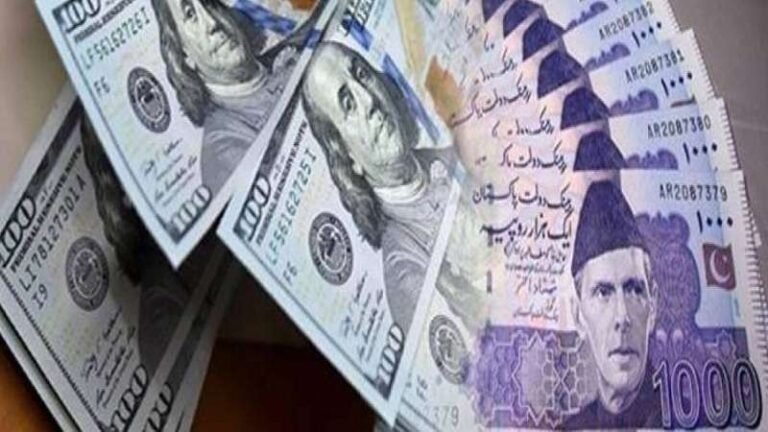
ISLAMABAD — The Pakistani Rupee appreciated by one paisa against the US Dollar in interbank trading on Tuesday, closing at Rs 277.85 compared to the previous day’s rate of Rs 277.86. This minor gain was reported by the Forex Association of Pakistan (FAP), reflecting a slight improvement in the currency’s value amid ongoing economic challenges.
What Happened
On Tuesday, the Rupee’s value saw a modest increase of one paisa against the US Dollar in the interbank market. The currency closed at Rs 277.85, a slight improvement from the previous closing rate of Rs 277.86. This change, although minimal, indicates a momentary stabilization in the exchange rate, which has been under pressure due to various economic factors.
The Forex Association of Pakistan reported that the buying and selling rates of the Dollar in the open market were recorded at Rs 277.50 and Rs 278.50, respectively. This reflects a consistent demand for the Dollar, which continues to influence the Rupee’s performance in both the interbank and open markets.
Currency traders and analysts attribute this minor appreciation to the recent measures taken by the State Bank of Pakistan (SBP) to stabilize the currency. These measures include interventions in the foreign exchange market and adjustments in monetary policy to control inflation and support the Rupee.
Background
The Pakistani Rupee has experienced significant volatility in recent years, largely due to economic instability, inflation, and external debt pressures. The currency has depreciated considerably against the US Dollar, driven by a widening current account deficit and declining foreign exchange reserves.
In response, the government and the SBP have implemented various policies to curb inflation and stabilize the Rupee. These include interest rate adjustments, import restrictions, and seeking financial assistance from international institutions such as the International Monetary Fund (IMF).
Historically, the Rupee has faced challenges due to Pakistan’s reliance on imports and the need for foreign currency to service external debt. These factors have made the currency vulnerable to fluctuations in global markets and changes in investor sentiment.
Why It Matters
The slight appreciation of the Rupee, although marginal, is significant in the context of Pakistan’s ongoing economic challenges. A stable currency is crucial for maintaining investor confidence and controlling inflation, which directly impacts the cost of living for ordinary citizens.
For businesses, a stable Rupee means more predictable costs for imported goods and raw materials, which can help in planning and budgeting. This stability is essential for sectors such as manufacturing and retail, which rely heavily on imported inputs.
On a broader scale, the Rupee’s performance is a key indicator of economic health. Persistent depreciation can lead to higher inflation, eroding purchasing power and increasing the cost of imports. This can further exacerbate economic inequality and put additional pressure on low-income households.
Internationally, the Rupee’s stability is crucial for maintaining Pakistan’s creditworthiness and attracting foreign investment. Investors closely monitor currency trends as part of their risk assessment, and a stable Rupee can enhance Pakistan’s attractiveness as an investment destination.
Key Takeaways
- The Pakistani Rupee appreciated by one paisa against the US Dollar, closing at Rs 277.85 in the interbank market.
- The Forex Association of Pakistan reported buying and selling rates of Rs 277.50 and Rs 278.50, respectively, in the open market.
- State Bank of Pakistan’s interventions and monetary policy adjustments have contributed to this slight appreciation.
- A stable Rupee is crucial for controlling inflation and maintaining investor confidence.
- The Rupee’s performance is a key indicator of Pakistan’s economic health and international creditworthiness.
Source Attribution
This article is based on official government statements, press releases, and public communications from relevant authorities.














