
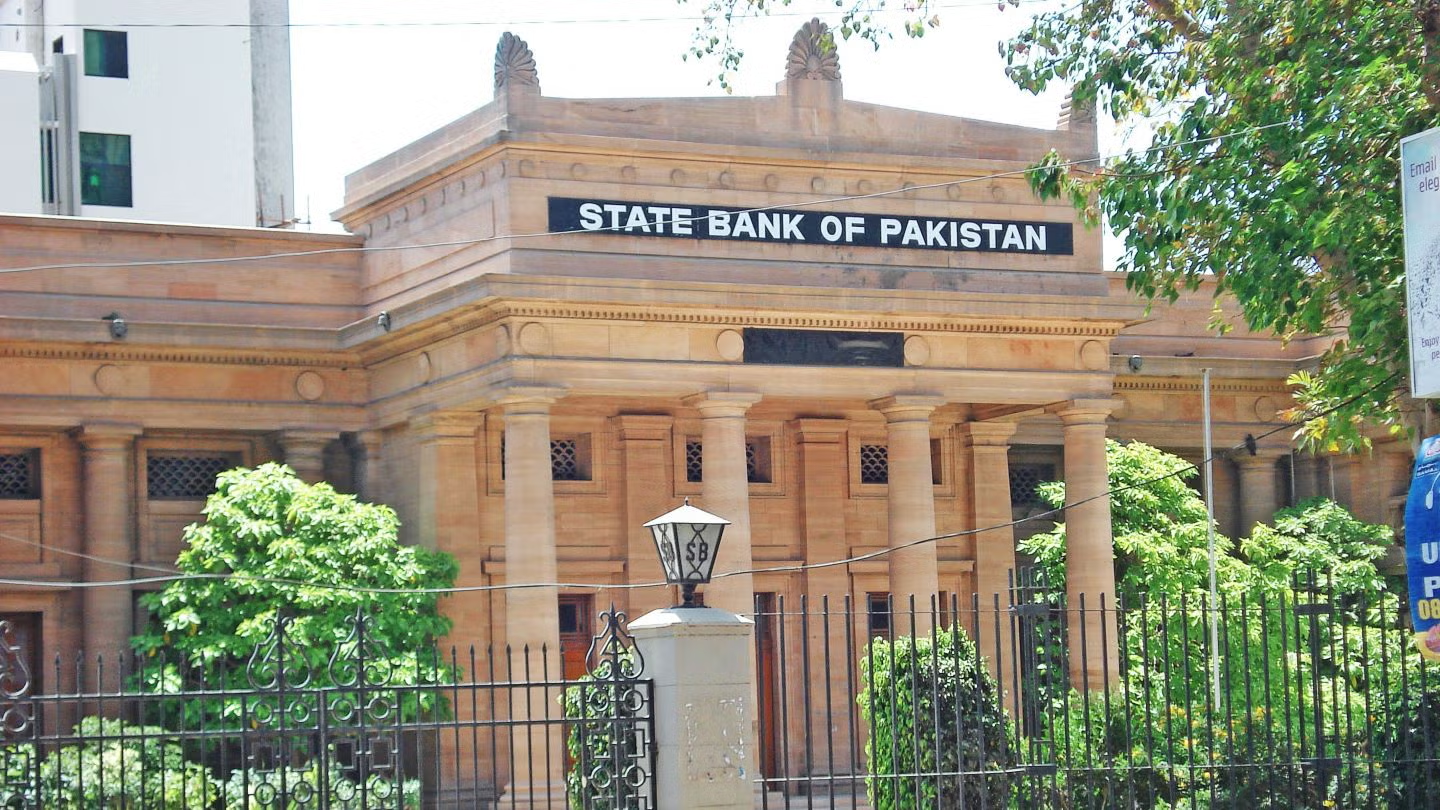
KARACHI — The State Bank of Pakistan (SBP) announced on Monday that it would maintain the policy rate at 11.5 percent. This decision comes amidst a backdrop of improving economic indicators and emerging geopolitical risks, particularly due to the resurgence of conflict in the Middle East.
What Happened
Governor of the State Bank of Pakistan, Jameel Ahmad, addressed a press conference in Karachi, alongside deputy governors, to explain the rationale behind maintaining the current policy rate. The decision to keep the rate unchanged is primarily influenced by the inflation outlook and the evolving geopolitical landscape, which poses potential risks to the economic stability of Pakistan.
Governor Ahmad noted that while there have been some positive developments in the economic indicators, such as a slight improvement in the fiscal deficit and foreign exchange reserves, the situation remains precarious due to external factors. “The resurgence of conflict in the Middle East has added a layer of uncertainty to the global economic environment, which could have repercussions for Pakistan,” he stated.
The central bank’s decision reflects a cautious approach to monetary policy, aiming to balance the need for economic growth with the imperative of controlling inflation. The SBP’s Monetary Policy Committee (MPC) evaluated the current economic conditions, considering both domestic and international factors, before arriving at this decision.
Background
The policy rate, a critical tool for central banks to control inflation and stabilize the currency, has been a focal point for Pakistan’s economic strategy. In recent years, the SBP has adjusted the rate in response to fluctuating inflation rates and economic challenges. Historically, the rate has been used to curb inflationary pressures and stabilize the Pakistani rupee.
In the past, the SBP has faced challenges in maintaining a balance between fostering economic growth and managing inflation. The current rate of 11.5 percent has been in place for several months, reflecting the bank’s cautious stance in a volatile economic environment.
Why It Matters
The decision to keep the policy rate unchanged at 11.5 percent is significant for several reasons. Economically, it signals the SBP’s focus on maintaining stability amidst external uncertainties. The ongoing conflict in the Middle East has the potential to disrupt global oil supplies, which could lead to increased energy prices and inflationary pressures in Pakistan.
Socially, the decision impacts the cost of borrowing for businesses and consumers. A stable policy rate can help businesses plan their investments and manage costs more effectively, contributing to economic growth. However, if inflationary pressures increase, it could affect the purchasing power of consumers, leading to higher costs of living.
Politically, the SBP’s decision underscores the importance of maintaining economic stability in a region fraught with geopolitical tensions. The central bank’s cautious approach aims to mitigate risks and ensure that Pakistan’s economy remains resilient in the face of external shocks.
Internationally, the decision reflects Pakistan’s commitment to maintaining a stable economic environment, which is crucial for attracting foreign investment. Stability in monetary policy can enhance investor confidence, which is vital for economic growth and development.
Key Takeaways
- The State Bank of Pakistan has maintained the policy rate at 11.5 percent due to inflation concerns and geopolitical risks.
- Governor Jameel Ahmad highlighted improvements in economic indicators but noted external uncertainties.
- The decision aims to balance economic growth with inflation control amidst Middle East tensions.
- The policy rate stability is crucial for business investment planning and consumer cost management.
- Maintaining a stable economic environment is essential for attracting foreign investment to Pakistan.
Source Attribution
This article is based on official statements and public communications from the State Bank of Pakistan.














