
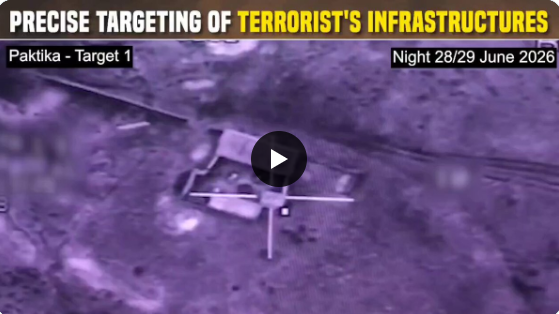
ISLAMABAD — Federal Minister for Information and Broadcasting Attaullah Tarar announced on Monday that Pakistan’s security forces executed targeted strikes on terrorist camps under Operation Ghazb Lil Haq. The operation focused on dismantling the safe havens of Jamaat-ul-Ahrar and Fitna al-Khwarij in the regions of Paktia, Paktika, and Kunar during the night of June 28 and 29.
What Happened
According to Minister Tarar, the operation was meticulously planned and executed with precision to neutralize threats posed by terrorist groups operating along the Pakistan-Afghanistan border. The strikes were part of a broader strategy to eliminate militant networks that have been responsible for numerous attacks within Pakistan. The operation targeted specific locations identified as strongholds of Jamaat-ul-Ahrar and Fitna al-Khwarij, two groups known for their violent activities in the region.
Minister Tarar emphasized the success of the operation, stating, “Our security forces have once again demonstrated their commitment and capability to protect our nation from the menace of terrorism.” He added that the operation was conducted with the utmost care to minimize collateral damage and ensure the safety of civilians in the affected areas.
The strikes were carried out in coordination with intelligence agencies, which provided crucial information regarding the locations and activities of the terrorist groups. The operation is part of an ongoing effort by the Pakistani government to secure its borders and maintain peace and stability in the region.
Background
Operation Ghazb Lil Haq is a continuation of Pakistan’s longstanding efforts to combat terrorism and insurgency within its borders. The operation is named after the Arabic term for “fury of truth,” reflecting the government’s resolve to confront and dismantle terrorist networks. Jamaat-ul-Ahrar and Fitna al-Khwarij have been active in the region for several years, often crossing the porous border between Pakistan and Afghanistan to launch attacks.
Historically, these groups have targeted both civilian and military installations, contributing to instability in the region. Pakistan has been engaged in various military operations over the years, such as Operation Zarb-e-Azb and Operation Radd-ul-Fasaad, to root out terrorism and restore order in areas affected by militant activities.
Why It Matters
The successful execution of Operation Ghazb Lil Haq is significant for several reasons. Firstly, it demonstrates Pakistan’s ongoing commitment to combating terrorism and securing its borders. By targeting the leadership and infrastructure of terrorist groups, the operation aims to disrupt their operations and reduce their capacity to carry out attacks.
Economically, the operation is crucial as terrorism has historically deterred foreign investment and hindered economic growth in Pakistan. By improving security, the government hopes to create a more stable environment that encourages investment and development.
On a social level, the operation is vital for the safety and security of Pakistani citizens, particularly those living in areas prone to terrorist attacks. By dismantling terrorist networks, the government aims to reduce the threat of violence and improve the quality of life for its citizens.
Internationally, the operation underscores Pakistan’s role as a key player in the global fight against terrorism. By taking decisive action against terrorist groups, Pakistan demonstrates its commitment to international security and cooperation with neighboring countries to address shared security challenges.
Key Takeaways
- Security forces conducted precise strikes on terrorist camps in Paktia, Paktika, and Kunar.
- Operation Ghazb Lil Haq targets Jamaat-ul-Ahrar and Fitna al-Khwarij.
- The operation aims to dismantle terrorist networks and improve regional security.
- Efforts are part of Pakistan’s broader strategy to combat terrorism and secure borders.
- Successful operations enhance Pakistan’s international standing in counter-terrorism efforts.
Source Attribution
This article is based on official government statements, press releases, and public communications from relevant authorities.














