
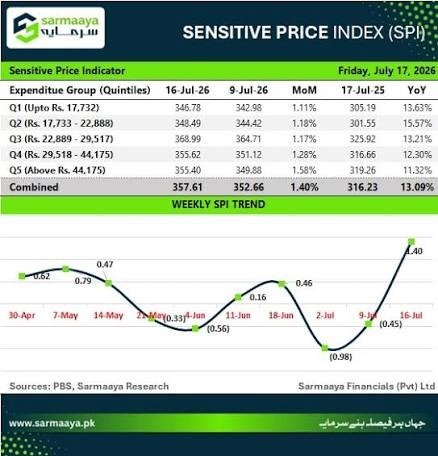
ISLAMABAD — The Pakistan Bureau of Statistics (PBS) reported on Friday that the Sensitive Price Indicator (SPI)-based weekly inflation rose by 1.40% for the combined consumption group during the week ending July 16, 2026. This rise in inflation reflects ongoing economic challenges faced by the country.
What Happened
The latest figures from the Pakistan Bureau of Statistics reveal a 1.40% increase in the Sensitive Price Indicator (SPI) for the week concluding on July 16, 2026. This indicator tracks the price changes of essential goods and services consumed by households. The SPI is a crucial tool for understanding short-term inflationary trends, especially in a country like Pakistan, where inflation can significantly impact daily life.
The increase in inflation is attributed to several factors, including fluctuations in the prices of food items, energy costs, and other essential commodities. The PBS report highlighted that prices of key items such as wheat flour, sugar, and cooking oil saw noticeable increases, contributing to the overall rise in the SPI. Additionally, utility costs, particularly electricity and gas, have also seen upward adjustments, further exacerbating the inflationary pressures.
According to the PBS, the SPI is calculated based on the prices of 51 essential items collected from 17 urban centers across the country. The indicator is particularly sensitive to changes in the prices of food and energy, which constitute a significant portion of household expenditures in Pakistan.
Background
Inflation in Pakistan has been a persistent issue, with various economic and political factors influencing its trajectory. Historically, inflation rates have been affected by domestic supply chain disruptions, international commodity price fluctuations, and fiscal policies. The government has often struggled to maintain price stability, especially in times of economic uncertainty or political upheaval.
In recent years, Pakistan has faced challenges such as currency depreciation, rising import costs, and fiscal deficits, all of which have contributed to inflationary pressures. The government has implemented various measures to curb inflation, including monetary policy adjustments and subsidies on essential goods. However, these measures have had mixed results, with inflation remaining a significant concern for policymakers and the public alike.
Why It Matters
The rise in short-term inflation has significant implications for the Pakistani economy and its citizens. For households, especially those with fixed or low incomes, increased inflation means a higher cost of living, which can lead to reduced purchasing power and financial strain. This situation is particularly challenging for the lower and middle-income groups who spend a larger portion of their income on essential goods and services.
Economically, persistent inflation can erode consumer confidence and hinder economic growth. Businesses may face higher operational costs, leading to increased prices for goods and services, which can further fuel inflation in a vicious cycle. Additionally, inflation can impact investment decisions, as uncertainty over future costs and returns may deter both domestic and foreign investors.
On a broader scale, the government’s ability to manage inflation effectively is crucial for maintaining economic stability and public trust. High inflation can lead to social unrest and political instability, as citizens demand action to alleviate the financial burden. Therefore, addressing inflation is not only an economic imperative but also a political one.
Key Takeaways
- The Sensitive Price Indicator (SPI) increased by 1.40% for the week ending July 16, 2026.
- Price hikes in essential commodities like wheat flour, sugar, and cooking oil contributed to the inflation rise.
- Inflation poses significant challenges for households, particularly those with fixed or low incomes.
- Persistent inflation can hinder economic growth and affect investment decisions.
- Effective management of inflation is crucial for maintaining economic stability and public trust.
Source Attribution
This article is based on official government statements, press releases, and public communications from relevant authorities.














