
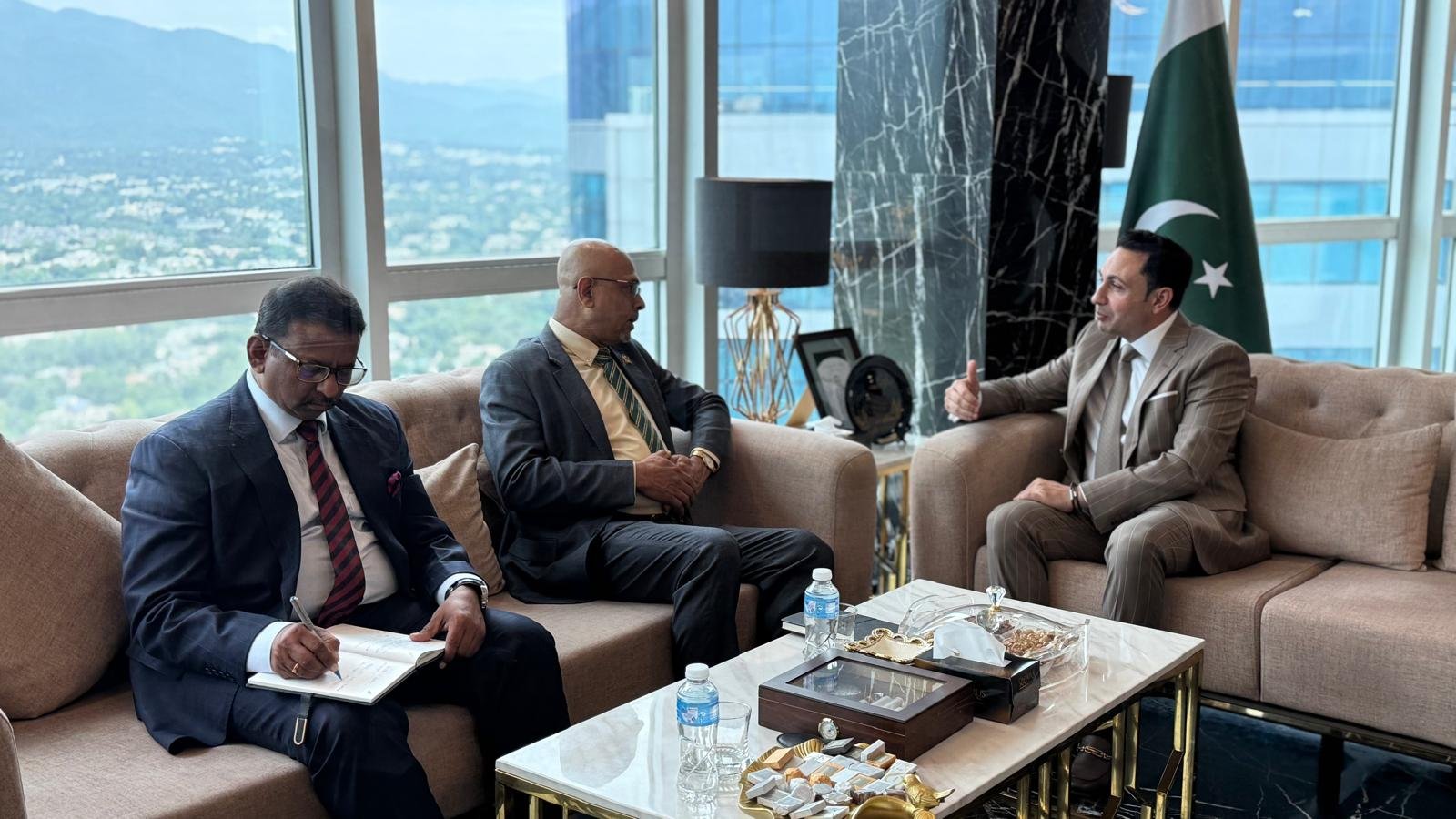
ISLAMABAD — Sri Lanka and Pakistan are exploring new opportunities to enhance cooperation in tourism and cultural exchanges, following a meeting between Sri Lankan High Commissioner to Pakistan Fred Senevirathne and Sardar Yasir Ilyas Khan, Advisor to the Prime Minister of Pakistan on Tourism. The discussions, held in Islamabad, focused on strengthening bilateral ties in tourism, culture, education, and people-to-people exchanges.
What Happened
During the meeting, High Commissioner Fred Senevirathne and Sardar Yasir Ilyas Khan deliberated on various strategies to boost tourism and cultural cooperation between Sri Lanka and Pakistan. The discussions emphasized the potential for increased collaboration in tourism, which is a significant sector for both countries. Senevirathne highlighted Sri Lanka’s interest in attracting Pakistani tourists and promoting cultural exchanges that could foster deeper understanding and friendship between the two nations.
Sardar Yasir Ilyas Khan, who also serves as CEO of Centaurus Group and Mövenpick Hotel, expressed Pakistan’s eagerness to enhance tourism ties with Sri Lanka. He noted that such cooperation could lead to mutual benefits, including economic growth and strengthened cultural relations. Khan underscored the importance of facilitating easier travel and promoting joint ventures in the tourism industry.
The meeting also touched upon educational exchanges and the potential for collaborative projects in the cultural sector. Both officials agreed on the need to create more opportunities for people-to-people interactions, which could serve as a foundation for long-term bilateral cooperation.
Background
Pakistan and Sri Lanka have historically enjoyed friendly relations, marked by cooperation in various sectors including trade, defense, and culture. Tourism has been identified as a key area for potential growth, given the rich cultural heritage and natural beauty of both countries. In recent years, both nations have been working to enhance their tourism sectors, recognizing the economic benefits and opportunities for cultural diplomacy.
Pakistan’s tourism industry has been gaining momentum, with the government implementing policies to attract more international visitors. Similarly, Sri Lanka has been focusing on rebuilding its tourism sector, which was significantly impacted by the COVID-19 pandemic. The recent discussions are part of broader efforts to revitalize tourism and foster cultural ties.
Why It Matters
The discussions between Sri Lanka and Pakistan hold significant implications for both countries, particularly in terms of economic growth and cultural diplomacy. Tourism is a vital sector that can contribute to economic development by creating jobs, generating foreign exchange, and promoting regional integration. Enhanced tourism cooperation can also lead to increased cultural understanding and stronger diplomatic relations.
For Pakistan, boosting tourism ties with Sri Lanka could help diversify its tourism offerings and attract more visitors from the South Asian region. This aligns with Pakistan’s broader strategy to position itself as a key tourist destination, leveraging its historical sites, diverse landscapes, and cultural heritage.
For Sri Lanka, attracting Pakistani tourists could provide a much-needed boost to its tourism industry, which is recovering from the pandemic’s effects. Increased cultural exchanges can also pave the way for educational collaborations and joint cultural projects, enriching both societies and fostering a sense of shared heritage.
Key Takeaways
- Sri Lanka and Pakistan are exploring ways to enhance cooperation in tourism and cultural exchanges.
- The meeting focused on strategies to attract tourists and promote people-to-people interactions.
- Both countries recognize the economic and cultural benefits of strengthened tourism ties.
- Educational exchanges and joint cultural projects were also discussed as potential areas of collaboration.
- The discussions align with broader efforts to revitalize tourism sectors in both nations.
Source Attribution
This article is based on official government statements, press releases, and public communications from relevant authorities.














