
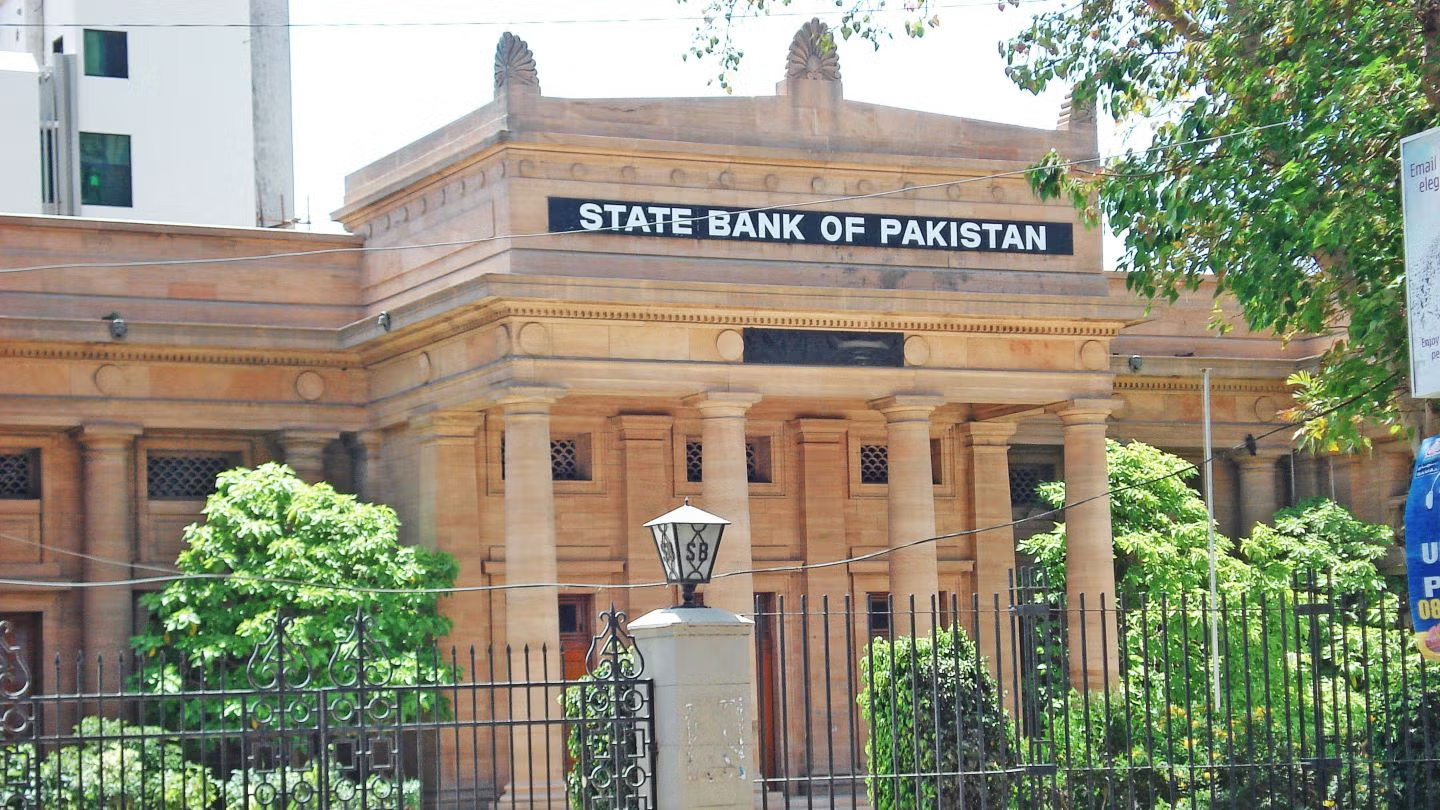
ISLAMABAD — The State Bank of Pakistan (SBP) has injected Rs 2,259.5 billion into the financial market to maintain liquidity. This significant move, executed on Thursday, was carried out through Reverse Repo Purchase and Shariah Compliant Mudarabah-based Open Market Operations (OMO), aiming to stabilize the banking sector amid ongoing economic challenges.
What Happened
The SBP’s decision to inject Rs 2.259 trillion into the market comes as part of its routine liquidity management operations. The injection was executed through two primary mechanisms: the Reverse Repo Purchase and the Shariah Compliant Mudarabah-based OMO. These tools are used by the central bank to manage short-term liquidity in the banking system, ensuring that banks have sufficient funds to meet their obligations and continue lending to businesses and consumers.
According to the SBP, the Reverse Repo Purchase involves buying securities from banks with an agreement to sell them back at a later date. This provides banks with immediate liquidity, which they can use to finance their operations. The Shariah Compliant Mudarabah-based OMO is a similar tool, but it is structured in accordance with Islamic finance principles, which prohibit interest-based transactions.
The SBP’s intervention is seen as a response to the current economic conditions, where liquidity pressures have been mounting due to various factors, including inflationary trends and external debt obligations. By injecting this substantial amount, the SBP aims to alleviate these pressures and support the stability of the financial system.
Background
The State Bank of Pakistan regularly conducts open market operations to manage liquidity in the banking sector. These operations are a key part of the central bank’s monetary policy toolkit, allowing it to influence short-term interest rates and ensure the smooth functioning of the financial system.
Historically, the SBP has used these tools to address liquidity shortages that arise due to seasonal demand for cash, fluctuations in government borrowing, or external economic shocks. The current injection is one of the largest in recent times, reflecting the significant liquidity needs of the banking sector amid challenging economic conditions.
In recent years, Pakistan’s economy has faced several challenges, including high inflation rates, a widening fiscal deficit, and a growing current account deficit. These issues have put pressure on the financial system, necessitating active intervention by the central bank to maintain stability.
Why It Matters
The SBP’s injection of Rs 2.259 trillion is crucial for several reasons. Economically, it helps ensure that banks have adequate liquidity to meet the demands of businesses and consumers. This is particularly important in the current context, where economic activity is recovering from the impacts of the COVID-19 pandemic and other global economic disruptions.
Socially, maintaining liquidity in the banking sector is vital for consumer confidence. When banks have sufficient liquidity, they are better able to provide loans and other financial services, which supports economic growth and development. This has a direct impact on employment and income levels, contributing to overall economic stability.
Politically, the SBP’s actions demonstrate the government’s commitment to maintaining financial stability and supporting economic growth. By proactively managing liquidity, the central bank is helping to ensure that the financial system can withstand external shocks and continue to function effectively.
Key Takeaways
- The State Bank of Pakistan injected Rs 2.259 trillion to maintain market liquidity.
- The operation was conducted through Reverse Repo Purchase and Shariah Compliant Mudarabah-based OMO.
- This move addresses liquidity pressures due to inflation and external debt obligations.
- Ensuring liquidity supports economic growth and consumer confidence.
- The intervention reflects the SBP’s role in stabilizing the financial system.
Source Attribution
This article is based on official government statements, press releases, and public communications from relevant authorities.














