
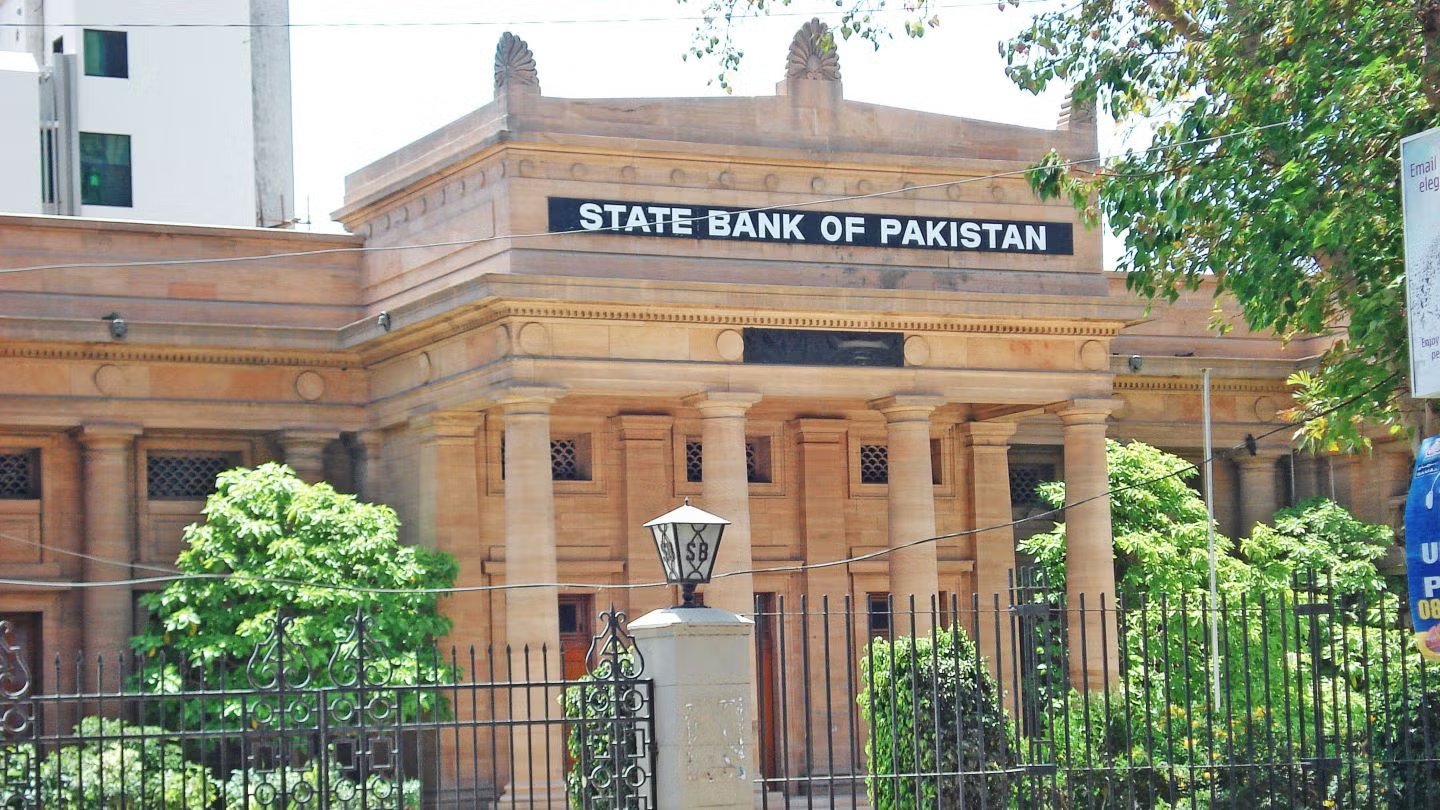
KARACHI — The State Bank of Pakistan (SBP) injected Rs 656 billion into the financial market on Wednesday through Open Market Operations (OMO) Reverse Repo Purchase. This strategic move aims to ensure adequate liquidity within the banking system.
What Happened
On August 5, 2026, the SBP conducted an OMO injection with a two-day tenor, successfully injecting Rs 656 billion into the market. The central bank received seven bids for the Reverse Repo Purchase, all of which were accepted at a uniform rate of return of 11.54 percent. The bids collectively amounted to Rs 656 billion, with the rate of return ranging between 11.54 and 11.62 percent. By accepting the entire amount at the lower end of the rate spectrum, the SBP demonstrated its commitment to maintaining market stability and ensuring that banks have sufficient funds to meet their short-term obligations.
The OMO Reverse Repo Purchase is a tool used by central banks to manage liquidity in the banking system. By injecting funds, the SBP provides banks with the necessary liquidity to continue lending and supporting economic activities. This operation is part of the SBP’s regular monetary policy measures to address liquidity fluctuations and maintain financial stability.
Background
The State Bank of Pakistan regularly uses Open Market Operations as a monetary policy tool to manage liquidity in the financial system. The OMO involves the buying or selling of government securities to regulate the money supply. In this case, the Reverse Repo Purchase allows the SBP to lend money to commercial banks, which in turn helps stabilize the financial system by ensuring that banks have adequate funds.
Historically, the SBP has employed OMOs to address liquidity shortages, particularly during times of economic uncertainty or increased demand for funds. The central bank’s actions are guided by its mandate to maintain price stability and support economic growth. By adjusting liquidity levels, the SBP can influence interest rates and, consequently, the overall economic activity in the country.
Why It Matters
The SBP’s injection of Rs 656 billion is significant for several reasons. Firstly, it underscores the central bank’s proactive approach to managing liquidity and ensuring the smooth functioning of the financial system. By providing banks with the necessary funds, the SBP helps prevent potential liquidity crises that could disrupt economic activities.
Economically, the infusion of liquidity supports lending activities, which are crucial for businesses and consumers. By ensuring that banks have sufficient funds, the SBP facilitates credit availability, which can stimulate investment and consumption. This is particularly important in a country like Pakistan, where economic growth is heavily reliant on domestic consumption and investment.
Socially, maintaining liquidity in the banking system helps protect jobs and livelihoods. When banks have adequate funds, they can continue providing loans to businesses, helping them maintain operations and employment levels. This is crucial for the broader economy, as stable employment levels contribute to social stability and economic resilience.
Politically, the SBP’s actions demonstrate its independence and commitment to its mandate. By taking decisive steps to manage liquidity, the central bank reinforces its role as a stabilizing force in the economy, which can enhance investor confidence and support the government’s broader economic objectives.
Key Takeaways
- The State Bank of Pakistan injected Rs 656 billion into the market through OMO Reverse Repo Purchase.
- The operation was conducted with a two-day tenor at an 11.54 percent rate of return.
- The SBP’s actions aim to maintain liquidity and financial stability in the banking system.
- Ensuring adequate liquidity supports lending, investment, and economic growth.
- The move highlights the SBP’s proactive approach to managing economic challenges.
Source Attribution
This article is based on official government statements, press releases, and public communications from relevant authorities.














