
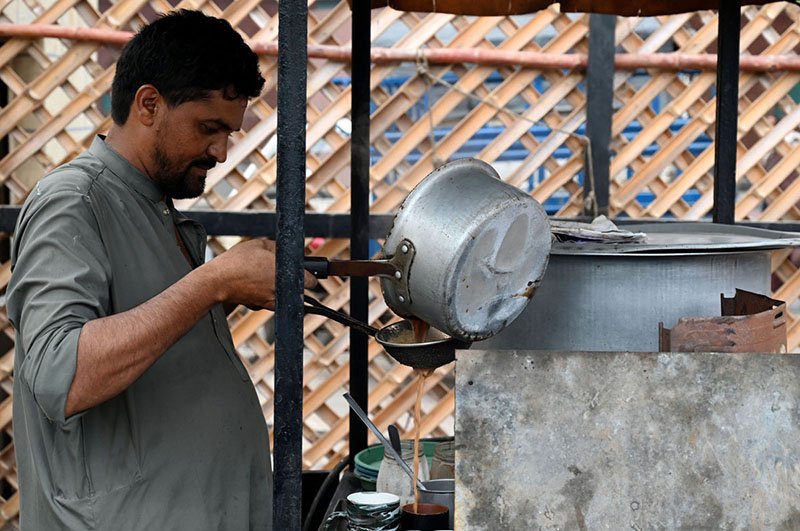
LAHORE — A street vendor in Lahore has become a familiar sight for locals as he diligently prepares and sells tea at his roadside stall in the provincial capital. This small business, situated amidst the hustle and bustle of Lahore’s vibrant streets, has attracted a steady stream of customers seeking a warm cup of tea.
What Happened
The vendor, whose stall is strategically located in a busy area of Lahore, has been serving tea to passersby and regulars alike. Operating from a modest setup, he begins his day early, ensuring that his tea is ready for the morning rush. The stall, adorned with a simple canopy and basic seating, offers a respite for those looking to enjoy a quick break from their daily routines.
Despite the simplicity of his operation, the vendor’s tea has gained popularity due to its rich flavor and affordable price. Customers from various walks of life, including office workers, students, and laborers, frequent the stall, creating a diverse and lively atmosphere. “I come here every day for my morning tea. It’s the best way to start my day,” said a regular customer, highlighting the vendor’s consistent quality and service.
The vendor’s dedication to his craft is evident in the meticulous preparation of each cup of tea. Using a traditional method, he brews the tea with a blend of spices, milk, and sugar, resulting in a flavorful beverage that keeps customers coming back for more. His ability to maintain quality while serving a high volume of customers is a testament to his skill and experience.
Background
Street vending is a common sight in many Pakistani cities, including Lahore. These vendors play a crucial role in the local economy, providing affordable food and beverages to the public. The tradition of roadside tea stalls, known as ‘chai dhabas,’ has a long history in South Asia, serving as social hubs where people gather to converse and relax.
In recent years, the informal sector, which includes street vendors, has faced challenges due to urban development and regulatory pressures. Despite these challenges, many vendors continue to operate, adapting to changing circumstances while maintaining their cultural and economic significance.
Why It Matters
The presence of street vendors like the Lahore tea seller is significant for several reasons. Economically, these vendors contribute to the informal sector, which provides livelihoods for millions across Pakistan. They offer affordable options for food and drink, making them accessible to a wide range of consumers, particularly in urban areas where cost of living is high.
Socially, tea stalls serve as communal spaces where people from different backgrounds can interact. In a city as diverse as Lahore, these stalls facilitate social cohesion by bringing together individuals from various communities. The vendor’s stall, in particular, has become a microcosm of Lahore’s vibrant society, illustrating the city’s cultural diversity and the importance of shared spaces.
Furthermore, the resilience of street vendors in the face of economic and regulatory challenges highlights the adaptability and resourcefulness of Pakistan’s informal sector. These vendors continue to thrive by meeting the needs of their communities, demonstrating the enduring relevance of traditional practices in modern urban settings.
Key Takeaways
- A Lahore street vendor’s tea stall has become popular for its quality and affordability.
- Street vending plays a crucial role in Pakistan’s informal economy, providing livelihoods and affordable options.
- Tea stalls serve as social hubs, fostering interaction across diverse communities in urban areas.
- Despite challenges, street vendors demonstrate resilience and adaptability in changing urban landscapes.
- The vendor’s success underscores the cultural and economic significance of traditional practices in Lahore.
Source Attribution
This article is based on official government statements, press releases, and public communications from relevant authorities.














