
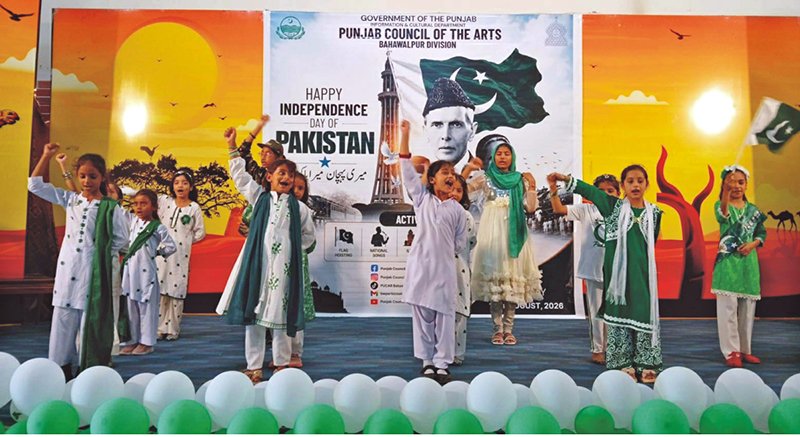
BAHAWALPUR — Students captivated audiences with a cultural tableau at an Independence Day event organized by the Punjab Council of the Arts in Bahawalpur on August 14. The event was part of the nationwide celebrations marking Pakistan’s 79th Independence Day.
What Happened
The Punjab Council of the Arts hosted an Independence Day event in Bahawalpur, where students performed a tableau that highlighted the rich cultural heritage of Pakistan. The performance was designed to instill a sense of patriotism and pride among the attendees. The event attracted a diverse audience, including local dignitaries, families, and art enthusiasts, all gathered to witness the vibrant display of cultural expression.
The tableau, performed by students from various schools in the region, depicted significant historical events and cultural traditions of Pakistan. The young performers donned traditional attire representing different provinces, showcasing the unity in diversity that characterizes the nation. The performance was met with applause and appreciation from the audience, who were visibly moved by the students’ dedication and talent.
In addition to the tableau, the event featured speeches by local leaders and cultural experts who emphasized the importance of preserving and promoting Pakistan’s cultural heritage. The event concluded with a flag-hoisting ceremony and a rendition of the national anthem, further enhancing the patriotic spirit of the occasion.
Background
Independence Day in Pakistan is celebrated annually on August 14, commemorating the country’s independence from British rule in 1947. The day is marked by various events and activities across the country, including flag-hoisting ceremonies, parades, cultural performances, and fireworks displays. The Punjab Council of the Arts, established to promote cultural activities and support artists in the region, regularly organizes events that celebrate and preserve the cultural heritage of Punjab and Pakistan as a whole.
Tableaux performances have been a traditional part of Independence Day celebrations, serving as a medium to educate and engage the public about the country’s history and cultural diversity. These performances are often integrated into school curriculums and community events, highlighting their role in fostering national unity and pride.
Why It Matters
The cultural tableau performed by students in Bahawalpur is significant for several reasons. Firstly, it serves as a reminder of the rich cultural diversity that exists within Pakistan. By showcasing the traditional attire and customs of various provinces, the performance underscores the importance of unity in a country with diverse ethnic and cultural backgrounds.
Moreover, events like these play a crucial role in educating the younger generation about the nation’s history and cultural heritage. In an era where global influences are pervasive, such performances help preserve indigenous traditions and instill a sense of national identity among the youth.
Economically, cultural events contribute to the local economy by attracting visitors and promoting tourism. They provide a platform for local artists and performers to showcase their talents, potentially leading to further opportunities in the arts and entertainment sectors.
On a broader scale, celebrating Independence Day with cultural events strengthens national solidarity and pride. It reminds citizens of the struggles and sacrifices made by their forebears to achieve independence, reinforcing the values of freedom and democracy that are central to Pakistan’s national identity.
Key Takeaways
- Students performed a cultural tableau at an Independence Day event in Bahawalpur, organized by the Punjab Council of the Arts.
- The performance highlighted Pakistan’s cultural diversity and historical events, fostering national unity and pride.
- Independence Day celebrations in Pakistan commemorate the country’s independence from British rule in 1947.
- Cultural events contribute to local economies and provide platforms for artists to showcase their talents.
- Such events play a vital role in educating youth about national history and preserving cultural heritage.
Source Attribution
This article is based on official government statements, press releases, and public communications from relevant authorities.














