
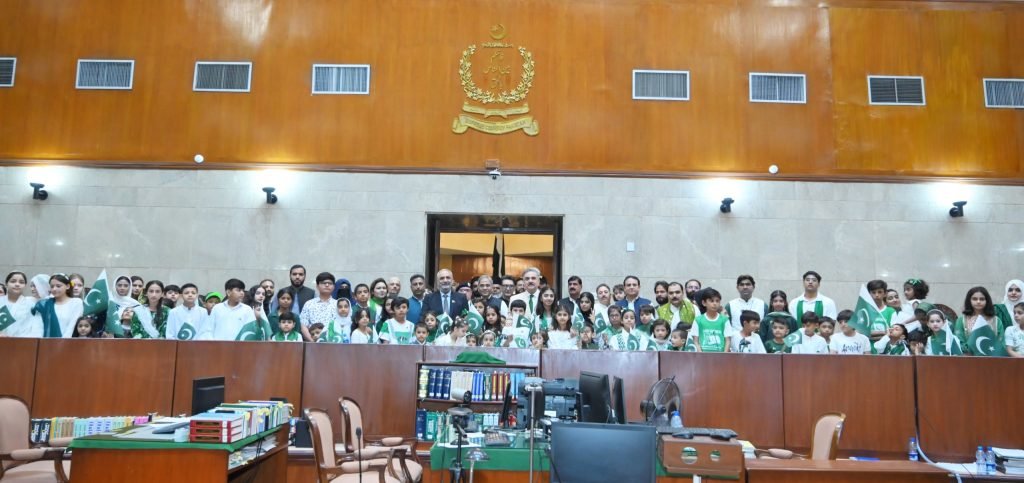
ISLAMABAD — A solemn flag-hoisting ceremony took place at the Supreme Court of Pakistan on Friday to mark the nation’s 79th Independence Day. The event highlighted Pakistan’s commitment to equality and inclusion, featuring participation from diverse religious communities.
What Happened
The Supreme Court of Pakistan became a focal point for national pride as it hosted a dignified flag-hoisting ceremony on August 14, celebrating the 79th anniversary of Pakistan’s independence. The Chief Justice of Pakistan, along with other Supreme Court judges, the Registrar, officers, staff, and their children, attended the event.
In a symbolic gesture of unity, the national flag was hoisted by children from minority communities, alongside the Chief Justice and judges of the Supreme Court. This inclusive group also featured a Hindu Pandit, a Christian Priest, and a Muslim Cleric, underscoring Pakistan’s constitutional commitment to religious harmony and equality.
The event was further enriched by the Police Band’s rendition of the national anthem, which imbued the occasion with solemnity and national pride. The Chief Justice took the opportunity to engage with the children, guiding them through Court Room No.1 to familiarize them with the Supreme Court’s working environment, thereby making the day both educational and memorable for the young attendees.
The celebrations concluded with the traditional cutting of the Independence Day cake, a gesture shared by the Chief Justice, judges, and children, symbolizing the collective joy and spirit of the national occasion. In his Independence Day message, the Chief Justice extended greetings to the people of Pakistan and the legal fraternity. He paid tribute to the sacrifices and determination that led to the creation of an independent Pakistan and emphasized the enduring responsibility of upholding values, protecting rights, and strengthening citizens’ confidence in state institutions.
Background
Pakistan’s Independence Day, celebrated on August 14, marks the day in 1947 when the country gained independence from British rule. It is a day of national pride and reflection on the journey towards becoming a sovereign nation. The Supreme Court’s involvement in such celebrations underscores its role as a guardian of the Constitution and a symbol of justice and equality.
Historically, Independence Day celebrations have included flag-hoisting ceremonies, parades, and cultural events across the country, reflecting the diverse cultural and religious fabric of Pakistan. The inclusion of minority communities in these events has been a growing trend, aligning with the nation’s constitutional ideals of equality and non-discrimination.
Why It Matters
The inclusive nature of the Independence Day ceremony at the Supreme Court is significant in several ways. Economically, it reflects the potential for unity and collaboration among Pakistan’s diverse population, which can drive national development and stability. Socially, it sends a powerful message of inclusion and harmony, reinforcing the idea that Pakistan’s strength lies in its diversity.
Politically, the event highlights the judiciary’s role in upholding the Constitution, which guarantees equal rights and protection for all citizens, regardless of their religious or ethnic backgrounds. By involving children from minority communities in the ceremony, the Supreme Court not only celebrated independence but also reaffirmed its commitment to fostering an inclusive society.
Internationally, such gestures can enhance Pakistan’s image as a nation committed to religious harmony and equal rights, potentially improving diplomatic relations and attracting foreign investment. The ceremony serves as a reminder of the ongoing journey towards a more inclusive and equitable society, where every citizen can contribute to and benefit from national progress.
Key Takeaways
- The Supreme Court hosted an inclusive flag-hoisting ceremony for Pakistan’s 79th Independence Day.
- Children from minority communities participated, symbolizing religious harmony and equality.
- The Chief Justice emphasized the responsibility of upholding constitutional values and rights.
- The event highlighted the judiciary’s role in promoting an inclusive society.
- Such ceremonies enhance Pakistan’s international image as a nation committed to diversity and unity.
Source Attribution
This article is based on official government statements, press releases, and public communications from relevant authorities.














