
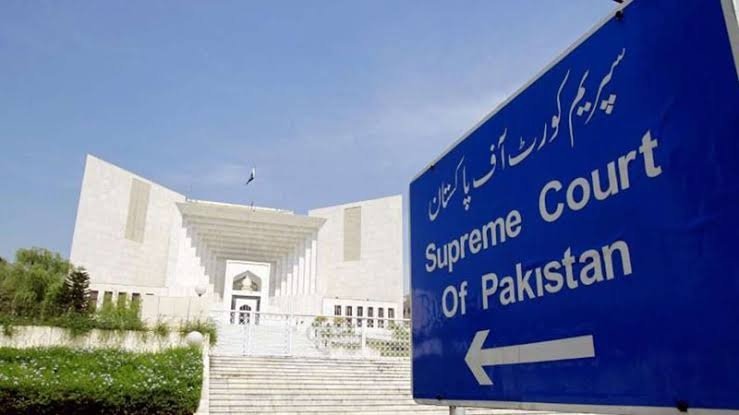
ISLAMABAD — The Supreme Court of Pakistan has clarified that the mere presence of a pending case in a higher court does not constitute sufficient grounds to halt or delay proceedings in a trial court unless an explicit stay order has been issued. This ruling emphasizes the necessity for remanded cases to be resolved promptly and without unwarranted postponements.
What Happened
The Supreme Court’s recent decision addresses a critical procedural issue in the judicial process, underscoring that the pendency of a case in a higher court should not automatically impede the progress of related proceedings in a trial court. The Court highlighted that only a formal stay order from the higher court can justify such a halt. This ruling was made to ensure that the judicial process remains efficient and that cases are adjudicated within a reasonable timeframe.
In its detailed judgment, the Supreme Court noted, “The mere pendency of a case before a higher court cannot justify stopping or delaying proceedings before a trial court in the absence of an explicit stay order.” The Court further stressed the importance of resolving remanded cases without unnecessary adjournments, thereby promoting judicial efficiency and reducing backlog.
This decision comes in the wake of numerous instances where trial courts have delayed proceedings due to pending appeals or related cases in higher courts, often leading to prolonged litigation and justice delayed for the parties involved.
Background
The judicial system in Pakistan, like in many other countries, operates on a hierarchical structure where higher courts have the authority to review decisions made by lower courts. Historically, the pendency of a case in a higher court has often been used as a rationale to delay proceedings in trial courts, contributing to significant backlogs and delays in the judicial process.
In recent years, the Supreme Court has taken several steps to address these delays, including the issuance of directives aimed at expediting the resolution of cases and reducing the number of pending cases. This latest ruling is part of a broader effort to streamline judicial procedures and enhance the efficiency of the court system.
Why It Matters
The Supreme Court’s ruling is significant for several reasons. Firstly, it reinforces the principle that justice delayed is justice denied, and aims to ensure that cases are resolved in a timely manner. This is crucial in a country like Pakistan, where the judicial system is often criticized for its slow pace and inefficiencies.
Economically, prolonged legal proceedings can be costly for individuals and businesses, leading to increased legal fees and uncertainty. By ensuring that trial courts proceed with cases unless a stay order is issued, the Supreme Court’s decision can help reduce these costs and provide more predictable legal outcomes.
Socially, the ruling has implications for the public’s trust in the judicial system. When cases are resolved efficiently, it enhances the perception of the judiciary as a fair and effective arbiter of justice. This can lead to greater public confidence in legal institutions, which is essential for maintaining the rule of law.
Politically, the decision may also have implications for high-profile cases involving political figures, where delays are often perceived as tactics to avoid accountability. By clarifying that proceedings should not be halted without a stay order, the Supreme Court is sending a message that the judicial process should not be manipulated for political gain.
Key Takeaways
- The Supreme Court ruled that pending cases in higher courts do not justify halting trial court proceedings without a stay order.
- This decision aims to reduce judicial delays and ensure timely resolution of cases.
- The ruling is part of broader efforts to improve efficiency and reduce backlogs in the judicial system.
- It has significant economic, social, and political implications, enhancing trust in the judiciary.
- The decision reinforces the principle that justice delayed is justice denied.
Source Attribution
This article is based on official government statements, press releases, and public communications from relevant authorities.














