
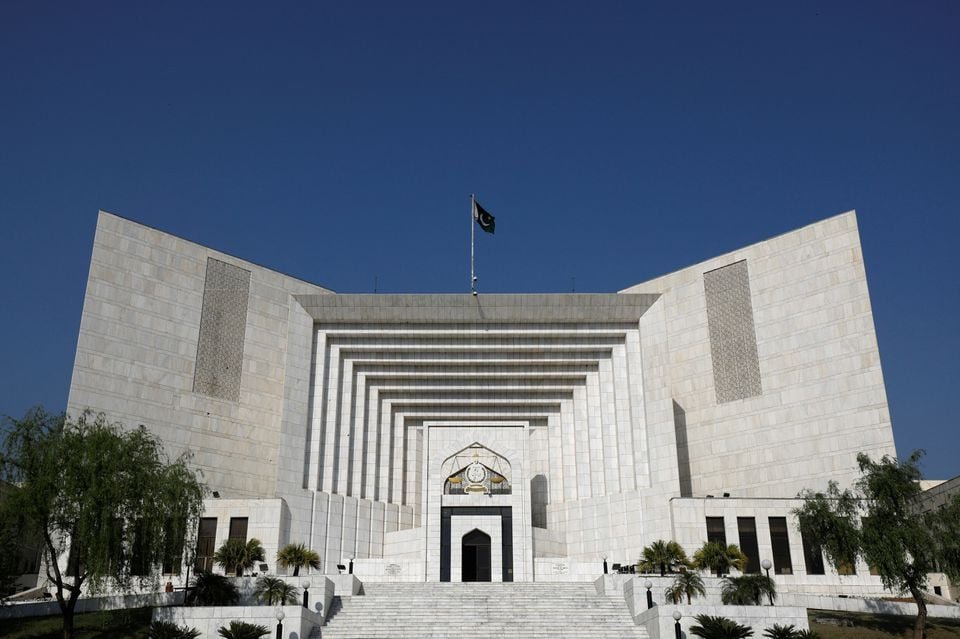
ISLAMABAD — The Supreme Court of Pakistan has delivered a verdict favoring the Federal Board of Revenue (FBR) by rejecting claims for input tax adjustments on construction materials. The decision, announced on Monday, pertains to materials such as cement and steel used in the construction of factories and other immovable structures, which the court found inadmissible under the Sales Tax Act, 1990.
What Happened
The Supreme Court’s ruling addressed the contentious issue of whether businesses could claim input tax adjustments for construction materials under the existing tax legislation. The court concluded that such claims do not align with the provisions of the Sales Tax Act, 1990. The judgment clarified that materials like cement and steel, integral to constructing immovable properties, are excluded from input tax adjustments.
This decision came after a thorough examination of the legal framework governing sales tax in Pakistan. The court emphasized that the primary intent of the Sales Tax Act is to allow input tax adjustments for goods and services directly linked to the production and sale of taxable goods. Since construction materials are used for creating fixed assets rather than producing goods for sale, they fall outside the scope of permissible adjustments.
The ruling has significant implications for businesses involved in construction and manufacturing, as it delineates the boundaries of tax claims related to construction materials. The FBR, which had previously contested the admissibility of such claims, welcomed the court’s decision as a reinforcement of the existing tax laws.
Background
The Sales Tax Act, 1990, serves as the foundational legal framework for sales tax in Pakistan. It outlines the conditions under which businesses can claim input tax adjustments, primarily focusing on goods and services directly related to the production process. Over the years, disputes have arisen regarding the interpretation of these provisions, particularly concerning construction materials.
Prior to this ruling, various businesses sought to leverage input tax adjustments for materials used in constructing factories and other immovable assets, arguing that these materials were essential to their operations. However, the FBR maintained that such claims were not permissible, leading to legal challenges that have now culminated in the Supreme Court’s definitive ruling.
Why It Matters
The Supreme Court’s decision holds significant economic and legal implications for Pakistan’s business community. By upholding the FBR’s interpretation of the Sales Tax Act, the ruling sets a precedent that could influence future tax-related disputes. Businesses involved in construction and manufacturing may need to reassess their financial strategies and tax planning to align with this interpretation.
Economically, the ruling could impact the cost structures of businesses that rely heavily on construction materials. Without the ability to claim input tax adjustments, these businesses might face increased operational costs, potentially affecting their pricing strategies and competitiveness in the market. This could have a ripple effect on the construction industry, influencing investment decisions and project feasibilities.
From a legal perspective, the ruling underscores the importance of adhering to the precise language of tax legislation. It highlights the judiciary’s role in interpreting complex tax laws and providing clarity on contentious issues. The decision also reinforces the FBR’s authority in administering tax laws, potentially strengthening its position in future disputes.
Key Takeaways
- The Supreme Court ruled against input tax adjustments for construction materials under the Sales Tax Act, 1990.
- The decision supports the FBR’s stance, clarifying the scope of admissible tax claims.
- Businesses may face increased costs due to the inability to claim adjustments on construction materials.
- The ruling sets a legal precedent that could influence future tax-related disputes.
- Economic implications include potential changes in pricing strategies and investment decisions in the construction sector.
Source Attribution
This article is based on official government statements, press releases, and public communications from relevant authorities.














