
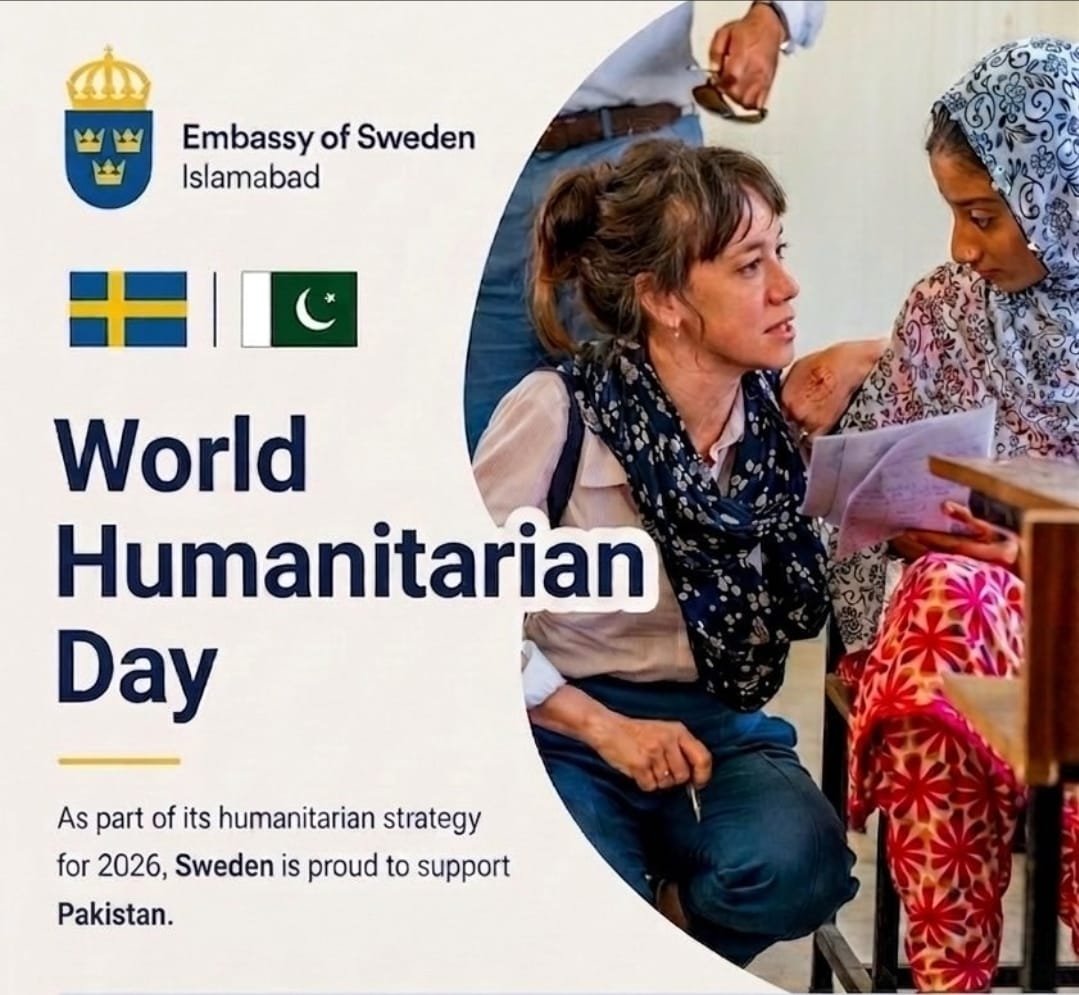
ISLAMABAD — On World Humanitarian Day, Sweden paid tribute to its local partners in Pakistan, acknowledging their tireless efforts to support those in need. The Swedish government emphasized its ongoing commitment to collaborative humanitarian efforts in the region.
What Happened
Sweden, recognized as one of the world’s largest humanitarian donors, celebrated World Humanitarian Day by honoring its local partners in Pakistan. These partners play a crucial role in delivering aid and support to vulnerable populations across the country. In a social media message, Alexandra Berg von Linde, the Ambassador of Sweden to Pakistan, highlighted the importance of collaboration with Pakistani communities and organizations that lead humanitarian responses.
“As one of the world’s largest humanitarian donors, we believe in working hand-in-hand with communities as leaders of their own future,” stated Ambassador Berg von Linde. She reaffirmed Sweden’s commitment to supporting locally-led initiatives in Pakistan, focusing on emergency relief, resilience, and sustainable development. The ambassador’s message underscored the critical role of local partners in ensuring that assistance reaches those who need it most, especially during emergencies.
World Humanitarian Day, observed annually on August 19, serves as a global recognition of aid workers and volunteers who deliver life-saving support in challenging circumstances. This year’s observance provided an opportunity for Sweden to highlight its partnerships in Pakistan, which are central to its humanitarian strategy in the region.
Background
World Humanitarian Day was established by the United Nations General Assembly in 2008 to honor the memory of the 22 humanitarian workers killed in the 2003 bombing of the United Nations headquarters in Baghdad, Iraq. Since then, it has grown into a global observance that recognizes the dedication and sacrifice of aid workers worldwide.
Sweden has a long-standing tradition of humanitarian aid, consistently ranking among the top donors globally. Its approach emphasizes collaboration with local communities and organizations to ensure that aid is effective and sustainable. In Pakistan, Sweden’s humanitarian efforts have focused on areas such as emergency relief, disaster risk reduction, and building community resilience against natural and man-made crises.
Why It Matters
The recognition of local partners by Sweden on World Humanitarian Day highlights the critical role of collaboration in effective humanitarian response. By working closely with local organizations, Sweden ensures that aid is not only timely but also culturally sensitive and relevant to the communities it serves. This approach enhances the resilience of local populations, enabling them to better withstand future crises.
In Pakistan, a country frequently affected by natural disasters such as floods and earthquakes, as well as ongoing socio-political challenges, the support of international partners like Sweden is vital. The focus on locally-led initiatives empowers communities to take charge of their development and disaster response strategies, fostering a sense of ownership and sustainability.
Moreover, Sweden’s commitment to humanitarian aid in Pakistan contributes to the broader international efforts to achieve the United Nations Sustainable Development Goals (SDGs), particularly those related to poverty alleviation, health, and education. By investing in local capacity building, Sweden helps to create a more resilient and self-reliant society, reducing the long-term dependency on external aid.
Key Takeaways
- Sweden honored its local humanitarian partners in Pakistan on World Humanitarian Day, emphasizing collaboration.
- Ambassador Alexandra Berg von Linde highlighted Sweden’s commitment to locally-led humanitarian efforts.
- World Humanitarian Day recognizes the contributions of aid workers globally, observed on August 19.
- Sweden is one of the largest humanitarian donors, focusing on emergency relief and sustainable development in Pakistan.
- Collaborative efforts with local partners enhance the effectiveness and sustainability of humanitarian aid.
Source Attribution
This article is based on official government statements, press releases, and public communications from relevant authorities.














