
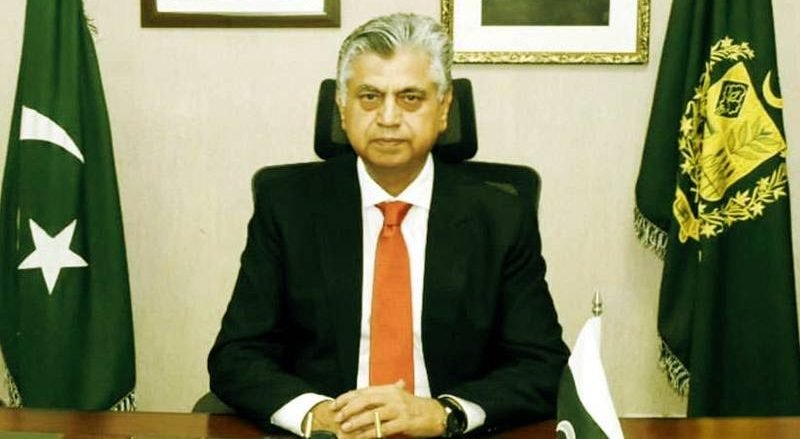
ISLAMABAD — Spokesperson to the President, Murtaza Solangi, has accused the Afghan Taliban regime of exporting terrorism into Pakistan through proxies. The statement was made on Saturday, highlighting concerns over regional security dynamics as Pakistan seeks to maintain peace both locally and globally.
What Happened
Murtaza Solangi, the spokesperson to the President of Pakistan, alleged that the Taliban regime in Afghanistan is actively involved in exporting terrorism into Pakistan. According to Solangi, this is being done through joint proxies, with purported collaboration from India. The statement comes at a time when Pakistan is engaged in efforts to secure peace in the region and beyond.
Solangi’s remarks underscore the ongoing tensions between Pakistan and Afghanistan, especially in the context of cross-border terrorism. “At a time when Pakistan is working to secure peace in the region and the world at large, the Afghan Taliban regime is busy exporting terrorism into Pakistan through its joint proxies in collaboration with India,” Solangi stated.
These allegations are significant as they reflect the complex geopolitical challenges faced by Pakistan, particularly in its relations with neighboring Afghanistan and India. The accusation also raises questions about the Taliban’s commitment to maintaining peace and stability in the region following their takeover of Afghanistan in August 2021.
Background
The relationship between Pakistan and Afghanistan has historically been fraught with tension, particularly concerning issues of terrorism and border security. Pakistan has frequently accused elements within Afghanistan of harboring militants who launch attacks across the border. The Taliban’s return to power in Afghanistan has further complicated these dynamics.
Since the Taliban’s takeover, there have been numerous reports of increased militant activity along the Pakistan-Afghanistan border. The Durand Line, the border between the two countries, has been a longstanding point of contention, with both sides accusing the other of not doing enough to curb cross-border terrorism.
India’s involvement in Afghanistan, particularly its diplomatic and developmental activities, has also been a point of concern for Pakistan, which views India’s presence as a strategic threat. The allegations of collaboration between the Taliban and India in exporting terrorism into Pakistan add another layer of complexity to the regional security situation.
Why It Matters
The allegations made by Murtaza Solangi have significant implications for regional security and Pakistan’s foreign policy. If true, these claims could exacerbate tensions not only between Pakistan and Afghanistan but also between Pakistan and India. The situation could lead to increased military and diplomatic friction, potentially destabilizing an already volatile region.
For Pakistan, the threat of terrorism is a critical concern, impacting national security and economic stability. The country has been a victim of numerous terrorist attacks over the years, which have claimed thousands of lives and disrupted economic activities. The government’s efforts to combat terrorism are crucial for ensuring the safety of its citizens and fostering a conducive environment for economic growth.
Internationally, these developments could influence how global powers engage with the Taliban regime. Countries invested in Afghan stability may need to reassess their strategies if the Taliban is indeed involved in exporting terrorism. This could affect international aid, diplomatic recognition, and the broader geopolitical landscape in South Asia.
Key Takeaways
- Murtaza Solangi accuses the Afghan Taliban of exporting terrorism into Pakistan.
- Allegations include collaboration with India, complicating regional security dynamics.
- Pakistan’s efforts to secure peace are challenged by cross-border terrorism threats.
- The situation could impact Pakistan’s relations with both Afghanistan and India.
- International implications may affect global engagement with the Taliban regime.
Source Attribution
This article is based on official government statements and public communications from relevant authorities.














