
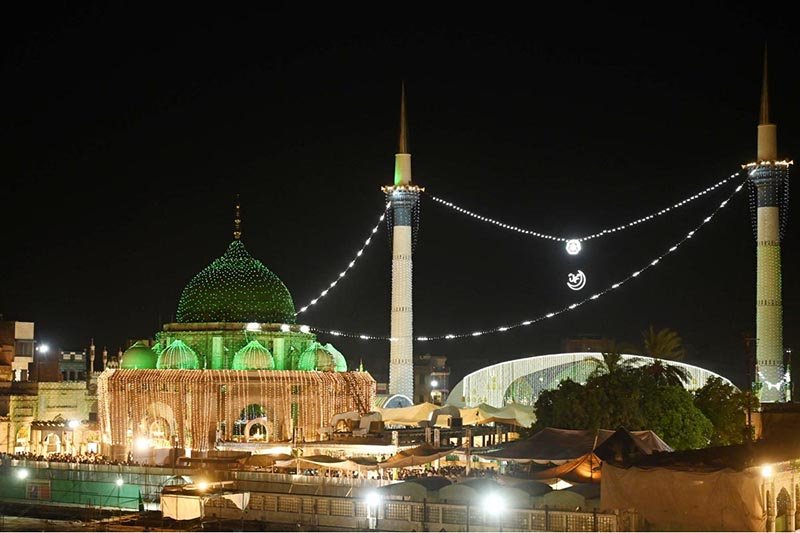
LAHORE — Thousands of devotees have gathered at the historic Data Darbar in Lahore to participate in the 983rd Urs celebration of the revered Sufi saint, Data Ali Hajveri, also known as Data Gunj Bakhsh. The three-day event, which began on October 25, 2023, features a series of religious and cultural activities, drawing attendees from across Pakistan and beyond.
What Happened
The Data Darbar complex, one of the largest Sufi shrines in South Asia, has been adorned with colorful lights and intricate decorations to mark the occasion. The Urs celebration commenced with the traditional ‘Chadar Poshi’ ceremony, where a ceremonial cloth was placed over the saint’s tomb. This act symbolizes respect and devotion to Data Ali Hajveri, who is venerated for his teachings and spiritual legacy.
Throughout the event, devotees participate in various rituals, including recitations of the Quran, Qawwali performances, and spiritual gatherings. The shrine’s courtyard is filled with the aroma of incense and the sound of hymns, creating an atmosphere of reverence and unity among attendees.
Security measures have been heightened to ensure the safety of participants, with local authorities deploying additional personnel to manage the large crowds. Traffic management plans have also been implemented to facilitate the movement of visitors to and from the shrine.
Speaking to the media, a representative from the shrine’s management committee emphasized the importance of the Urs as a time for spiritual reflection and communal harmony. “Data Gunj Bakhsh’s teachings continue to inspire millions, and this celebration is a testament to his enduring influence,” the representative stated.
Background
Data Ali Hajveri, born in the 11th century in Ghazni, Afghanistan, is one of the most prominent Sufi saints in the Islamic world. He migrated to Lahore, where he spent the latter part of his life preaching the principles of Sufism and spreading the message of love, tolerance, and peace. His teachings are compiled in the renowned book ‘Kashf al-Mahjub’, which remains a significant text in Sufi literature.
The Urs, an annual event commemorating the death anniversary of a Sufi saint, is a longstanding tradition in South Asian Islamic culture. It serves as a spiritual pilgrimage for many devotees, who seek blessings and spiritual guidance from the saint’s legacy.
Why It Matters
The Urs of Data Ali Hajveri is not only a religious event but also a cultural and social gathering that strengthens communal bonds. It provides an opportunity for people from diverse backgrounds to come together in a shared expression of faith and devotion. This gathering underscores the importance of Sufi traditions in promoting peace and tolerance in a region often marked by sectarian tensions.
Economically, the Urs attracts thousands of visitors to Lahore, boosting local businesses such as hotels, restaurants, and vendors selling religious artifacts. The influx of pilgrims contributes to the city’s economy, providing a temporary but significant increase in commercial activity.
Politically, the event highlights the role of Sufi shrines as centers of influence in Pakistan. They serve as platforms for promoting messages of unity and resilience, which are crucial in addressing the challenges faced by the country. The continued reverence for Sufi saints like Data Ali Hajveri reflects the deep-rooted cultural and spiritual heritage that shapes Pakistan’s identity.
Key Takeaways
- The 983rd Urs of Data Ali Hajveri is underway at Data Darbar in Lahore, attracting thousands of devotees.
- The event features traditional rituals, Qawwali performances, and heightened security measures.
- Data Ali Hajveri’s teachings emphasize love, tolerance, and peace, resonating with millions worldwide.
- The Urs boosts local economic activity and highlights the cultural significance of Sufi traditions in Pakistan.
- Sufi shrines continue to play a pivotal role in promoting unity and resilience in the region.
Source Attribution
This article is based on official government statements, press releases, and public communications from relevant authorities.














