
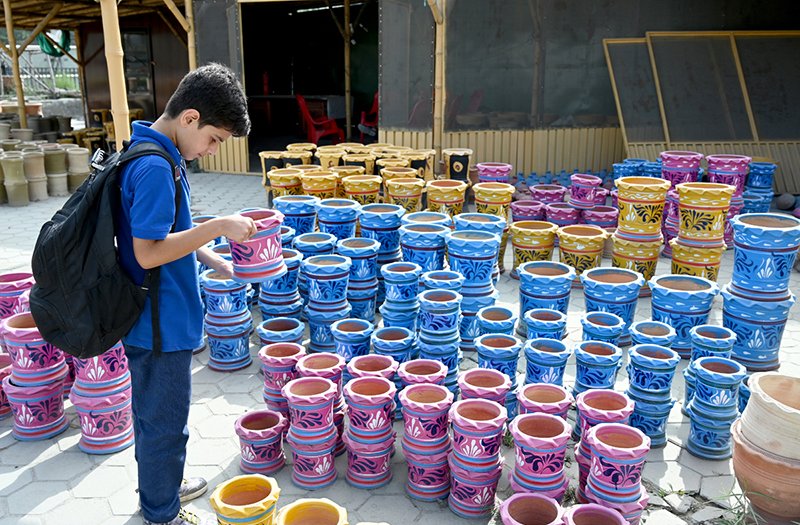
GILGIT — A vibrant display of traditional clay pots at a local pottery market in Gilgit has captured the interest of young visitors, reflecting a growing appreciation for cultural heritage among the youth. The market, known for its array of colorful and intricately designed pottery, is a testament to the rich artisanal traditions of the region.
What Happened
On August 21, a local pottery market in Gilgit became a center of attraction as a youngster was seen deeply engrossed in the vibrant display of traditional clay pots. These pots, crafted by skilled artisans, are renowned for their vivid colors and intricate designs that draw on centuries-old techniques. The market, bustling with activity, offered a glimpse into the cultural richness that the region is known for.
Artisans at the market expressed their delight at the interest shown by younger generations. “It’s encouraging to see young people taking an interest in our traditional crafts,” said Muhammad Ali, a local potter. “These pots are not just decorative items; they are a part of our history and identity.” The market serves as both a commercial hub and a cultural showcase, where artisans display their skills and sell their creations to locals and tourists alike.
The pottery on display includes a variety of items ranging from everyday kitchenware to decorative pieces, each telling a story of the region’s cultural and artistic heritage. The vibrant colors and unique patterns are achieved through traditional glazing techniques passed down through generations.
Background
The tradition of pottery in Gilgit and the broader Gilgit-Baltistan region has deep historical roots. Pottery has been a significant part of the local culture for centuries, with artisans using locally sourced clay to create functional and decorative items. The craft has been preserved through generations, with techniques and designs evolving over time while maintaining their traditional essence.
Historically, pottery was not only a craft but a necessity, providing essential household items. Over time, as industrial products became more prevalent, traditional pottery faced challenges in maintaining its relevance. However, recent years have seen a resurgence in interest, driven by both a desire to preserve cultural heritage and a growing market for artisanal goods.
Why It Matters
The renewed interest in traditional pottery among young people in Gilgit is significant for several reasons. Economically, it provides a boost to local artisans who rely on their craft for their livelihood. The market for traditional pottery is expanding, with both locals and tourists seeking unique, handmade items that reflect the cultural identity of the region.
Socially, the interest of younger generations in traditional crafts helps preserve cultural heritage. As globalization and modernization continue to influence lifestyles, maintaining a connection to traditional arts and crafts becomes crucial for cultural continuity. This interest ensures that the skills and knowledge of pottery-making are passed down, keeping the tradition alive for future generations.
Politically and internationally, the promotion of traditional crafts can enhance cultural diplomacy. By showcasing the unique cultural heritage of Gilgit-Baltistan, Pakistan can strengthen its cultural ties with other nations and promote a positive image on the global stage. Additionally, supporting traditional crafts aligns with sustainable development goals by promoting sustainable economic growth and cultural preservation.
Key Takeaways
- The pottery market in Gilgit showcases traditional clay pots, attracting interest from young visitors.
- Artisans express optimism as younger generations show appreciation for cultural heritage.
- The resurgence of interest in traditional crafts supports local economies and cultural preservation.
- Traditional pottery plays a role in cultural diplomacy and sustainable development.
- The market reflects the rich artisanal traditions of the Gilgit-Baltistan region.
Source Attribution
This article is based on official government statements, press releases, and public communications from relevant authorities.














