
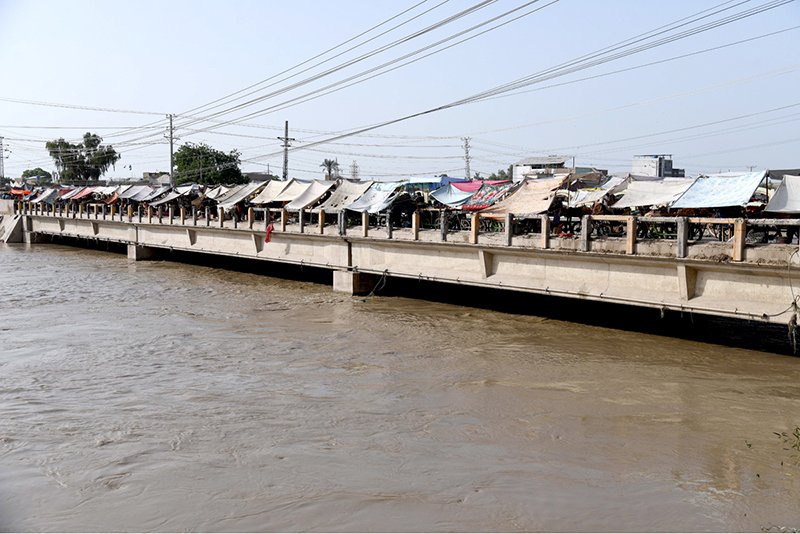
HYDERABAD — The flow of traffic on the bridge over the Rice Canal near the Old Bus Stand in Hyderabad is being significantly disrupted by a large number of handcarts parked under makeshift shades. Local authorities are being urged to take corrective measures to alleviate the congestion and restore normal traffic conditions.
What Happened
The bridge over the Rice Canal, a critical thoroughfare near the Old Bus Stand in Hyderabad, has become a hotspot for traffic congestion due to the presence of numerous handcarts. These carts, parked under temporary shades, are obstructing the smooth flow of vehicles, causing significant delays and frustration among commuters. The situation has persisted for several weeks, with no apparent action taken by the local authorities to address the issue.
Eyewitnesses report that the handcarts, which belong to local vendors, are stationed on the bridge throughout the day, particularly during peak traffic hours. The vendors have set up makeshift shades to protect their goods from the sun, inadvertently narrowing the available road space for vehicles. A local resident, Ahmed Khan, expressed his concern, stating, “The traffic jam on the bridge has become a daily ordeal. We urge the authorities to find a solution that accommodates both the vendors and the commuters.”
The congestion is not only causing delays but also poses safety risks, as emergency vehicles find it challenging to navigate the blocked roadway. The local traffic police have been notified of the situation, but as of now, no concrete steps have been taken to resolve the issue.
Background
The Rice Canal bridge is a vital link in Hyderabad’s transportation network, connecting various parts of the city and facilitating the movement of goods and people. The area around the Old Bus Stand is a bustling commercial hub, with numerous vendors relying on the foot traffic for their livelihood. Historically, the bridge has been a site of frequent traffic jams, particularly during market days when vendor activity peaks.
In the past, similar situations have arisen in other parts of the city, prompting temporary measures such as the relocation of vendors or the implementation of traffic management plans. However, these solutions have often been short-lived due to the lack of sustained enforcement and the economic dependence of vendors on their current locations.
Why It Matters
The ongoing obstruction on the Rice Canal bridge has significant implications for the local economy and the daily lives of residents. The vendors, who rely on their handcarts for income, are caught in a difficult position, as relocation could impact their earnings. Conversely, the persistent traffic jams hinder economic activities by delaying the transportation of goods and increasing fuel consumption for commuters.
From a social perspective, the situation highlights the challenges of urban planning in rapidly growing cities like Hyderabad. Balancing the needs of street vendors with those of commuters requires thoughtful policy-making and effective enforcement. The lack of action thus far raises questions about the responsiveness of local governance structures to the needs of their constituents.
On a broader scale, the traffic congestion on the bridge could have repercussions for the city’s reputation as a commercial center. Efficient transportation networks are crucial for attracting investment and fostering economic growth. If left unaddressed, such infrastructure issues could deter potential investors and affect the city’s long-term development prospects.
Key Takeaways
- The Rice Canal bridge in Hyderabad is experiencing severe traffic congestion due to parked handcarts.
- Local vendors have set up makeshift shades, narrowing the road space and causing delays.
- Authorities have yet to implement measures to resolve the obstruction and alleviate traffic.
- The situation underscores the need for balanced urban planning that considers both economic and commuter needs.
- Persistent traffic issues could impact Hyderabad’s economic growth and investment appeal.
Source Attribution
This article is based on official government statements, press releases, and public communications from relevant authorities.














