
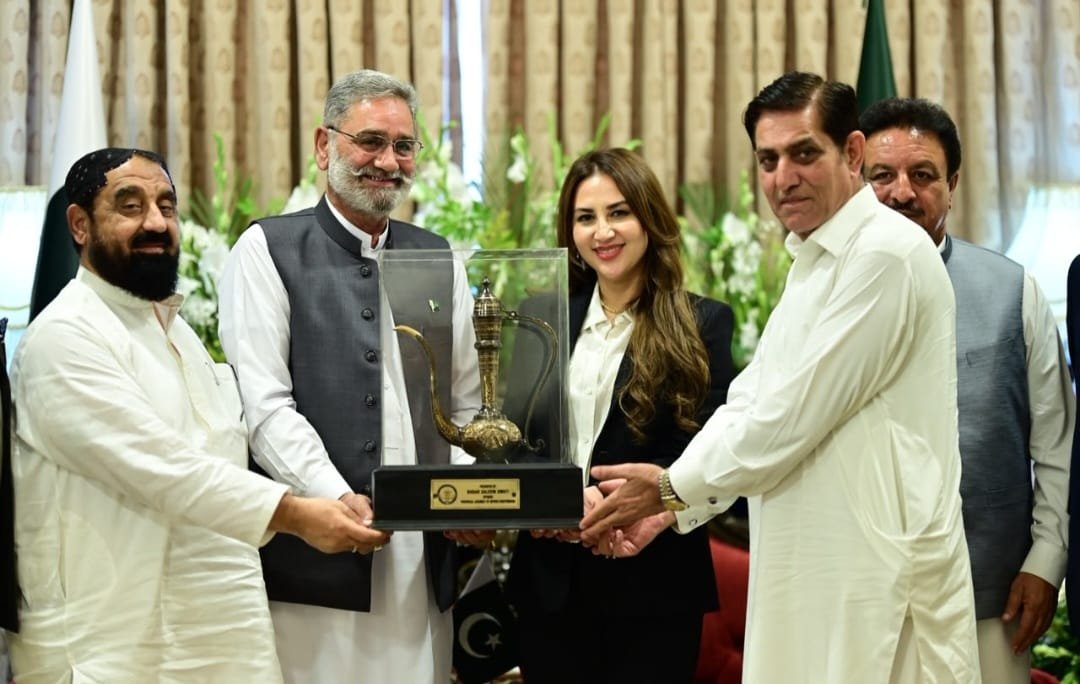
ISLAMABAD — The Chargé d’Affaires of the US Embassy, Natalie Baker, and US Consul General in Peshawar, Tom Eckert, engaged in discussions with Speaker of the Khyber Pakhtunkhwa Assembly, Babar Saleem Swati, and parliamentary leaders from Khyber Pakhtunkhwa (KP) at KP House in Islamabad. The meeting focused on enhancing cooperation in the fields of energy, minerals, and security.
What Happened
The meeting, held at KP House in Islamabad, was attended by key figures from both the United States and the Khyber Pakhtunkhwa region. Natalie Baker, the Chargé d’Affaires of the US Embassy, and Tom Eckert, the US Consul General in Peshawar, represented the United States. They were joined by Babar Saleem Swati, Speaker of the Khyber Pakhtunkhwa Assembly, and several parliamentary leaders from the region.
The discussions centered around potential areas of collaboration between the United States and KP, specifically in the sectors of energy, minerals, and security. The US delegation expressed interest in exploring opportunities to invest in KP’s rich mineral resources and to support the region’s energy infrastructure. Security cooperation was also a key topic, with both sides acknowledging the importance of maintaining stability in the region.
Speaker Swati highlighted the potential for growth in KP’s energy and mineral sectors, emphasizing the need for foreign investment and technological support. He also expressed gratitude for the US’s continued interest in fostering development in the region.
According to a statement from the US Embassy, the meeting was described as productive, with both parties agreeing to continue dialogue and explore specific projects that could benefit from US expertise and investment.
Background
Khyber Pakhtunkhwa, a province in northwestern Pakistan, is rich in natural resources, including minerals such as chromite, gypsum, and limestone. The region has been a focal point of development efforts due to its strategic location and resource potential. Historically, KP has faced challenges related to security and infrastructure, which have impacted its economic growth.
The United States has been a long-standing partner of Pakistan, providing aid and support in various sectors, including security, education, and economic development. The relationship between the US and KP has seen increased focus in recent years, particularly in areas that can bolster the region’s economic potential and stability.
Why It Matters
The discussions between US and KP leaders are significant for several reasons. Firstly, they highlight the ongoing interest of the United States in supporting Pakistan’s development, particularly in regions that have historically been underdeveloped. This cooperation could lead to increased foreign investment in KP, which is crucial for the province’s economic growth and job creation.
Secondly, the focus on energy and minerals aligns with Pakistan’s broader goals of enhancing its energy security and leveraging its natural resources for economic development. By collaborating with the US, KP can gain access to advanced technologies and expertise, which can help in the efficient extraction and management of its mineral resources.
Security cooperation is another critical aspect of the discussions. Given the strategic importance of KP in the context of regional stability, enhanced security collaboration with the US can help address challenges related to terrorism and cross-border threats, thereby contributing to a more stable environment conducive to economic development.
Key Takeaways
- The US and KP leadership discussed enhancing cooperation in energy, minerals, and security.
- The meeting took place at KP House in Islamabad, involving key leaders from both sides.
- Khyber Pakhtunkhwa’s rich mineral resources were a focal point of the discussions.
- Security cooperation was emphasized as essential for regional stability.
- The US expressed interest in investing in KP’s energy and mineral sectors.
Source Attribution
This article is based on official government statements, press releases, and public communications from relevant authorities.














