
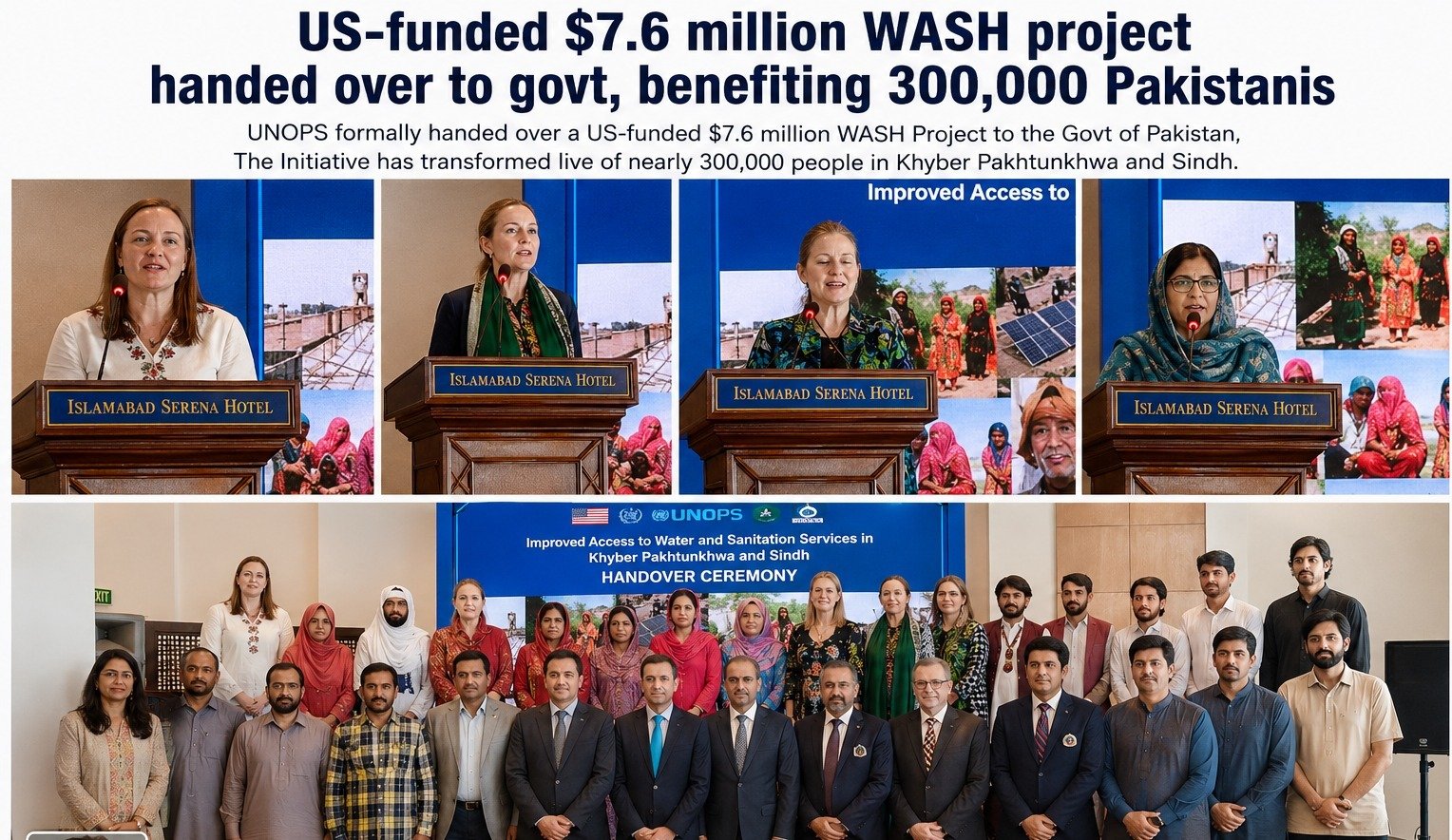
ISLAMABAD — The United Nations Office for Project Services (UNOPS) officially transferred a $7.6 million Water, Sanitation, and Hygiene (WASH) project to the Government of Pakistan on Thursday. This initiative, funded by the United States, has significantly improved access to essential services for nearly 300,000 people across the country.
What Happened
The WASH project, funded by the United States, was formally handed over to Pakistani authorities in a ceremony that underscored the successful collaboration between international and local entities. The project, valued at $7.6 million, has been pivotal in enhancing the availability of safe drinking water, adequate sanitation, and hygiene services, benefiting approximately 300,000 Pakistanis.
UNOPS, which managed the project, highlighted the transformative impact on communities that previously lacked access to these critical services. The initiative included the construction of water supply systems, sanitation facilities, and hygiene promotion activities in various regions. These efforts aimed to address long-standing challenges related to waterborne diseases and inadequate sanitation infrastructure.
During the handover ceremony, representatives from the United Nations, the United States, and the Government of Pakistan emphasized the importance of sustainable development and the role of international cooperation in achieving it. The project is expected to have lasting benefits, improving public health and quality of life for the communities involved.
Background
The WASH project is part of a broader international effort to improve water and sanitation infrastructure in developing countries. In Pakistan, access to clean water and proper sanitation has been a persistent challenge, particularly in rural and underserved urban areas. The lack of these basic services has contributed to health issues, including the spread of waterborne diseases.
Historically, Pakistan has faced difficulties in managing its water resources effectively. The country has experienced periods of drought, flooding, and water scarcity, which have compounded the challenges of providing reliable water and sanitation services. International partnerships, such as the one with the United States, have been crucial in addressing these issues and supporting Pakistan’s development goals.
Why It Matters
The successful completion and handover of the WASH project are significant for several reasons. Firstly, it demonstrates the impact of international aid and cooperation in addressing critical infrastructure gaps in Pakistan. By improving access to clean water and sanitation, the project directly contributes to better health outcomes and reduces the incidence of waterborne diseases, which are a major public health concern.
Economically, the project helps alleviate the burden on healthcare systems by reducing disease prevalence, allowing resources to be allocated more efficiently. Improved sanitation and hygiene also contribute to increased productivity, as healthier populations are better able to participate in economic activities.
Socially, the project empowers communities by providing them with the tools and knowledge to maintain their water and sanitation systems. This empowerment is crucial for ensuring the sustainability of the project’s benefits. Furthermore, access to clean water and sanitation is a fundamental human right, and this project represents a step towards fulfilling that right for more Pakistanis.
On an international level, the project highlights the importance of partnerships in achieving the United Nations Sustainable Development Goals (SDGs), particularly Goal 6, which aims to ensure availability and sustainable management of water and sanitation for all. The collaboration between the United States, UNOPS, and the Government of Pakistan serves as a model for similar initiatives in other regions.
Key Takeaways
- The $7.6 million WASH project was funded by the United States and managed by UNOPS.
- Approximately 300,000 Pakistanis have benefited from improved water, sanitation, and hygiene services.
- The project addresses critical health issues by reducing the prevalence of waterborne diseases.
- It highlights the importance of international cooperation in achieving sustainable development goals.
- The initiative serves as a model for future projects aiming to improve basic infrastructure in developing countries.
Source Attribution
This article is based on official government statements, press releases, and public communications from relevant authorities.














