
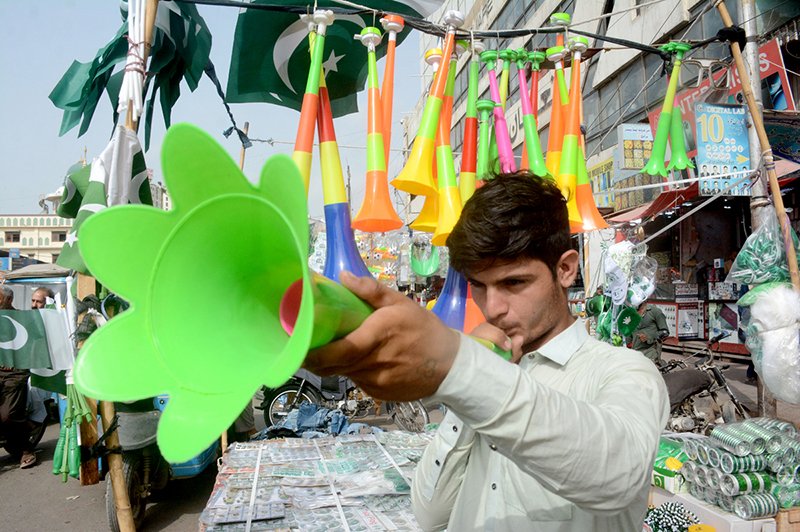
KARACHI — A vendor in Saddar market continues to sell pressure horns despite a ban imposed by authorities during the Independence Day celebrations. The ban aims to reduce noise pollution and maintain public order during the festivities.
What Happened
In the bustling Saddar market of Karachi, a vendor was observed displaying and selling pressure horns along the roadside, defying a ban implemented by local authorities. The restriction on pressure horns was part of a broader initiative to curb noise pollution and ensure a peaceful environment during the Independence Day celebrations, which are marked by large gatherings and public events.
The vendor’s actions have raised concerns among citizens and law enforcement agencies, as the use of pressure horns is known to contribute significantly to noise pollution in urban areas. Despite the clear directives issued by the authorities, the vendor continued to operate openly, attracting customers with the loud and disruptive sound of the horns.
According to eyewitnesses, the vendor appeared unfazed by the potential repercussions of violating the ban. “We have been instructed to avoid using pressure horns to maintain peace, but some people just don’t care,” said a local resident who wished to remain anonymous. The authorities have yet to take action against the vendor, but local law enforcement has been alerted to the situation.
Background
The ban on pressure horns during Independence Day celebrations is part of a longstanding effort by the government to address noise pollution in major cities across Pakistan. Noise pollution has been identified as a significant environmental issue, impacting the health and well-being of citizens. In recent years, the government has introduced various measures to reduce noise levels, including restrictions on the use of pressure horns, particularly in densely populated areas.
Independence Day, celebrated on August 14, is a significant national holiday in Pakistan, marked by patriotic displays, public gatherings, and various cultural events. In anticipation of these celebrations, authorities often implement temporary bans on activities that could disrupt public peace, such as the use of pressure horns, to ensure a safe and enjoyable environment for all participants.
Why It Matters
The continued sale and use of pressure horns, despite an official ban, underscores the challenges faced by authorities in enforcing regulations aimed at reducing noise pollution. Noise pollution is not only a nuisance but also a public health concern, linked to increased stress levels, sleep disturbances, and other health issues.
For the residents of Karachi, particularly those living near busy markets like Saddar, the presence of pressure horns exacerbates an already noisy environment. This situation highlights the need for more effective enforcement of noise pollution regulations and greater public awareness about the health impacts of noise pollution.
Economically, the sale of pressure horns represents a small but persistent market that thrives on the demand for loud, attention-grabbing devices. Vendors like the one in Saddar market capitalize on this demand, often at the expense of public health and safety regulations.
Politically, the issue reflects broader governance challenges in Pakistan, where regulatory enforcement often falls short due to limited resources and competing priorities. The ability of local authorities to enforce such bans effectively is crucial for maintaining public order and ensuring compliance with environmental standards.
Key Takeaways
- A vendor in Saddar market, Karachi, was found selling pressure horns despite a ban during Independence Day celebrations.
- The ban aims to reduce noise pollution and maintain public order during the festivities.
- Noise pollution is a significant environmental and public health issue in urban areas of Pakistan.
- Effective enforcement of noise regulations remains a challenge for local authorities.
- The situation highlights the need for increased public awareness and regulatory compliance.
Source Attribution
This article is based on official government statements, press releases, and public communications from relevant authorities.














