
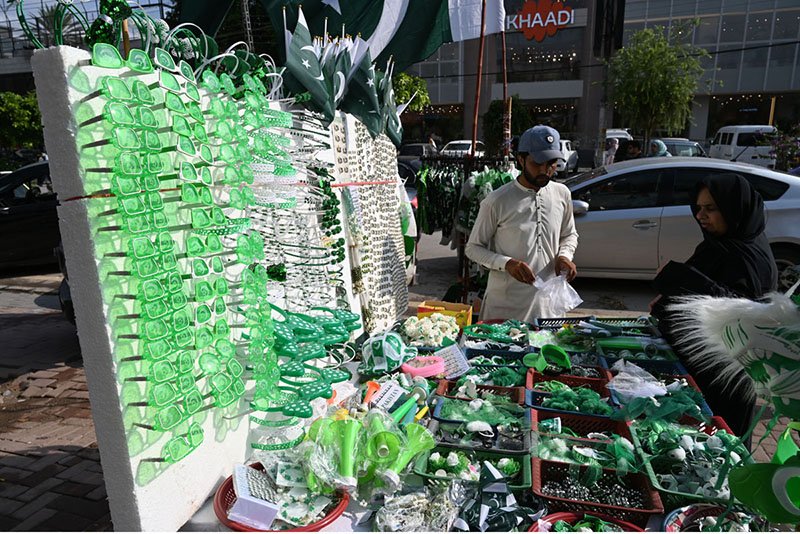
ISLAMABAD — As Pakistan prepares to celebrate its Independence Day, vendors across the country have set up stalls showcasing a variety of patriotic merchandise. Near the bustling Commercial Market, a vendor has displayed an array of Pakistani flags, badges, headbands, and other Jashn-e-Azadi items, attracting numerous shoppers eager to partake in the festivities.
What Happened
In anticipation of the upcoming Independence Day on August 14, vendors have begun to line the streets with stalls filled with nationalistic items. One such vendor, located near the Commercial Market, has become a focal point for shoppers looking to purchase celebratory goods. The stall offers a wide range of items, including flags of various sizes, badges emblazoned with the national emblem, and headbands in the country’s green and white colors.
The vendor, who has been participating in this seasonal trade for several years, expressed optimism about the sales this year. “Every year, we see a surge in demand as Independence Day approaches,” the vendor stated. “People are eager to show their patriotism, and these items help them do just that.” The festive atmosphere is palpable, with families and individuals browsing through the merchandise, selecting items that best express their national pride.
The display of patriotic merchandise is not limited to this particular stall. Across the country, similar scenes are unfolding as vendors capitalize on the public’s enthusiasm for the national holiday. The streets are awash with the colors of the Pakistani flag, and the air is filled with a sense of anticipation and celebration.
Background
Pakistan’s Independence Day, celebrated annually on August 14, marks the country’s liberation from British rule in 1947. It is a day of national pride and reflection, commemorated with various events, including flag-hoisting ceremonies, parades, and cultural performances. The day is also marked by the decoration of homes, streets, and public spaces with national symbols and colors.
The tradition of selling patriotic merchandise in the lead-up to Independence Day has become an integral part of the celebrations. Vendors across the country set up temporary stalls to cater to the demand for flags, badges, and other items that allow citizens to express their patriotism. This seasonal trade provides a boost to local economies, with many vendors relying on the increased sales to support their livelihoods.
Why It Matters
The sale of Independence Day merchandise is more than just a commercial activity; it is a reflection of the deep-seated patriotism that resonates with Pakistanis across the nation. The annual celebration serves as a reminder of the country’s hard-won independence and the sacrifices made by its founders. For many, purchasing and displaying these items is a way to honor that legacy and express their national pride.
Economically, the surge in demand for patriotic merchandise provides a temporary boost to local vendors and small businesses. Many vendors rely on this seasonal trade to supplement their income, making it a vital part of their economic well-being. The increased sales during this period can have a ripple effect, benefiting other sectors such as transportation and manufacturing, which supply the materials for these goods.
Socially, the widespread display of national symbols fosters a sense of unity and collective identity among citizens. It brings together people from diverse backgrounds, united by their shared love for the country. This unity is particularly significant in times of political or economic uncertainty, serving as a reminder of the common values and aspirations that bind the nation together.
Key Takeaways
- Vendors across Pakistan are setting up stalls with patriotic merchandise ahead of Independence Day.
- The sale of flags, badges, and headbands reflects the public’s enthusiasm for the national holiday.
- Independence Day commemorates Pakistan’s liberation from British rule in 1947.
- The seasonal trade provides an economic boost to local vendors and small businesses.
- The display of national symbols fosters unity and a shared sense of identity among citizens.
Source Attribution
This article is based on official government statements, press releases, and public communications from relevant authorities.














