
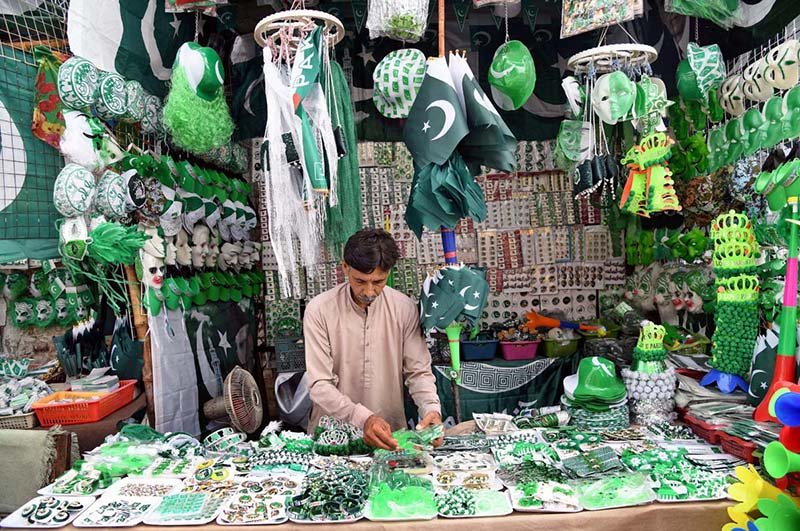
ISLAMABAD — As Pakistan prepares to celebrate its 79th Independence Day on August 14, vendors across the country are displaying national flags and various patriotic items to attract customers. The vibrant display of green and white symbolizes the nation’s pride and unity as citizens gear up for the annual festivities.
What Happened
In the lead-up to the Independence Day celebrations, vendors in major cities like Karachi, Lahore, and Islamabad have set up stalls showcasing a wide array of patriotic merchandise. These include national flags, badges, bunting, and clothing adorned with the national colors. The streets are bustling with activity as people of all ages flock to these stalls to purchase items that express their national pride.
One vendor in Lahore, Muhammad Ali, shared, “Every year, we see an increase in demand for flags and badges as Independence Day approaches. It’s a time when people come together to celebrate the spirit of Pakistan.” Ali, who has been selling Independence Day items for over a decade, noted that despite economic challenges, the enthusiasm among citizens remains high.
In Karachi, vendors have reported a similar trend. “We have stocked a variety of items this year, from flags of different sizes to T-shirts with patriotic slogans,” said Ayesha Khan, a vendor in the Saddar area. “People are eager to celebrate, and we are here to provide them with everything they need to make the day special.”
The government has also announced a series of events and activities to mark the occasion, including flag-hoisting ceremonies, parades, and cultural performances. These events are expected to draw large crowds, further boosting the demand for Independence Day merchandise.
Background
Pakistan gained independence from British rule on August 14, 1947. Since then, Independence Day has been celebrated annually with great fervor across the country. The day is marked by various activities, including official ceremonies, cultural events, and public gatherings. It serves as a reminder of the sacrifices made by the nation’s founders and the ongoing journey towards progress and prosperity.
In recent years, the celebrations have expanded to include digital and social media campaigns, where citizens share messages of patriotism and unity. The national flag, a symbol of Pakistan’s sovereignty and identity, plays a central role in these celebrations, with millions of flags being sold and displayed across the country.
Why It Matters
The celebration of Independence Day holds significant importance for Pakistanis, serving as a unifying force in a diverse nation. It provides an opportunity for citizens to reflect on their shared history and aspirations for the future. The day also highlights the resilience and spirit of the Pakistani people, who continue to strive for a better future despite various challenges.
Economically, the sale of Independence Day merchandise provides a boost to local businesses and vendors, many of whom rely on this seasonal demand for their livelihood. The increased economic activity during this period contributes to the local economy, providing a temporary uplift in sales and revenue for small businesses.
Socially, the celebrations foster a sense of community and national pride. Events and gatherings bring people together, transcending social and economic barriers. This sense of unity is particularly important in a country with diverse cultures and languages, as it reinforces the idea of a collective national identity.
Key Takeaways
- Vendors across Pakistan are displaying national flags and patriotic items ahead of the 79th Independence Day.
- Independence Day celebrations include official ceremonies, cultural events, and public gatherings.
- The day serves as a unifying force, fostering national pride and community spirit.
- Economic activity around Independence Day provides a boost to local vendors and businesses.
- The celebrations highlight the resilience and aspirations of the Pakistani people.
Source Attribution
This article is based on official government statements, press releases, and public communications from relevant authorities.














