
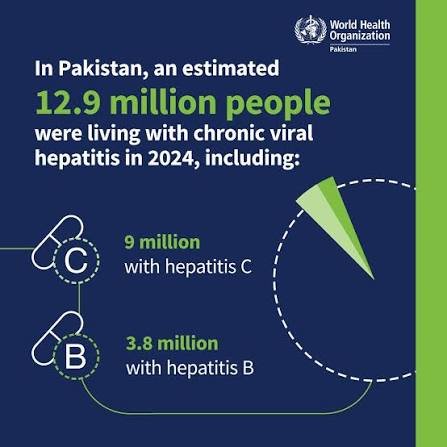
ISLAMABAD — The World Health Organization (WHO) has reported that approximately 12.9 million people in Pakistan are currently living with hepatitis. This announcement was made on World Hepatitis Day, as the WHO urged stakeholders to implement urgent, science-based measures to combat the disease and reiterated its support for Pakistan’s goal to eliminate hepatitis as a public health issue by 2030.
What Happened
On July 28, World Hepatitis Day, the WHO highlighted the significant burden of hepatitis in Pakistan, revealing that 12.9 million people are affected by the disease. The WHO called for immediate action from all stakeholders, including government bodies, healthcare providers, and non-governmental organizations, to address this public health challenge. The organization emphasized the need for science-based strategies to effectively manage and eventually eradicate hepatitis in Pakistan.
Hepatitis, a viral infection that primarily affects the liver, can lead to severe health complications if not treated properly. The WHO’s call to action is part of a broader initiative to eliminate hepatitis globally by 2030, a target set by the World Health Assembly in 2016. Dr. Tedros Adhanom Ghebreyesus, WHO Director-General, stated, “We must act now to address the hepatitis epidemic, which is a significant health threat in many countries, including Pakistan.”
The WHO’s report underscores the urgency of implementing comprehensive hepatitis prevention and treatment programs. This includes increasing public awareness, expanding access to diagnostic testing, and ensuring the availability of effective treatments. The organization also stressed the importance of vaccination programs, particularly for hepatitis B, which can prevent the disease from spreading.
Background
Hepatitis has been a persistent health issue in Pakistan, with both hepatitis B and C being prevalent. The country has faced challenges in controlling the spread of the virus due to factors such as inadequate healthcare infrastructure, limited public awareness, and insufficient access to medical care. In recent years, Pakistan has made efforts to tackle hepatitis through national programs aimed at increasing vaccination coverage and improving healthcare services.
The WHO has been a key partner in these efforts, providing technical assistance and resources to support Pakistan’s hepatitis control initiatives. The organization’s global strategy to eliminate hepatitis focuses on prevention, diagnosis, and treatment, with a particular emphasis on reaching vulnerable populations who are at higher risk of infection.
Why It Matters
The prevalence of hepatitis in Pakistan has significant implications for the country’s public health system and its population. Hepatitis can lead to chronic liver disease, cirrhosis, and liver cancer, all of which pose serious health risks and can result in high mortality rates. The economic impact is also considerable, as the disease can lead to increased healthcare costs and loss of productivity due to illness.
Addressing the hepatitis epidemic is crucial for improving the overall health and well-being of Pakistan’s citizens. Effective management and prevention strategies can reduce the burden of the disease, improve quality of life, and contribute to the country’s development goals. Moreover, achieving the WHO’s target of eliminating hepatitis by 2030 would represent a major public health victory for Pakistan and demonstrate the effectiveness of coordinated global health efforts.
Internationally, Pakistan’s success in combating hepatitis could serve as a model for other countries facing similar challenges. By sharing best practices and lessons learned, Pakistan can contribute to the global fight against hepatitis and help accelerate progress towards the elimination of the disease worldwide.
Key Takeaways
- The WHO reports 12.9 million people in Pakistan are living with hepatitis.
- Urgent, science-based action is needed to combat hepatitis in the country.
- Hepatitis poses significant health and economic challenges for Pakistan.
- Eliminating hepatitis by 2030 is a key public health goal for Pakistan.
- Pakistan’s efforts could serve as a model for global hepatitis eradication.
Source Attribution
This article is based on official statements and public communications from the World Health Organization and relevant authorities.














