
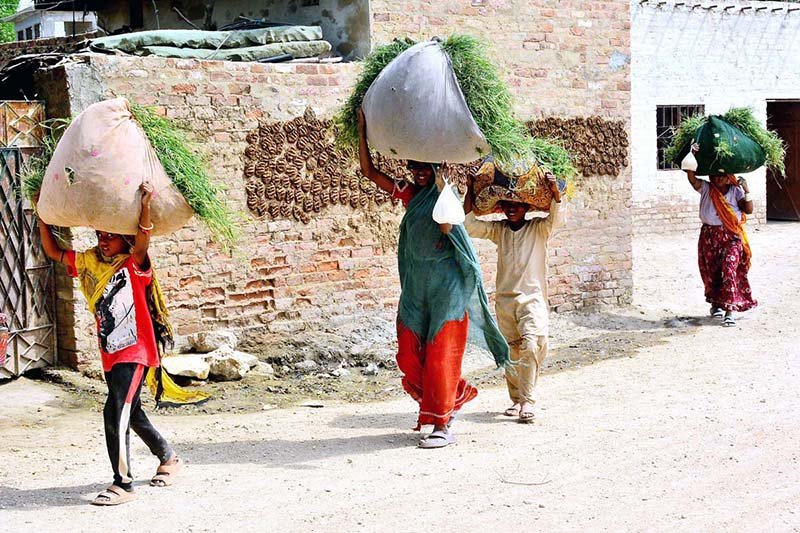
HYDERABAD — In the bustling locality of Latifabad Unit No. 4, women can be seen carrying bundles of grass on their heads, a testament to their daily toil in the fields. This scene, captured recently, underscores the ongoing agricultural activities in the region, where women play a crucial role in sustaining local economies.
What Happened
The sight of women balancing hefty bundles of grass on their heads is a common one in Latifabad, a neighborhood in Hyderabad known for its vibrant community and agricultural activities. These women, after cutting the grass from the fields, transport it manually, showcasing their strength and resilience. The grass is typically used for feeding livestock, a vital component of rural livelihoods.
Latifabad Unit No. 4, with its sprawling fields, provides an essential resource for local families who depend on agriculture and livestock for their sustenance. The women involved in this labor-intensive task often start their day early, navigating the fields to harvest grass, which is then used to feed cattle and other livestock. This practice not only supports their families but also contributes to the local agricultural economy.
According to local sources, the women of Latifabad have been engaged in these activities for generations, passing down skills and techniques that are vital for maintaining the productivity of their fields. The grass-cutting season is a particularly busy time, requiring coordinated efforts to ensure that enough fodder is collected to last through the year.
Background
Hyderabad, a city with a rich history and cultural heritage, has long been a hub for agricultural activities in Sindh province. Latifabad, one of its prominent areas, is known for its agricultural output, which includes crops such as wheat, rice, and sugarcane. The role of women in this sector is significant, as they often manage both household responsibilities and agricultural duties.
Historically, the agricultural sector in Pakistan has been a major contributor to the national economy, providing employment to a large portion of the population. In rural areas, women are often at the forefront of agricultural labor, involved in planting, harvesting, and processing agricultural products. Despite their contributions, they frequently face challenges such as limited access to resources, education, and healthcare.
Why It Matters
The image of women carrying grass in Latifabad highlights the broader socio-economic dynamics in rural Pakistan. Women in agriculture are pivotal to food security and economic stability, yet they often remain underrepresented in official statistics and policy discussions. Recognizing and supporting their contributions is crucial for sustainable development.
Economically, the labor of these women directly impacts the agricultural output of the region. By providing fodder for livestock, they help sustain the dairy and meat industries, which are vital components of the local and national economy. Socially, their work empowers them within their communities, fostering a sense of independence and resilience.
On an international level, the role of women in agriculture is increasingly being recognized as a key factor in achieving global food security. Initiatives aimed at improving the conditions for women in agriculture can lead to enhanced productivity and economic growth, aligning with global development goals.
Key Takeaways
- Women in Latifabad play a crucial role in the local agricultural economy by harvesting grass for livestock.
- The agricultural sector is a major contributor to Pakistan’s economy, with women at the forefront in rural areas.
- Despite their contributions, rural women face challenges such as limited access to resources and education.
- Supporting women in agriculture is essential for sustainable development and economic growth.
- International recognition of women’s roles in agriculture is vital for achieving global food security.
Source Attribution
This article is based on official government statements, press releases, and public communications from relevant authorities.














