
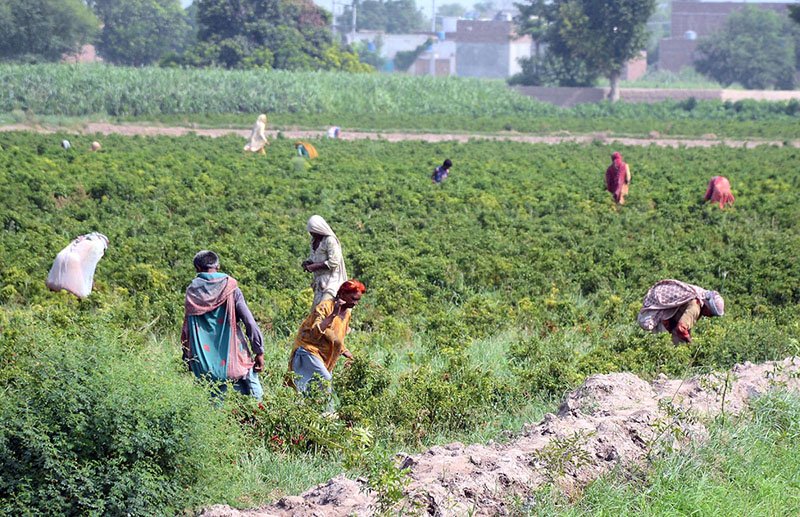
MULTAN — On the outskirts of Multan, women agricultural labourers are diligently harvesting ripe red chilies as the peak harvesting season reaches its zenith. This annual activity is crucial for the local economy, as chilies are a significant crop in the region, contributing to both domestic consumption and export.
What Happened
In the fields surrounding Multan, groups of women can be seen meticulously picking red chilies under the scorching sun. The harvest season, which typically spans from late July to early September, is a critical period for these labourers, many of whom rely on this work as their primary source of income. The women, often working in teams, carefully select and gather the chilies, ensuring that only the ripest are chosen to maintain quality standards.
According to local agricultural experts, the region’s climate and soil conditions are particularly conducive to chili cultivation, making it one of the largest chili-producing areas in Pakistan. The labour-intensive process involves not only picking but also sorting and drying the chilies, tasks predominantly carried out by women. These activities are essential to prepare the chilies for market, where they are sold both locally and internationally.
One of the labourers, Fatima Bibi, shared, “This work is tough, especially in the heat, but it is necessary for our families. We take pride in ensuring that the chilies we harvest are of the best quality.” The dedication of these women is evident as they work tirelessly to meet the demands of the season.
Background
Chili cultivation in Pakistan has a long history, with the country being one of the top producers globally. The crop is primarily grown in the provinces of Sindh and Punjab, with Multan being a key area due to its favorable agricultural conditions. Historically, chilies have been a staple in Pakistani cuisine, valued for their flavor and heat. The cultivation and harvesting of chilies have traditionally involved significant female participation, reflecting the broader role of women in the agricultural sector.
In recent years, the government has implemented various initiatives to support agricultural workers, including training programs aimed at improving harvesting techniques and increasing productivity. Despite these efforts, challenges such as climate change, water scarcity, and market fluctuations continue to affect the sector.
Why It Matters
The chili harvest in Multan is not just an agricultural event but a vital economic activity that impacts the livelihoods of thousands of families. The income generated from chili farming supports local communities and contributes to the national economy. Furthermore, the export of chilies provides foreign exchange earnings, which are crucial for Pakistan’s balance of payments.
Socially, the involvement of women in the chili harvest highlights their significant yet often underappreciated role in agriculture. Empowering these women through better working conditions and fair wages can lead to improved economic outcomes for families and communities. Additionally, the success of the chili harvest can influence food security, as chilies are a key ingredient in many traditional dishes.
On an international level, maintaining high-quality standards in chili production can enhance Pakistan’s reputation in global markets, potentially leading to increased demand and better trade relationships. This, in turn, can stimulate further investment in the agricultural sector, driving innovation and growth.
Key Takeaways
- Women labourers are actively involved in the chili harvest on the outskirts of Multan.
- The chili harvest season is crucial for local and national economies, supporting livelihoods and generating export revenue.
- Chili cultivation has a long history in Pakistan, with Multan being a key production area.
- Empowering female agricultural workers can lead to improved economic and social outcomes.
- Maintaining quality standards in chili production is essential for enhancing Pakistan’s global trade relationships.
Source Attribution
This article is based on official government statements, press releases, and public communications from relevant authorities.














