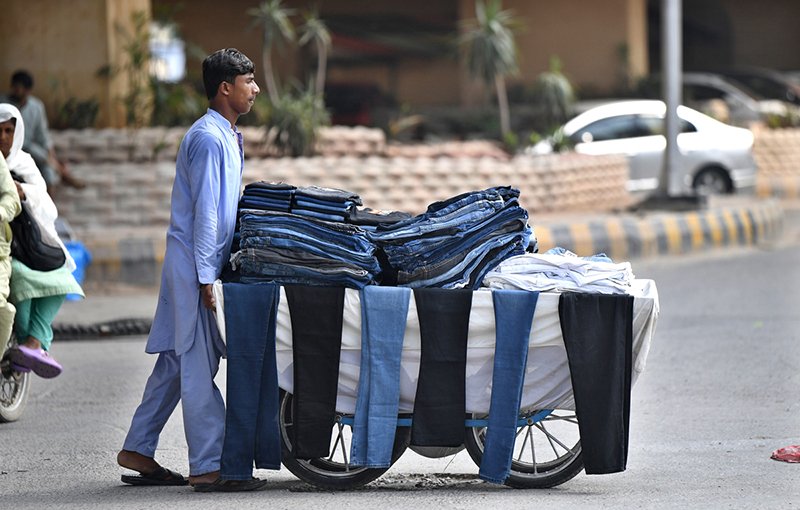
ISLAMABAD — A young vendor navigates the bustling streets of the twin cities, Islamabad and Rawalpindi, with a handcart brimming with second-hand jeans and trousers. As he maneuvers through the crowded roads, he strives to earn a livelihood amidst the challenges of urban life.
What Happened
The vendor, whose age is estimated to be in his early twenties, is a common sight on the busy roads connecting Islamabad and Rawalpindi. Each day, he pushes his handcart, laden with an assortment of second-hand clothing, predominantly jeans and trousers, hoping to attract customers among the throngs of pedestrians and commuters. His journey begins early in the morning and continues until dusk, as he attempts to make ends meet in a city where opportunities for unskilled laborers are limited.
According to local observers, the vendor’s presence is a testament to the resilience and entrepreneurial spirit of many young Pakistanis who face economic hardships. “It’s not easy, but I have to do this to support my family,” the vendor reportedly shared with passersby, highlighting the personal challenges he faces in his daily routine.
His route typically covers major commercial areas and residential neighborhoods, where he competes with other vendors and established shops. Despite the competition, his mobile setup allows him to reach customers who might not have the time or means to visit larger markets.
Background
The practice of selling second-hand clothing is a longstanding tradition in Pakistan, often referred to as “Landa Bazaar.” These markets have historically provided affordable clothing options to the lower and middle-income segments of society. The availability of second-hand goods has grown over the years, driven by imports from Western countries and donations from charitable organizations.
In recent years, the economic situation in Pakistan has placed additional pressure on young entrepreneurs like this vendor. With rising inflation and unemployment rates, many individuals have turned to informal sectors to sustain themselves. The government has attempted various initiatives to support small businesses, but challenges remain, particularly for those operating without formal business licenses or premises.
Why It Matters
The presence of young vendors on the streets of Islamabad and Rawalpindi underscores the broader economic challenges facing Pakistan. With a significant portion of the population under the age of 30, youth unemployment remains a pressing issue. The informal economy, including street vending, serves as a critical outlet for many who cannot find formal employment.
Economically, the reliance on second-hand goods reflects the purchasing power constraints faced by many Pakistanis. As inflation continues to erode real incomes, affordable alternatives like second-hand clothing become increasingly important for everyday consumers. This trend also highlights the need for policy interventions that can create more sustainable job opportunities and support for small-scale entrepreneurs.
Socially, the story of this young vendor is a narrative of resilience and adaptability. It illustrates the lengths to which individuals will go to provide for their families, despite systemic economic challenges. This resilience is a key component of Pakistan’s social fabric, yet it also points to the necessity for improved economic policies that can offer more stable and secure livelihoods.
Key Takeaways
- A young vendor in Islamabad and Rawalpindi sells second-hand jeans and trousers to make a living.
- His efforts highlight the economic challenges faced by many young Pakistanis in the informal sector.
- The practice of selling second-hand clothing is rooted in tradition and provides affordable options for consumers.
- Youth unemployment and inflation are significant issues impacting the livelihoods of young entrepreneurs.
- There is a need for policy interventions to support small businesses and create sustainable job opportunities.
Source Attribution
This article is based on official government statements, press releases, and public communications from relevant authorities.