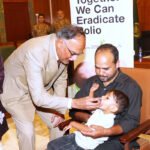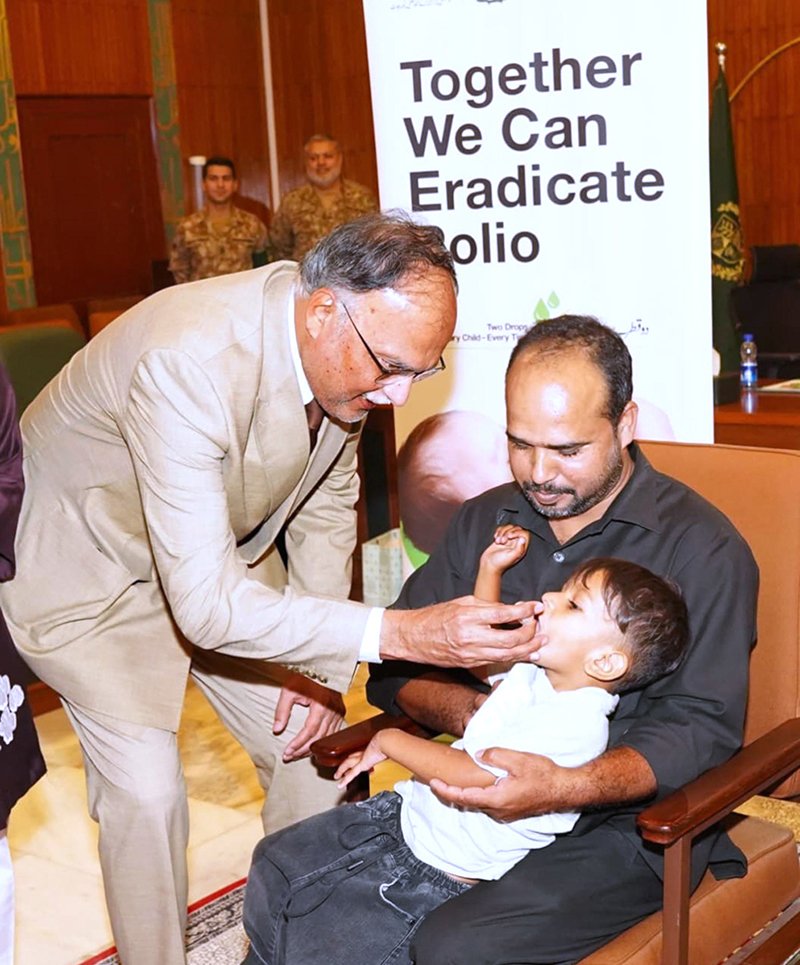
ISLAMABAD — Federal Minister for Planning, Development and Special Initiatives Ahsan Iqbal took a hands-on approach in the fight against polio by administering polio drops to a child during the Prime Minister’s Committee on the National Taskforce for Polio Eradication meeting. The meeting, chaired by Iqbal, was held to evaluate and enhance the strategies aimed at eradicating polio from Pakistan.
What Happened
The meeting of the Prime Minister’s Committee on the National Taskforce for Polio Eradication was convened in Islamabad, where Federal Minister Ahsan Iqbal emphasized the government’s commitment to eliminating polio. During the session, Iqbal personally administered polio drops to a child, symbolizing the hands-on approach and dedication of the government towards this public health challenge.
Iqbal addressed the attendees, including health officials and representatives from various partner organizations, highlighting the importance of coordinated efforts to combat polio. He stated, “The eradication of polio is a top priority for the government, and we are committed to ensuring that every child in Pakistan is vaccinated.” The meeting focused on assessing the current status of polio eradication initiatives and identifying areas for improvement.
The taskforce discussed various strategies to enhance the reach and effectiveness of polio vaccination campaigns, particularly in high-risk areas. The meeting also reviewed the progress made in the past year and set targets for the upcoming campaigns. The importance of community engagement and the role of local health workers were underscored as critical components of the eradication strategy.
Background
Polio has been a persistent public health challenge in Pakistan, with the country being one of the few in the world where the virus remains endemic. Despite significant progress in reducing the number of polio cases, sporadic outbreaks continue to occur, primarily due to gaps in vaccination coverage and challenges in reaching remote areas.
The National Taskforce for Polio Eradication was established to coordinate efforts across federal and provincial levels, involving both government and non-governmental organizations. The taskforce aims to implement comprehensive strategies to ensure complete immunization coverage and address obstacles such as misinformation and resistance to vaccination.
Why It Matters
The eradication of polio is not only a public health imperative but also a matter of national pride and international responsibility for Pakistan. Successfully eliminating polio would signify a major victory in public health, improving the country’s global standing and fulfilling its commitments to international health organizations.
Economically, eradicating polio would reduce the burden on the healthcare system, allowing resources to be redirected towards other pressing health issues. Socially, it would alleviate the stigma and fear associated with the disease, particularly in affected communities. The success of the polio eradication campaign could also serve as a model for addressing other public health challenges in Pakistan.
Internationally, Pakistan’s progress in polio eradication is closely monitored by global health organizations, and its success would contribute significantly to the global effort to eradicate the disease. The commitment demonstrated by leaders like Ahsan Iqbal is crucial in maintaining momentum and ensuring that the goal of a polio-free world is achieved.
Key Takeaways
- Federal Minister Ahsan Iqbal administered polio drops during a national taskforce meeting, highlighting government commitment.
- The meeting focused on enhancing strategies for polio eradication and reviewed past progress and future targets.
- Polio eradication remains a top priority for Pakistan, with significant implications for public health and international standing.
- Challenges such as vaccination coverage gaps and misinformation were addressed during the taskforce discussions.
- Successful eradication would improve Pakistan’s healthcare system and serve as a model for tackling other health challenges.
Source Attribution
This article is based on official government statements, press releases, and public communications from relevant authorities.