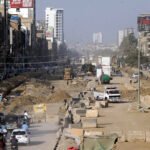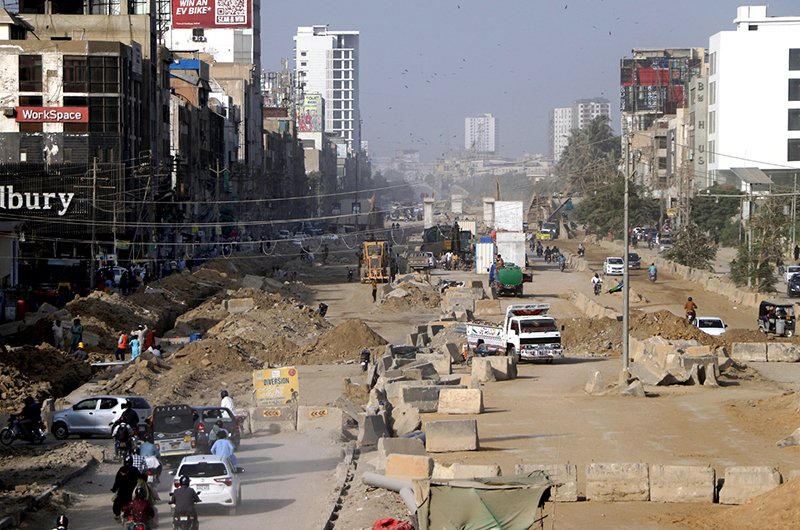
KARACHI — The development work on the Red Line Bus Rapid Transit (BRT) project is currently progressing along University Road in Karachi, with heavy machinery being deployed to expedite the construction process. The project, aimed at alleviating traffic congestion in the city, is a significant component of Karachi’s urban transport infrastructure plan.
What Happened
The Red Line BRT project, part of Karachi’s broader public transport strategy, has seen increased activity along University Road, a major thoroughfare in the provincial capital. Construction teams have been working tirelessly, utilizing heavy machinery to lay the groundwork for the BRT corridor. This phase of the project involves significant earth-moving operations, road widening, and the installation of necessary infrastructure to support the BRT system.
The project, which is expected to span approximately 29 kilometers, will connect Model Colony to Mazar-e-Quaid, passing through key areas such as Malir Halt, Numaish, and the University of Karachi. According to project officials, the Red Line BRT is designed to accommodate over 300,000 passengers daily, significantly easing the burden on Karachi’s existing public transport system.
“The Red Line BRT is a crucial development for Karachi, addressing both traffic congestion and environmental concerns by promoting the use of public transport,” stated a project spokesperson. The initiative is part of a larger effort to modernize Karachi’s transport network and improve urban mobility.
Background
The Red Line BRT project is one of several BRT initiatives under the Karachi Bus Rapid Transit System, which aims to provide efficient and reliable public transport across the city. The project is funded through a combination of federal and provincial government resources, with additional support from international financial institutions.
Historically, Karachi has struggled with inadequate public transport infrastructure, leading to severe traffic congestion and pollution. The introduction of BRT systems is seen as a sustainable solution to these challenges, offering a high-capacity, rapid transit option that reduces reliance on private vehicles.
Previous BRT projects in Karachi, such as the Green Line, have faced delays and operational challenges. However, lessons learned from these experiences are being applied to ensure the successful implementation of the Red Line.
Why It Matters
The Red Line BRT project is pivotal for Karachi, a city grappling with one of the highest urban population densities in the world. By providing a reliable mass transit option, the project aims to reduce traffic congestion, lower emissions, and improve air quality. This is particularly important in a city where vehicular emissions contribute significantly to pollution levels.
Economically, the project is expected to stimulate local businesses by improving access to commercial areas and reducing travel time for commuters. It also holds potential for job creation during the construction phase and future operations, contributing to the local economy.
Politically, the successful implementation of the Red Line BRT could bolster public confidence in government-led infrastructure projects, which have often been criticized for delays and inefficiencies. It represents a tangible step towards modernizing Karachi’s infrastructure, which is crucial for the city’s growth and development.
Internationally, the project aligns with global trends towards sustainable urban transport solutions, showcasing Pakistan’s commitment to addressing urban mobility challenges in line with environmental sustainability goals.
Key Takeaways
- The Red Line BRT project is actively progressing along University Road in Karachi.
- The project aims to connect key areas of Karachi, spanning approximately 29 kilometers.
- It is designed to accommodate over 300,000 passengers daily, easing traffic congestion.
- The initiative is part of a broader effort to modernize Karachi’s transport infrastructure.
- Successful implementation could enhance public confidence in government infrastructure projects.
Source Attribution
This article is based on official government statements, press releases, and public communications from relevant authorities.