Author name: nenagency

Pakistan

Government Reviews Sugar Availability and Pricing to Protect Consumers

ISLAMABAD, August 11, 2025 — Deputy Prime Minister and Foreign Minister Senator Mohammad Ishaq Dar chaired a high-level meeting to review sugar prices and availability across Pakistan. The primary aim was to safeguard consumer interests amid ongoing market concerns. Sugar Market Assessment by Federal Government Officials conducted a comprehensive assessment of sugar stock positions nationwide. They reviewed market supply levels and recent price trends impacting Pakistani consumers. Extensive data on sugar availability was provided by federal and provincial departments. This information helped officials understand supply chain dynamics and identify potential shortages early, aiming to prevent market disruptions. Deputy Prime Minister Dar emphasized the federal government’s commitment to maintaining price stability. Ensuring adequate supplies of essential commodities remains a top priority for the government. Emphasis on Consumer Protection Measures Protecting consumer interests is a core objective. Officials discussed proactive measures to prevent price manipulation and ensure fair market practices. Provincial departments will collaborate with federal authorities to closely monitor local market conditions. This collaboration addresses regional supply variations promptly, maintaining stable sugar prices across Pakistan. Strategic Policy Session with Key Officials The high-level meeting brought together key decision-makers from various ministries to develop effective monitoring strategies. Attendees included: Minister for National Food Security & Research (MNFSR) Special Assistant to the Prime Minister Tariq Bajwa Secretaries from MNFSR, Commerce, and Industries & Production Ministries Senior officials from federal and provincial departments This meeting underscores ongoing government efforts to monitor essential commodity markets. Regular reviews enable authorities to take timely actions, protecting Pakistani consumers from price volatility and ensuring food security nationwide.
Pakistan, Politics, Srcurity

PM Shehbaz Warns India Over Water Threats, Vows Decisive Response to Any Violation of Indus Waters Treaty

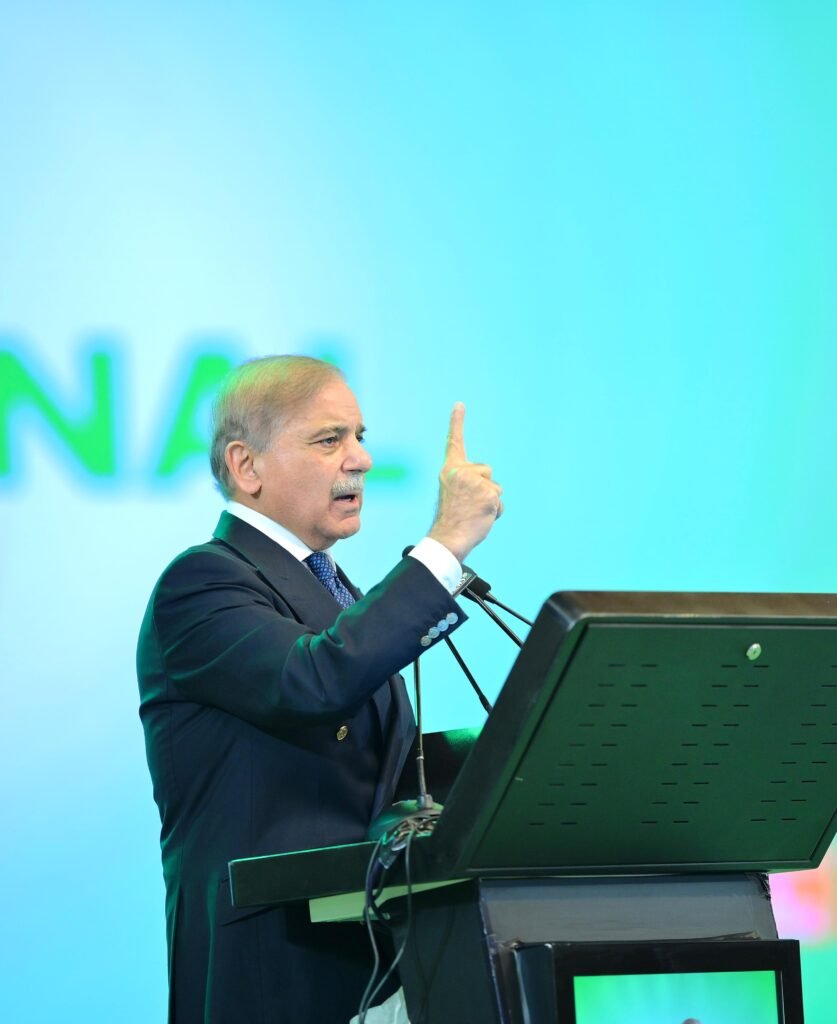
ISLAMABAD, Aug 12 — Prime Minister Shehbaz Sharif has issued a stern warning to India over potential threats to Pakistan’s water rights under the Indus Waters Treaty. He declared that any Indian attempt to block Pakistan’s water share will face a decisive counteraction. “You threaten to stop our water. If you attempt such a move, Pakistan will teach you a lesson you will never forget,” the premier stated at an event marking International Youth Day in Islamabad. Shehbaz Sharif emphasized the crucial role of water for Pakistan, insisting there would be no compromise on the country’s rights under international agreements. Pakistan’s Defense Readiness Reflecting on events from May 10, the prime minister mentioned that the Pakistan Air Force reportedly downed six Indian fighter jets. He hailed this as a historic moment that humbled India, showcasing the emergence of a “new Pakistan” prepared to defend itself. Student Laptop Initiative PM Shehbaz reaffirmed his commitment to youth empowerment by announcing the distribution of 100,000 interest-free laptops to students. He promised a transparent and merit-based process. “This government believes in transparency and merit. We will ensure both in the distribution process,” he assured. Support for Minorities The prime minister commended the contributions of minorities to Pakistan’s development. Minister for Religious Affairs Sardar Muhammad Yousaf announced the government’s dedication to equal rights, introducing a 5% job quota for minorities to promote interfaith harmony. The Indus Waters Treaty Explained Signed in 1960, the Indus Waters Treaty regulates water control over the Indus River and its tributaries between India and Pakistan. Despite ongoing tensions, the treaty provides a critical framework for water sharing. Recent disputes have sparked fears of violations, yet the agreement remains vital for Pakistan’s agriculture and drinking water supply.

Balochistan, Pakistan, Srcurity

Security Forces Eliminate Three Indian-Sponsored Militants in Balochistan’s Zhob: Interior Minister

ISLAMABAD, Aug 12 — Federal Interior Minister Mohsin Naqvi applauded the Pakistani security forces for their successful operation against Indian-sponsored militants in Balochistan’s Zhob district. He described this operation as a significant victory in combating cross-border terrorism. Operation in Zhob District The Interior Minister revealed that these militants, known as “Fitna-e-Hindustan,” were involved in efforts to destabilize Balochistan. They had direct connections to Indian support networks. Official reports showed that these militants were planning targeted attacks to incite unrest. However, quick intelligence gathering and decisive actions by security agencies thwarted the threat before it could escalate. Support for Security Forces Nationwide Naqvi praised the security personnel for their dedication and professional excellence. He remarked, “This operation has prevented a dangerous plot to disrupt peace in the province. The nation is united with our forces to eliminate Indian-sponsored terrorism.” Enhancing Federal Counter-Terrorism Strategy Minister Naqvi reiterated the government’s zero-tolerance approach towards terrorism. He underscored Pakistan’s strong commitment to fighting foreign-backed militancy with resolve. This successful operation in Balochistan highlights the capability of Pakistani security forces to address emerging threats. The minister reaffirmed the nationwide support for the armed forces’ mission to combat terrorism across the provinces.

Pakistan

PM Shehbaz: Equipping Youth with Modern Technology & AI is Govt’s Top Priority

ISLAMABAD, Aug 11 — Prime Minister Muhammad Shehbaz Sharif reaffirmed the government’s commitment to empowering Pakistan’s youth through expertise in modern technology and artificial intelligence (AI). This initiative is a top government priority. Shehbaz Sharif emphasized that equipping young people with advanced skills will allow them to compete effectively with global peers in a technology-driven economy. International Youth Day 2025 Message In his message for International Youth Day 2025, celebrated globally on August 12, Prime Minister Shehbaz Sharif highlighted Pakistan’s dedication to its youth. He described them as symbols of determination, courage, and resilience, recognizing them as key drivers of the nation’s economic progress and development. “Pakistan’s youth bring pride to the nation at home and abroad, contributing actively to diverse sectors of our economy through their skills, intelligence, and energy,” PM Shehbaz stated. Federal Youth Development Initiatives The prime minister outlined several national programs focusing on education, professional capacity, and skill development for young Pakistanis. These initiatives prepare youth for future technological challenges: National Artificial Intelligence Policy 2025 — enabling youth to integrate AI and emerging technologies across industries. Prime Minister’s Youth Skill Development Programme (PMYSDP) — training millions in market-relevant skills. Youth Business & Agricultural Loan Schemes — financing entrepreneurship and innovation in agriculture. Technical & IT Training — preparing youth for global job markets. Paid Internships & Education Loans — supporting students and fresh graduates in career growth. Youth’s Role in Social Services Prime Minister Shehbaz praised the volunteer spirit integral to Pakistan’s culture, highlighting the critical role young people play during emergencies, crises, and natural disasters. Programs like Uraan Pakistan foster community platforms for youth participation in local problem-solving, encouraging civic engagement and social responsibility. Future Vision for a Technology-Driven Pakistan Shehbaz Sharif urged federal and provincial governments, educators, parents, and community leaders to empower the younger generation. He stressed their role as custodians of Pakistan’s cultural, social, and religious values. The prime minister highlighted the importance of preparing youth to lead a prosperous, technology-driven future. Pakistan’s investment in youth technology and AI skills aims to position the nation competitively in the global digital economy.

Pakistan

President Zardari Vows to Safeguard Minority Rights and Promote Religious Harmony

ISLAMABAD, August 11, 2025 — President Asif Ali Zardari reaffirmed Pakistan’s unwavering commitment to the welfare and equal rights of minority communities. He described these groups as essential parts of the nation’s social fabric. National Minorities Day Celebration During the National Minorities Day ceremony at Aiwan-e-Sadr in Islamabad, President Zardari praised minority communities for their contributions to Pakistan’s strength and development. He assured that minority rights, freedoms, and safety are guaranteed under Pakistan’s Constitution, emphasizing that discrimination, extremism, or violence will not be tolerated. Federal Initiatives Supporting Minorities President Zardari highlighted several federal initiatives aimed at fostering inclusion and providing equal opportunities for minorities in Pakistan. These initiatives demonstrate the government’s dedication to minority rights and include: Reserved seats for non-Muslims in Parliament and Provincial Assemblies A 5% quota in federal and provincial government jobs for minorities Scholarships for minority students from primary to higher and professional education levels Recognition of National Minorities Day Leaders from various minority communities expressed appreciation to President Zardari for officially declaring August 11 as National Minorities Day during his first presidential tenure in 2009. This milestone is recognized for highlighting minority contributions and constitutional rights. Restoration of Worship Places President Zardari pledged to restore minority worship places currently under illegal occupation without delay. He directed the government to take prompt action, ensuring these properties are returned and religious freedom is upheld for all communities. Policy for Interfaith Harmony The National Policy for Interfaith Harmony aims to promote religious tolerance in Pakistan. It seeks to strengthen social unity and integrate all communities into a cohesive national identity. Citing the Charter of Madina and Quaid-e-Azam Muhammad Ali Jinnah’s vision, President Zardari emphasized Pakistan’s commitment to building an inclusive society where every citizen, regardless of religion, enjoys equal rights and opportunities. President Zardari urged the nation to strengthen unity and mutual respect, ensuring every citizen can meaningfully contribute to Pakistan’s shared future.

World

Ishaq Dar, Turkish FM Discuss Bilateral Ties and Gaza Crisis

ISLAMABAD, August 10, 2025 — Pakistan’s Deputy Prime Minister and Foreign Minister, Senator Mohammad Ishaq Dar, held a late-night phone conversation with Turkish Foreign Minister Hakan Fidan. The discussion focused on strengthening Pakistan-Turkey bilateral ties and addressing critical regional issues, particularly the Gaza crisis. Strategic Partnership Between Pakistan and Turkey Foreign Ministers Dar and Fidan reaffirmed the strong, historic ties between Pakistan and Turkey. They emphasized their dedication to enhancing collaboration across various strategic sectors. Key Areas of Bilateral Cooperation During their discussion, the ministers highlighted several priority areas for enhanced diplomatic coordination: Political cooperation and diplomatic engagement at international forums Economic partnerships and expansion of trade relations Defense sector collaboration and security cooperation They also addressed urgent international developments, focusing particularly on the worsening humanitarian situation in Gaza. Pakistan Condemns Israeli Military Operations in Gaza Foreign Minister Dar expressed significant concern over the escalating crisis in Gaza, condemning Israel’s reported plan for a complete military takeover of the region. He condemned Israeli actions as blatant violations of international law, citing breaches of several United Nations Security Council resolutions. Dar called on the international community to ensure unrestricted humanitarian access to Gaza’s besieged population and stressed the need for holding Israel accountable for its actions in Palestinian territories. Diplomatic Coordination on Gaza Crisis The ministers emphasized the urgent need for collective diplomatic efforts to counter Israeli impunity. They highlighted the importance of multilateral cooperation in pursuing lasting peace in the Middle East. Pakistan and Turkey agreed to maintain close coordination on the Gaza crisis at international forums, committing to collaborate on regional security challenges affecting the Muslim world. This strategic consultation highlights Pakistan’s proactive foreign policy on key international issues. The cooperation between Islamabad and Ankara showcases their shared commitment to addressing humanitarian crises and promoting regional stability through bilateral efforts.

Pakistan

Tarar Urges Unified National Front Against Indian Media Misinformation

ISLAMABAD, August 8 — Federal Minister for Information and Broadcasting Attaullah Tarar has condemned Indian media for spreading false narratives about Pakistan. He urged for a unified national front to counter disinformation campaigns targeting the country. National Assembly’s Response to Disinformation During a National Assembly session, Tarar lauded Parliament for its strong stance in Operation Bunyaan Marsus. Lawmakers showed collective support for Pakistan’s armed forces. Tarar dismissed claims made by Indian media about destroyed ‘ports’ in Lahore and Multan, pointing out the inaccuracy, as both cities are landlocked. Joint Efforts Against Misinformation Tarar highlighted the collaborative efforts of Pakistan’s Parliament, armed forces, and media in countering false claims. Government and opposition members have played pivotal roles in reinforcing Pakistan’s global position. The minister expressed gratitude to PPP Chairman Bilawal Bhutto Zardari and other leaders for defending Pakistan internationally. Challenges from AI-Driven Misinformation Tarar noted the growing challenges in combating misinformation due to artificial intelligence advancements, making the threat more complex and difficult to detect. Government Actions Against Fake News To strengthen efforts against disinformation, the federal minister announced several government initiatives: Launch of a Fact Checker Twitter handle for real-time verification Establishment of Pakistan’s first Digital Communication Department Implementation of the Fake News Buster program on PTV World Enhanced coordination among state-run media Media outlets like PBC, PTV, APP, and PID are actively identifying and countering fake news campaigns. Proposal for a Parliamentary Committee Tarar proposed creating a parliamentary committee to improve institutional coordination and devise strategies against disinformation targeting Pakistan. He called for active opposition participation, underlining that success should be credited to the National Assembly’s collective efforts. National Assembly Speaker Sardar Ayaz Sadiq assured lawmakers that the proposal would be forwarded to the relevant Ministry of Information committee for necessary action.

World

Modi Avoided Trump Meeting Fearing Encounter with Pakistan’s Army Chief: Report

In a surprising diplomatic development, Indian Prime Minister Narendra Modi reportedly avoided a meeting with former U.S. President Donald Trump. This decision occurred during the recent NATO summit events in Washington D.C. and was influenced by concerns over a potential encounter with Pakistan’s Chief of Army Staff, General Asim Munir. Strategic Diplomatic Avoidance According to a Bloomberg report, Indian officials anticipated General Munir’s presence at the event. Consequently, they advised Modi to skip the meeting to avoid a potentially tense situation. The Indian delegation’s discomfort with the possible simultaneous presence of both leaders led to this strategic cancellation. Intensifying Diplomatic Sensitivities The Bloomberg report highlights growing diplomatic sensitivities in South Asia, especially following Pakistan’s assertive international stance on Kashmir. Tensions along the Line of Control (LoC) continue to strain bilateral relations, extending diplomatic friction into global forums. Interpreting India’s Move While Indian sources cited scheduling conflicts as the reason for the cancellation, diplomatic analysts suggest a different perspective. They view it as a calculated political maneuver to avoid sharing international space with Pakistan’s top military leadership. Since General Asim Munir became COAS, he has gained significant visibility in international diplomacy, actively strengthening Pakistan’s military ties with key global players. Pakistan’s Military Diplomacy Expansion General Munir has forged strategic relationships with several major powers, including: The United States China Middle Eastern allies Geopolitical Implications for South Asia The situation raises critical questions about the future of India-Pakistan relations and the evolving power dynamics in South Asia. It illustrates how geopolitical considerations shape high-level diplomatic engagements. The NATO summit incident highlights the complex nature of bilateral relations between the two countries, showing how even indirect encounters at international forums can lead to diplomatic tension.

Business

Shehbaz Sharif Announces Bold Economic Recovery Plan 2025

Prime Minister Shehbaz Sharif announced Pakistan’s Economic Recovery Plan 2025 during a televised address on August 8, 2025. The comprehensive strategy targets financial stability and sustainable growth amid ongoing economic challenges. This plan presents a strategic blend of tax reforms, investment-friendly policies, and digital payment incentives to boost economic confidence and attract both local and international investors. “This plan is a roadmap to rebuild our economy on a solid foundation of fairness, technology, and transparency,” declared Shehbaz Sharif during his address. Key Features of the Economic Recovery Plan 2025 Tax Reform Package The government has implemented comprehensive tax reforms aimed at simplifying compliance and reducing business burdens. These reforms strive to create a transparent and efficient tax system that fosters investment. Simplifying tax filing for small and medium enterprises (SMEs) Reducing sales tax for digital enterprises to enhance technology use Introducing AI-powered audit systems to curb corruption and boost transparency Export Boosting Measures The plan supports Pakistan’s export competitiveness, particularly in the textile, agriculture, and IT sectors, to foster exports and revenue growth. Providing direct subsidies for textile, agriculture, and IT exports Fast-tracking loan approvals for export-oriented industries Establishing trade offices in the Gulf, China, and Central Asia to expand market access Digital Economy Promotion The recovery plan prioritizes digital payment infrastructure, recognizing the importance of financial digitization. It aims to modernize Pakistan’s banking sector and decrease cash dependency. Waiving transaction charges for small-scale digital payments Expanding the Raast digital payment network to rural areas Providing financial incentives for fintech startups and online freelancers Economic Challenges Addressed The Prime Minister acknowledged the prevailing economic challenges that necessitate this recovery plan. Pakistan currently faces soaring inflation above 20%, low foreign exchange reserves, and declining foreign direct investment (FDI). Shehbaz Sharif reassured the public that this multi-phase plan will stabilize prices and strengthen the rupee, projecting over 2 million new jobs by the end of 2026. International Response to the Recovery Plan International financial institutions, including the IMF and World Bank, have reacted cautiously yet optimistically. An IMF spokesperson described the Economic Recovery Plan 2025 as a “positive and necessary step.” The need for strong implementation and transparency was emphasized, with support from international lenders being crucial as Pakistan seeks economic stabilization. Public and Political Reaction The recovery plan has sparked mixed reactions within Pakistan’s political circles. Government allies have lauded it as “visionary” and vital for economic revival. However, the opposition has questioned its feasibility, criticizing the absence of clear funding sources. PTI spokesperson Fawad Chaudhry voiced these concerns.

Pakistan

PTI Supporters Arrested in Nationwide Protests Marking Imran Khan’s Two-Year Imprisonment Anniversary

Islamabad, August 5, 2025 — Over 200 Pakistan Tehreek-e-Insaf (PTI) supporters were arrested during nationwide protests. These protests marked the two-year anniversary of Imran Khan’s imprisonment, as demonstrators across several cities condemned political repression under Prime Minister Shehbaz Sharif’s government. Violent Clashes in Lahore Violent clashes erupted in Lahore as police used batons and tear gas to disperse crowds. Dozens of PTI supporters gathered to honor the somber anniversary of their leader’s arrest. Tensions escalated through the day, with protesters regrouping in various parts of the city. Security forces deployed extensively to prevent further unrest. Crackdown in Rawalpindi In Rawalpindi, authorities preemptively banned public gatherings, leading to several arrests before protests fully took shape. Among those detained was 73-year-old senior PTI activist Rehana Dar, seen being escorted into a police vehicle, highlighting the extensive nature of the crackdown. Increasing Political Tensions Political analysts note that these events emphasize the rising tensions between Imran Khan’s supporters and the ruling PML-N government. The arrests deepen political polarization in Pakistan. Many observers link these developments to shrinking civil liberties and increased restrictions on political opposition. Human rights advocates and opposition parties continue to criticize the government’s handling of PTI protests.

Scroll to Top