Author name: nenagency

Pakistan

PM Shehbaz Sharif Urges Chinese Collaboration to Revolutionize Pakistan’s Agriculture Sector

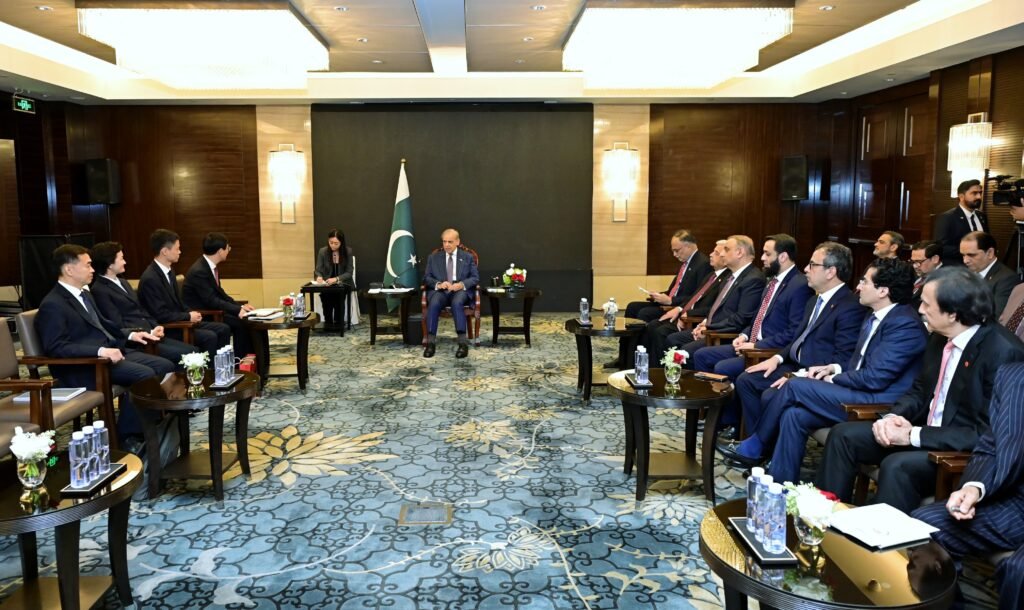
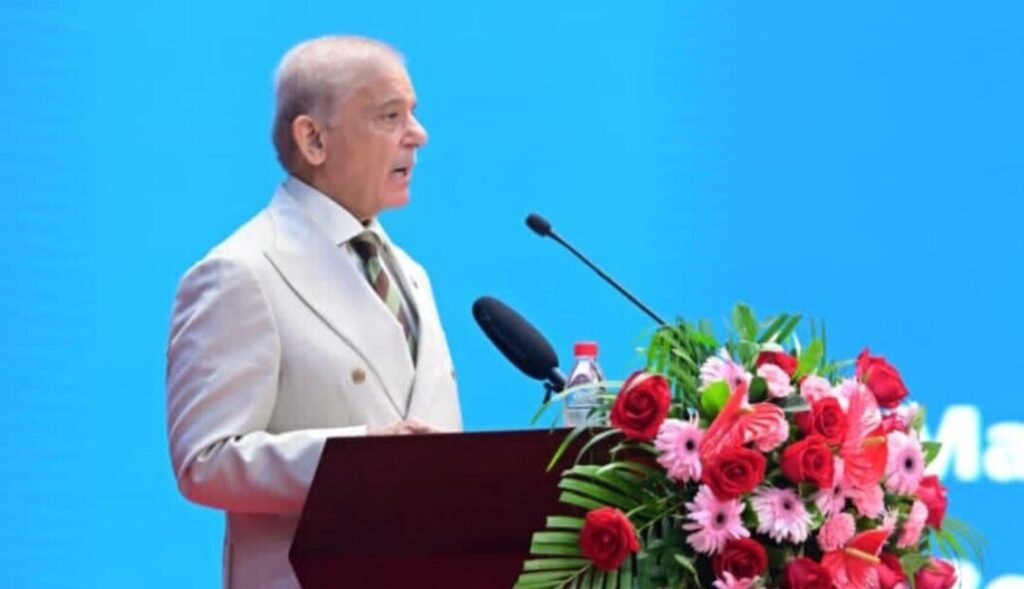
BEIJING: Prime Minister Shehbaz Sharif has called for increased collaboration with China to modernize Pakistan’s agriculture sector. He emphasized its critical role in achieving economic self-reliance and national growth. Pakistan-China Agricultural Workshop During a high-level workshop on agricultural cooperation at the Chinese Academy of Agricultural Sciences (CAAS) in Beijing, PM Shehbaz proposed that CAAS spearhead efforts to rejuvenate Pakistan’s agricultural research and implement modern farming practices. Strategic Partnership with China Deepens The Prime Minister highlighted the evolving strategic economic partnership with China, focusing on agriculture, innovation, and rural development. He expressed gratitude to CAAS President, Professor Dr. Huang Sanwen, after receiving an honorary professorship, acknowledging Pakistan’s strides in these fields. He stated, “Celebrating 75 years of diplomatic relations, this milestone encourages us to harness our strong friendship into an economic revolution across agriculture, industry, and research.” Reviving the Agriculture Sector’s Backbone Prime Minister Shehbaz noted that agriculture is the backbone of Pakistan’s economy. He advocated for the adoption of modern technology and research to boost productivity and empower youth in the sector. “Envisioning Pakistan’s future, we see farmers in challenging conditions, scientists in labs, and students gaining knowledge in leading institutions,” he highlighted. Revamping PARC Shehbaz Sharif stressed rejuvenating the Pakistan Agricultural Research Council (PARC) with CAAS’s guidance. This initiative aims to introduce fresh talent and foster a modern research culture in Pakistan’s agricultural institutions. Training Pakistani Students in China The Prime Minister announced plans to send 1,000 agriculture graduates annually from all provinces to Chinese universities. These students will be trained in advanced farming techniques and technologies. “These students are our country’s future,” he said, adding that their newfound knowledge will transform agriculture upon their return. Additionally, plans involve inviting these graduates to the Prime Minister’s House to focus on practical agricultural reform ideas and innovation. Agriculture Focus in CPEC 2.0 In talks with Chinese President Xi Jinping and Premier Li Qiang, PM Shehbaz noted both leaders’ agreement to prioritize agriculture in CPEC 2.0, enhancing bilateral cooperation. “I am touched by their assurance of China’s full support for Pakistan’s economic independence,” he remarked. He reiterated Pakistan’s commitment to strengthening long-term ties between scientists, universities, and researchers from both countries. Establishing Centres of Excellence CAAS President, Professor Dr. Huang Sanwen, noted that over 300 Pakistani students have already trained at the academy, setting the foundation for expanded cooperation. Ahmed Umair, Coordinator to the Prime Minister, emphasized these collaborations’ significance.

Pakistan

Ishaq Dar Meets President Xi Jinping, Reaffirms Pakistan-China All-Weather Partnership

Beijing: Deputy Prime Minister and Foreign Minister Senator Mohammad Ishaq Dar recently met with Chinese President Xi Jinping. This meeting is part of Prime Minister Shehbaz Sharif’s official visit to China, focusing on the enduring strategic ties between Pakistan and China. Strengthening Bilateral Ties On Tuesday, Senator Dar emphasized the friendly exchange during the meeting, highlighting the lasting, time-tested friendship between the two nations. Dar stated, “Pakistan deeply values the strength of the Pakistan-China All-Weather Strategic Cooperative Partnership.” The relationship has grown stronger despite regional challenges over the years. Strategic Cooperation Pillars The Deputy Prime Minister outlined the core elements of Pakistan-China relations, built on a shared commitment and vision for regional prosperity: Mutual respect and trust Shared aspirations for regional development Strong commitment to regional peace Enhanced connectivity initiatives Economic development cooperation 75-Year Diplomatic Milestone This meeting marks 75 years of diplomatic relations between Pakistan and China, celebrating decades of unwavering support and strategic partnership. Both countries are eager to expand cooperation under the China-Pakistan Economic Corridor (CPEC), a pivotal project of China’s Belt and Road Initiative in Pakistan. The CPEC continues to drive economic development across the region. Strengthening ties with China remains a cornerstone of Pakistan’s national development strategy.

International, Pakistan, World

PM Shehbaz Sharif Highlights Pakistan-China Brotherhood at 75th Diplomatic Anniversary Ceremony

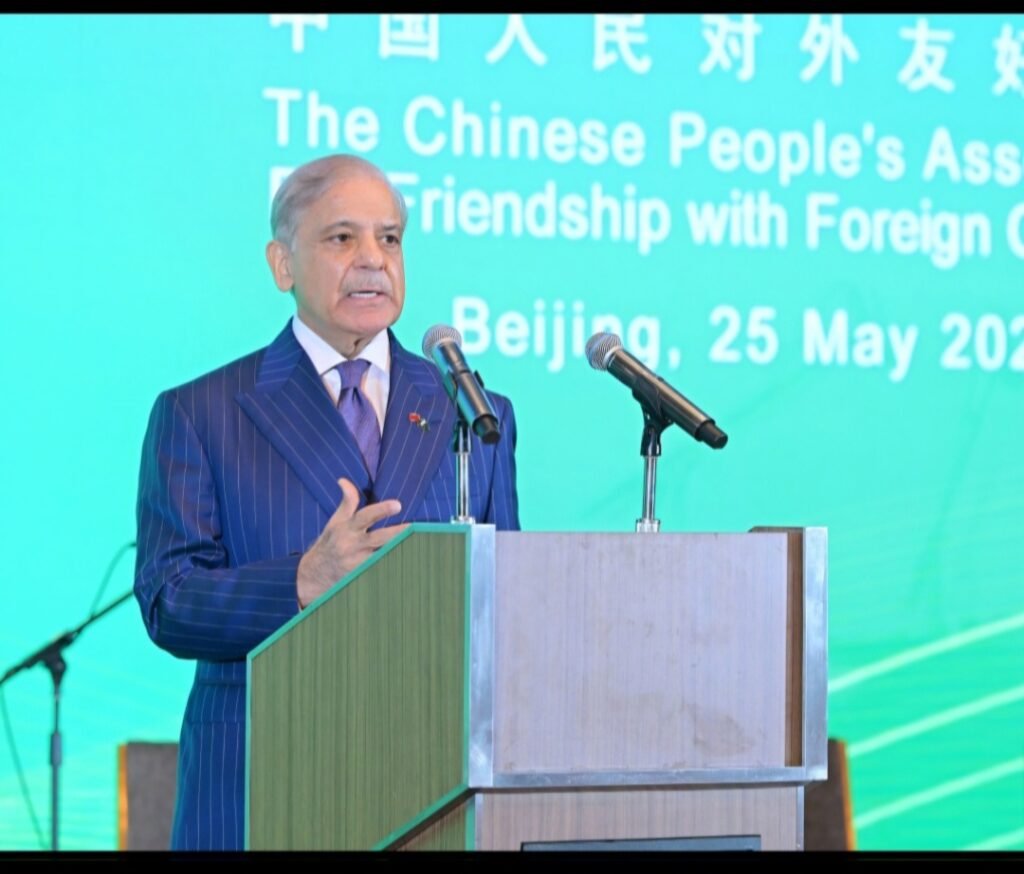
Prime Minister Muhammad Shehbaz Sharif delivered a heartfelt speech in Beijing on Tuesday, commemorating 75 years of diplomatic relations between Pakistan and China. This event celebrated one of the world’s most enduring bilateral partnerships. Historic Milestone Celebrated in Beijing On May 26, 2026, the Prime Minister highlighted the profound friendship between the two nations. He described it as a model international partnership grounded in trust, mutual respect, and shared objectives. Senior leaders from both countries reflected on seven decades of robust bilateral ties. PM Shehbaz Sharif emphasized the resilience of Pakistan-China diplomatic relations, focusing on the economic, strategic, and cultural benefits. Iron-Clad Friendship and Strategic Partnership This milestone event underscored the iron-clad friendship, described as ‘higher than mountains and deeper than oceans.’ Both countries reaffirmed their commitment to strengthen cooperation across multiple sectors. Leaders from Pakistan and China pledged to deepen strategic ties, focusing on mutual prosperity and regional stability. Key Areas of Bilateral Collaboration Trade and economic development initiatives Infrastructure projects under the China-Pakistan Economic Corridor (CPEC) Technology transfer and innovation partnerships Regional connectivity and development corridors Defense and security cooperation CPEC Remains Cornerstone of Bilateral Cooperation The China-Pakistan Economic Corridor (CPEC) remains a cornerstone of bilateral cooperation, transforming Pakistan’s infrastructure since its inception. The celebrations align with Pakistan and China’s efforts to expand collaboration across various sectors, ensuring benefits for future generations. Islamabad’s Foreign Policy Priority The 75th anniversary not only celebrates past achievements but also commits to deepening strategic partnerships. PM Shehbaz Sharif’s presence underscores Pakistan’s foreign policy priority of maintaining strong ties with China. The event reinforces Islamabad’s dedication to this all-weather friendship, as both nations continue to advance their shared vision for regional development and prosperity.

Economy, International, Pakistan

PM Shehbaz Sharif Describes Pakistan-China Ties as ‘Two Souls, One Heart’ at 75th Anniversary Celebrations

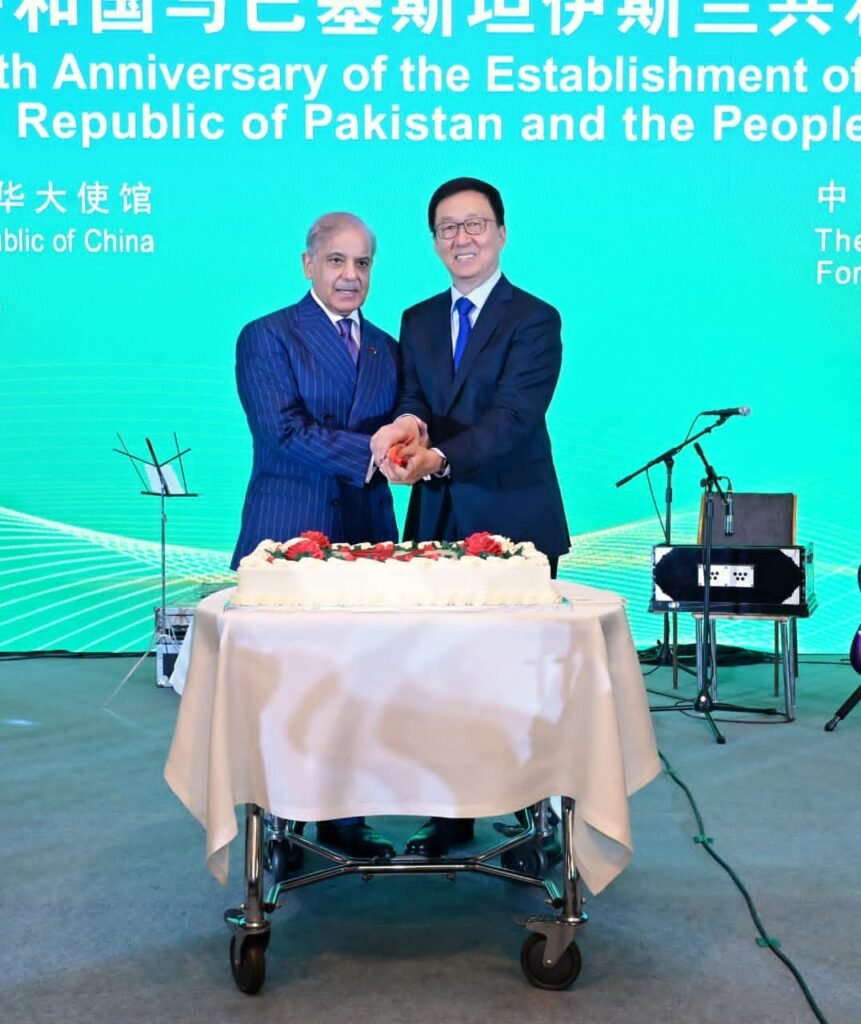
Prime Minister Muhammad Shehbaz Sharif praised the enduring ties between Pakistan and China, describing them as “two souls, one heart.” He delivered this statement during a special event in Beijing marking the 75th anniversary of diplomatic relations between the two countries. The Prime Minister emphasized the historic bond, bolstered by the vision and dedication of leaders from both nations for over seven decades. Unmatched Diplomatic Relations PM Shehbaz noted that the diplomatic relations between Pakistan and China are unrivaled globally. These ties are built on trust, mutual respect, and cooperation, making them stand out in the arena of international diplomacy. He praised China’s rise as a global economic and military power, attributing its success to its leaders’ hard work and consistent policies. PM Shehbaz mentioned that China’s experience in addressing poverty and economic challenges offers valuable lessons to developing nations. “Today’s China exemplifies how determination and consistency can achieve the impossible,” he stated. Visionary Leadership of Xi Jinping PM Shehbaz lauded Chinese President Xi Jinping for lifting over 800 million people out of poverty with visionary policies. He commended Xi for promoting peace and diplomacy on the global stage, even as China’s influence grows. Milestones in Friendship PM Shehbaz shared fond memories of Pakistan-China relations, such as joining citizens in Lahore to welcome former Chinese Premier Zhou Enlai with then Foreign Minister Zulfikar Ali Bhutto. He also highlighted China’s role in the 2010 floods in Pakistan, where Chinese teams played a crucial role in relief efforts. “Our friendship has weathered every storm,” he remarked. Future Economic Cooperation PM Shehbaz expressed optimism that Pakistan-China ties will continue to flourish. He emphasized that cooperation is vital for benefiting future generations and suggested that Pakistan could emulate China’s economic model through necessary reforms. Beijing’s Support for Pakistan Chinese Vice President Han Zheng congratulated both nations on their milestone anniversary, reaffirming Beijing’s unwavering support for Pakistan. He described the countries as “good friends connected by geography and a shared future.” Han acknowledged Pakistan’s support for China, particularly in helping China regain its UN seat. Joint Achievements The Chinese Vice President highlighted key joint achievements: The Karakoram Highway linking both nations The China-Pakistan Economic Corridor (CPEC) Phase 2.0 Projects under the Belt and Road Initiative Strategic Partnership Commitments Han Zheng expressed readiness to deepen strategic partnerships further, ensuring mutual progress and development.

Business

PM Shehbaz Sharif Meets Chinese Business Leaders in Beijing to Advance CPEC Phase II

Prime Minister Muhammad Shehbaz Sharif met with top Chinese enterprises in Beijing. The discussions aimed to strengthen economic and infrastructure ties as part of the second phase of the China-Pakistan Economic Corridor (CPEC). These talks focused on accelerating CPEC Phase II investment and enhancing bilateral economic cooperation. The Prime Minister highlighted agriculture, maritime development, mineral resources, and large-scale infrastructure projects. FAMSUN’s Role in Agriculture In a meeting with FAMSUN, led by CEO Mr. Zhengjun Chen, PM Shehbaz underscored the company’s vital role in Pakistan’s agriculture sector. FAMSUN significantly contributes to grain storage, feed production, and food security initiatives. The Prime Minister stressed reducing post-harvest losses and invited FAMSUN to build manufacturing and technology facilities in Pakistan. Special Economic Zones and the Green Pakistan Initiative offer incentives to boost productivity and food security. Shandong Xinxu Group’s Investments PM Shehbaz met with Chairman Hou Jianxin and representatives from the Shandong Xinxu Group Corporation. He applauded their growing investments in various sectors across Pakistan. Investment Focus Areas Maritime development initiatives Battery manufacturing facilities Mineral processing operations Industrial cooperation projects He praised their progress in the Xinxu Special Economic Zone and the Sea-to-Steel project at Port Qasim, ensuring full government support to create jobs and boost industrial capacity. Infrastructure Progress with CCCC In a separate meeting with Mr. Zhang Bingnan, Chairman of China Communications Construction Corporation (CCCC), and senior China Road and Bridge Corporation (CRBC) representatives, the Prime Minister appreciated their ongoing support for Pakistan’s infrastructure growth. He emphasized projects like the Karakoram Highway and Rashakai Special Economic Zone, with a focus on expediting priority initiatives such as the ML-1 railway upgrade and KKH realignment, crucial for trade and economic growth. Future Economic Cooperation Chinese business leaders expressed confidence in Pakistan’s economic potential. They plan expanded investments in agriculture, manufacturing, logistics, infrastructure, and technology sectors. Accompanied by key Pakistani ministers, the Prime Minister focused on swift decision implementation to advance CPEC Phase II investment, foster economic growth, and create new revenue streams for both nations.

World

Pakistan’s Deputy Prime Minister Ishaq Dar Arrives in New York for Key UN Engagements

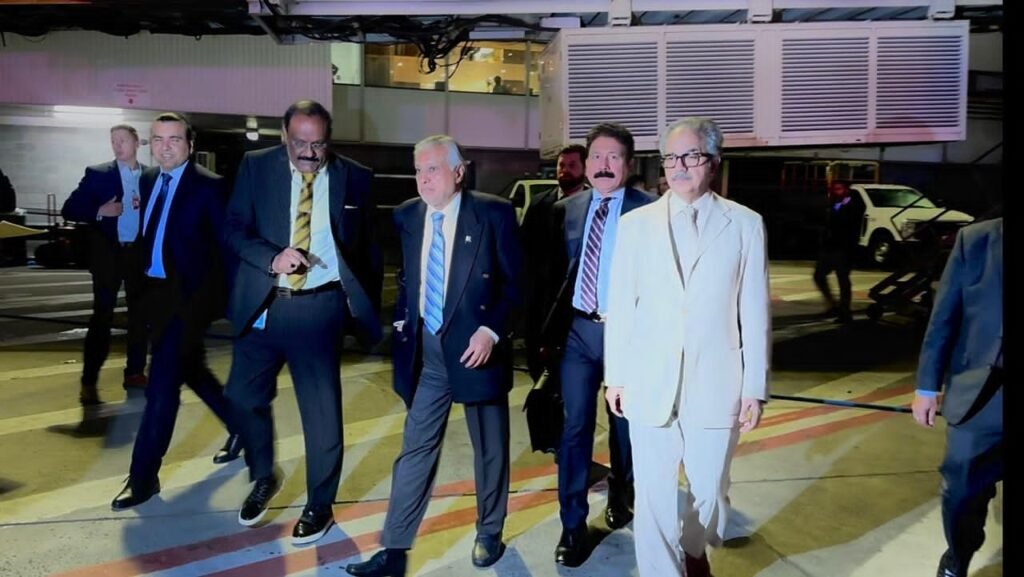
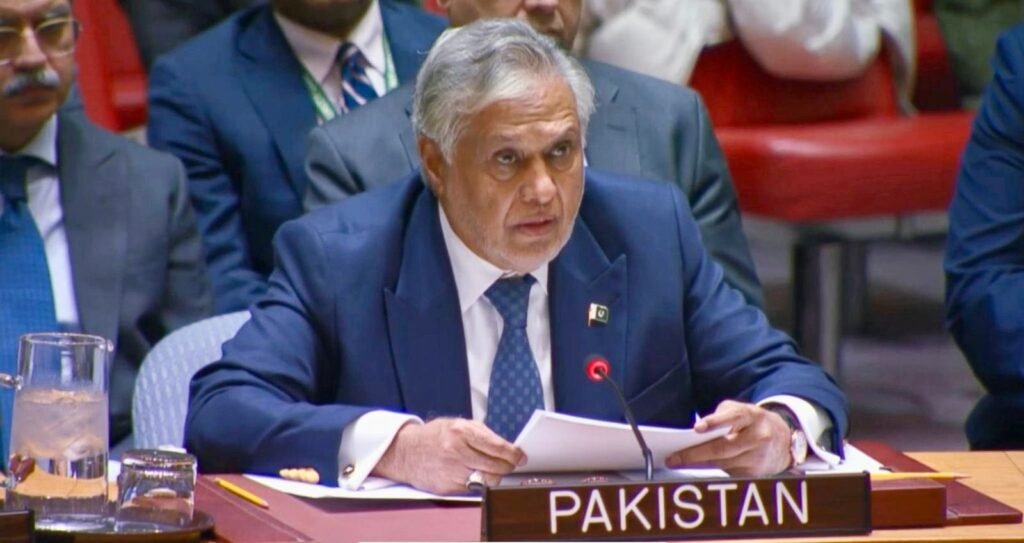
Deputy Prime Minister and Foreign Minister Senator Mohammad Ishaq Dar has arrived in New York for an official visit spanning from May 26 to 28. This three-day trip aims to strengthen Pakistan’s engagement with the United Nations Security Council and enhance international partnerships. United Nations Security Council Involvement Senator Dar is set to participate in a high-level open debate at the United Nations Security Council. The debate, titled “Maintenance of International Peace and Security: Upholding the Purposes and Principles of the UN Charter and Strengthening the UN-Centered International System,” will address crucial global issues. With China currently presiding over the Security Council, this significant debate highlights Pakistan’s commitment to multilateral diplomacy and global peace initiatives. Diplomatic Meetings and Agenda In addition to the UNSC debate, Deputy Prime Minister Dar plans to engage in bilateral meetings with various international counterparts. He will also engage with senior United Nations officials during his stay in New York. Foreign Policy Objectives Strengthening Pakistan’s international partnerships Advancing foreign policy goals at the United Nations Enhancing geopolitical cooperation on major global issues Official Arrival Protocol Upon his arrival in New York, Senator Dar was warmly welcomed by Pakistan’s Permanent Representative to the United Nations, Ambassador Asim Iftikhar Ahmad. The Consul General of Pakistan in New York, Aamer Ahmad Atozai, also greeted him.

World

Deputy PM Ishaq Dar to Visit New York for UN Security Council Debate, Global Governance Meeting

Beijing – Deputy Prime Minister and Foreign Minister Senator Mohammad Ishaq Dar will visit New York from May 26–28, 2026, for a three-day diplomatic mission. The trip focuses on crucial multilateral engagements at the United Nations. United Nations Security Council Open Debate On May 26, Dar will participate in the United Nations Security Council Open Debate. This session will address the Maintenance of International Peace and Security, emphasizing the UN Charter’s significance and the enhancement of the UN-centered international system. In May 2026, China leads the UN Security Council. Chinese Foreign Minister Wang Yi will preside over the session. Pakistan supports this leadership, underscoring the necessity of strengthening multilateralism and the UN’s role in managing complex global issues. Meeting on Global Governance Reform On May 28, Dar will attend the Group of Friends on Global Governance meeting. This session is devoted to Reforming and Improving Global Governance, aiming at joint efforts to tackle global challenges. The meeting will explore practical reform strategies for international institutions, and attendees will discuss coordinated responses to emergent geopolitical challenges. Bilateral Meetings and Diplomatic Activities During his visit, Dar will hold bilateral meetings with foreign policy counterparts and engage with senior United Nations officials. Pakistan reaffirms its support for multilateralism and is committed to contributing positively to global peace, security, and developmental initiatives.

Business

BISP and State Bank Advance Digital Payments for Deserving Women Under Cashless Economy Vision

Senator Rubina Khalid, Chairperson of the Benazir Income Support Program (BISP), and BISP Secretary Aamir Ali Ahmed met with State Bank Governor Jamil Ahmed in Karachi. They discussed the swift deployment of digital wallets for BISP payments across the nation, representing a significant step towards financial inclusion for women beneficiaries. Prime Minister’s Cashless Economy Vision This meeting emphasized the shift to digital wallet-based BISP payments, aligning with the Prime Minister’s cashless economy initiative. Officials highlighted progress in implementing secure digital payment solutions targeted at women beneficiaries. Pakistan’s digital payment strategy modernizes social protection programs by reducing cash usage and improving financial service transparency. Strategic Initiatives for Financial Inclusion Transparent Payment Systems BISP aims to establish a transparent, accessible payment system for beneficiaries. This digital setup enhances accountability and reduces payment processing delays. Interoperability for Universal Access A new interoperability mechanism allows fund withdrawal from any bank in Pakistan, removing branch-specific restrictions. This ensures broader banking access and convenience. Women’s Financial Autonomy and Economic Growth Officials noted that digital wallets will foster financial inclusion, boost women’s financial autonomy, and enhance economic participation. Direct banking access supports broader economic growth goals. Implementation Timeline and Key Actions Accelerated SIM Distribution Free mobile SIM distribution to beneficiaries is underway. SIMs must be collected from BISP offices by June 15, 2026, to facilitate a smooth transition to the new digital payment platform. Enhanced Awareness Campaign To ensure accessibility to the digital payment system, BISP has launched an intensive awareness campaign. Training sessions are also being conducted to help users navigate new banking technology effectively. State Bank’s Institutional Support State Bank Governor Jameel Ahmad affirmed extensive institutional support for BISP beneficiaries. He pledged to develop user-friendly digital payment systems for recipients, with the central bank providing technical assistance and regulatory oversight during the rollout. The collaboration between the State Bank and BISP is a major step towards creating a secure, accessible payment system, essential for digitizing social protection payments and realizing the cashless economy vision.

Pakistan

Prime Minister Muhammad Shehbaz Sharif Holds Warm Meeting with President Xi Jinping in Beijing

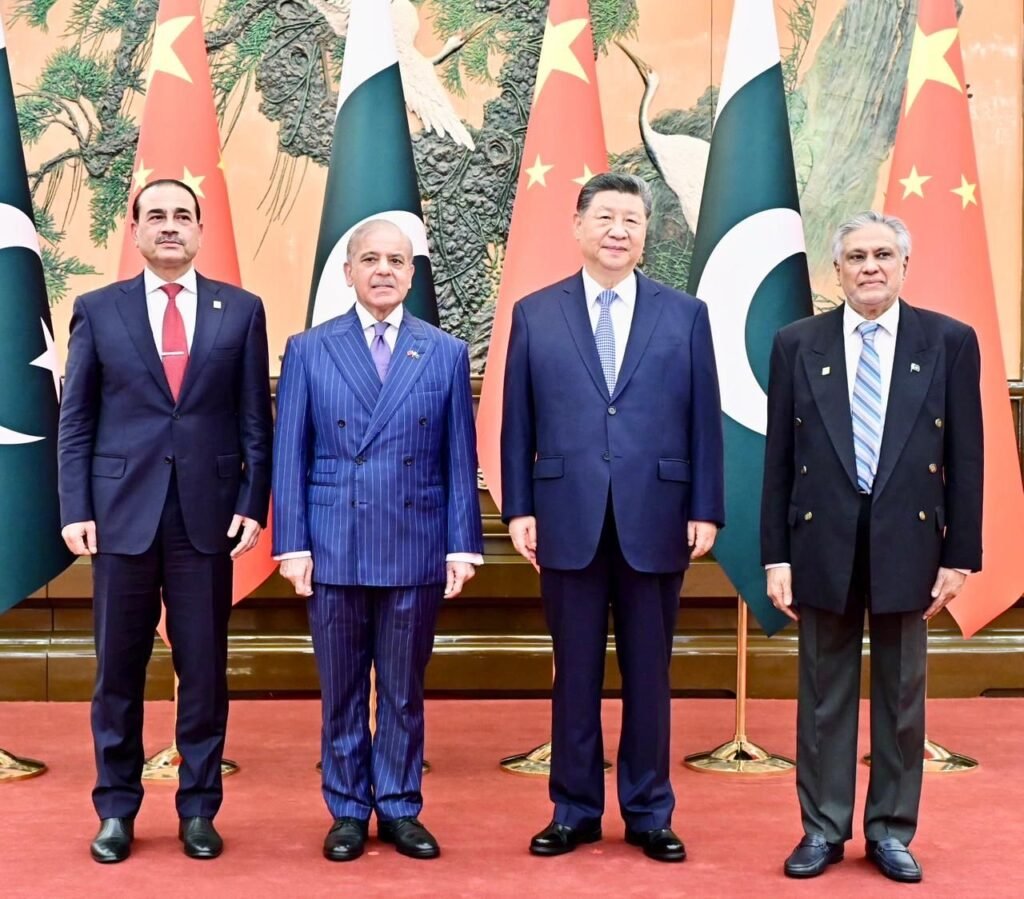
Prime Minister Muhammad Shehbaz Sharif met with Chinese President Xi Jinping in Beijing, commemorating the 75th anniversary of diplomatic ties between Pakistan and China. The discussion included influential personalities such as Deputy Prime Minister Mohammad Ishaq Dar and Chief of Army Staff Field Marshal Syed Asim Munir. Strengthening Strategic Partnership During their talks, Prime Minister Sharif conveyed gratitude for President Xi’s warm reception. He highlighted the importance of the Pakistan-China All-Weather Strategic Cooperative Partnership in Pakistan’s foreign policy. This enduring friendship remains vital amidst evolving regional and global dynamics. Support for China’s Core Interests Sharif reaffirmed Pakistan’s support for China’s core interests, underscoring adherence to the One China Principle. He recognized China’s unwavering support for Pakistan’s sovereignty and economic stability. Reflecting on his Hangzhou visit, Sharif lauded President Xi’s leadership in Zhejiang from 2002 to 2007, which bolstered China’s global standing. Regional Peace and Stability Sharif appreciated China’s backing of Pakistan’s regional peace initiatives and praised President Xi’s four-point peace proposal. The long-standing Pakistan-China relationship continues to offer a stabilizing influence both regionally and globally. Commitment to Global Initiatives The Prime Minister commended President Xi’s international initiatives aimed at fostering cooperation and reaffirmed Pakistan’s commitment to building a Community with a Shared Future for Humanity. These include: Belt and Road Initiative Global Development Initiative Global Security Initiative Global Civilization Initiative Global Governance Initiative Economic Collaboration and CPEC Shehbaz Sharif pledged to enhance bilateral ties and strategic coordination. He prioritized high-quality development under the China-Pakistan Economic Corridor (CPEC) and proposed harmonizing China’s 15th Five-Year Plan with Pakistan’s Uraan Pakistan initiative to bolster cooperation in key sectors. Key Sectors for Collaboration Industrialization Connectivity infrastructure Science and technology Agricultural modernization Clean energy development Digital transformation The selection of Pakistani astronauts for China’s space station program represents a significant milestone in bilateral collaboration.

Pakistan

First Informal Meeting of Journalists Residing in Sectors G-13 and G-14, Islamabad

Journalists from Islamabad’s Sectors G-13 and G-14 recently gathered for their inaugural informal community meeting. Hosted at the residence of senior journalist Dr. Abdul Wadood Qureshi, this event represents a new initiative among media professionals in Pakistan’s capital. Building the Islamabad Journalists Community Seven media professionals came together, marking a crucial step in enhancing Islamabad’s media community. Attendees included Dr. Abdul Wadood Qureshi, Sarwar Munir Rao, Hilal Ahmed, Dr. Ayesha Khan, Rana Rizwan Arshad, Yasir Zubairi, and Rizwan Malik. Each participant brought unique insights from their journalistic fields. Plans were discussed to expand the forum by inviting more journalists and columnists from these sectors. The aim is to hold regular meetings to strengthen professional ties and encourage collaboration. Fostering Non-Political Collaboration The group decided to keep the forum non-political, focusing on community building and avoiding ideological debates. This approach is intended to create a collaborative environment that supports professional growth across various media organizations in Pakistan. Key Objectives of the Journalists’ Forum Strengthening bonds among neighboring journalists in Islamabad sectors Encouraging interaction within Pakistan’s media community Fostering a spirit of sharing challenges and achievements among colleagues Establishing a support network for media professionals based in Islamabad Valuable Insights from Senior Journalists Participants honored Dr. Abdul Wadood Qureshi for initiating this gathering, laying a foundation for ongoing collaboration among Islamabad journalists. Esteemed journalists Dr. Abdul Wadood Qureshi and Sarwar Munir Rao shared insights from their extensive careers in Pakistan’s evolving media landscape. Their mentorship inspired attendees, particularly younger journalists, highlighting the forum’s potential to strengthen Pakistan’s journalism community for future generations.

Scroll to Top