
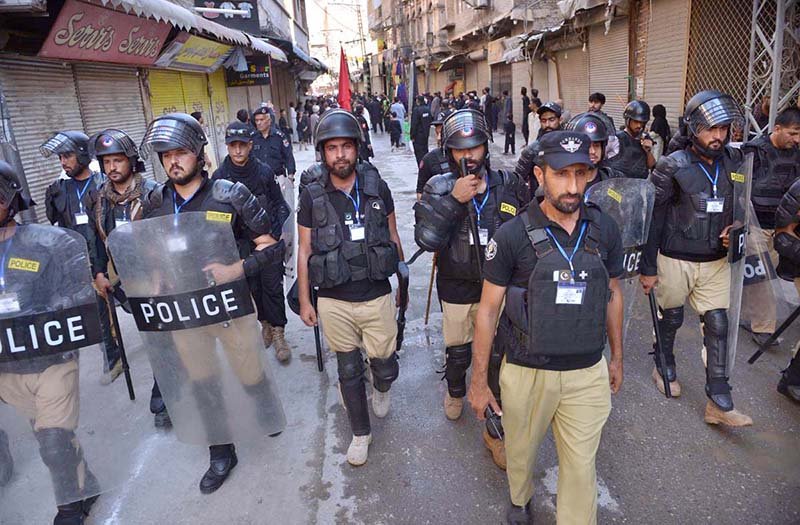
LAHORE — The Cabinet Committee on Law and Order thoroughly reviewed the security and administrative preparations for the upcoming Muharram events along Lahore’s central procession route on Tuesday. Provincial Minister and Committee Chairman Khawaja Salman Rafique led the inspection, focusing on key locations like Nisar Haveli and Karbala Gamay Shah.
Inspection of Security Measures
The Cabinet Committee on Law and Order, tasked with ensuring the safety and smooth conduct of Muharram processions, visited vital sites along Lahore’s central route. This visit aimed to assess the preparedness of security arrangements and address any potential issues before the Muharram observances, which are expected to attract large crowds.
Khawaja Salman Rafique and other committee members evaluated security measures, including law enforcement personnel deployment and surveillance systems installation. The committee stressed maintaining a peaceful environment during these significant cultural and religious events for the Shia community in Pakistan.
Administrative Arrangements
The committee also assessed administrative preparations like traffic management and emergency response plans. These steps are crucial to ensure that processions run smoothly without incidents, minimizing disruptions to daily life in Lahore while respecting the participants’ religious practices.
Background on Muharram Events
Muharram, the first month of the Islamic lunar calendar, is a mourning period for Shia Muslims. It commemorates the martyrdom of Imam Hussain, Prophet Muhammad’s grandson, at the Battle of Karbala. Lahore’s central procession is a significant event, drawing thousands and requiring extensive security and logistical planning.
Historically, Muharram processions in Pakistan have been vulnerable to sectarian violence, necessitating strict security measures. The government typically augments police and paramilitary forces, sets up checkpoints, and implements traffic diversions to ensure participant safety and maintain order.
Importance of These Arrangements
Security and administrative arrangements for Muharram processions are vital due to potential sectarian tensions and the large participant numbers. Their safety is crucial for communal harmony and violence prevention.
A smoothly conducted Muharram can economically impact local businesses and daily activities in Lahore. Planning inadequacies or security incidents could lead to economic losses and inconvenience for residents.
Political implications arise from the government’s capability to manage these events, showcasing its commitment to protecting religious freedoms and public order. Successful observances can enhance public confidence in the government’s capabilities and instill a sense of security among the populace.
Internationally, how Pakistan handles religious events like Muharram is closely observed, reflecting its management approach to sectarian diversity and religious rights. Effective management can enhance Pakistan’s image as a nation that respects and safeguards its citizens’ religious practices.
Key Takeaways
- The Cabinet Committee on Law and Order reviewed Muharram security and administrative preparations in Lahore.
- Key locations such as Nisar Haveli and Karbala Gamay Shah were inspected for readiness.
- Muharram processions are significant cultural and religious events requiring substantial security measures.
- Effective management is crucial for maintaining communal harmony and public confidence in the government.














