
Pakistan

News related to Pakistan in Pakistan and around the world.

Pakistan

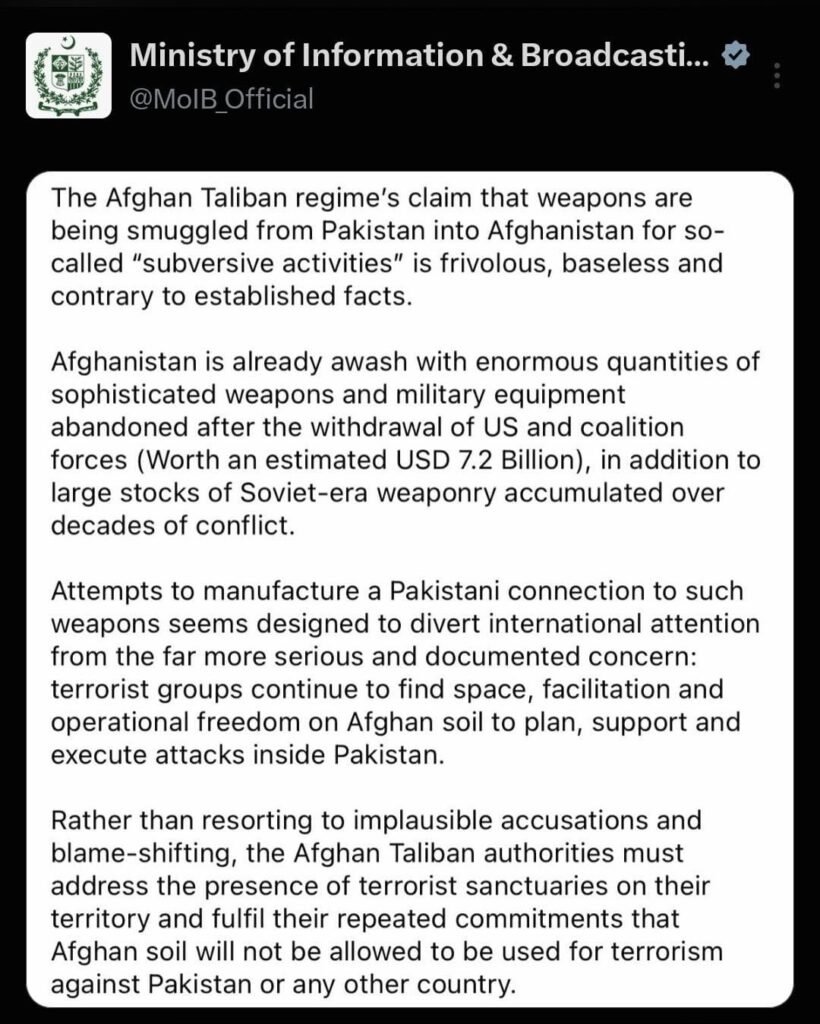
Pakistan Dismisses Afghan Taliban’s Weapons Smuggling Allegations

ISLAMABAD — The Ministry of Information and Broadcasting has firmly rejected the Afghan Taliban’s allegations that weapons are being smuggled from Pakistan into Afghanistan. The ministry described these claims as baseless and contrary to established facts in a statement released on Sunday. What Happened The Afghan Taliban recently accused Pakistan of being involved in the smuggling of weapons into Afghanistan, purportedly for use in subversive activities. In response, Pakistan’s Ministry of Information and Broadcasting issued a statement categorically denying these allegations. The ministry emphasized that such claims are frivolous and not supported by any credible evidence. According to the statement, Pakistan has always maintained a policy of non-interference in Afghanistan’s internal affairs and has consistently supported peace and stability in the region. The ministry highlighted that Pakistan has been a victim of terrorism itself and has made significant sacrifices in the fight against terrorism. The statement further noted that Pakistan has implemented strict measures to prevent any illegal cross-border activities, including the smuggling of weapons. The ministry reiterated Pakistan’s commitment to maintaining peace and security along its borders and called for constructive engagement with Afghanistan to address mutual concerns. Background The relationship between Pakistan and Afghanistan has been marked by mutual suspicion and allegations over the years. Both countries share a long and porous border, which has often been a source of tension. Accusations of cross-border terrorism and smuggling have been a recurring theme in their bilateral relations. In recent years, Pakistan has taken steps to fence its border with Afghanistan to curb illegal crossings and enhance security. The border fencing project, which began in 2017, is part of Pakistan’s broader strategy to manage its borders more effectively and prevent the movement of militants and illicit goods. Historically, the region has been affected by the presence of various militant groups, and both countries have accused each other of harboring such elements. The complex geopolitical dynamics in the region, involving various international stakeholders, have further complicated the security situation. Why It Matters The allegations by the Afghan Taliban and Pakistan’s subsequent rejection are significant in the context of regional security and diplomatic relations. Such claims, if left unaddressed, have the potential to strain bilateral ties further and impact efforts towards peace and stability in the region. For Pakistan, maintaining stability along its western border is crucial not only for national security but also for economic development. The country has been working to improve its international image and attract foreign investment, and allegations of involvement in illegal activities could undermine these efforts. On a broader scale, the stability of Afghanistan is of paramount importance to the entire region. A peaceful Afghanistan would contribute to regional trade, connectivity, and development. Therefore, constructive dialogue and cooperation between Pakistan and Afghanistan are essential for achieving long-term peace and prosperity. The international community, including major powers and regional players, has a vested interest in ensuring that tensions between Pakistan and Afghanistan do not escalate. Collaborative efforts to address security concerns and promote economic cooperation could pave the way for a more stable and prosperous South Asia. Key Takeaways Pakistan’s Information Ministry has rejected the Afghan Taliban’s claims of weapons smuggling as baseless. The ministry emphasized Pakistan’s commitment to regional peace and its non-interference policy. Border security measures, including fencing, are part of Pakistan’s strategy to prevent illegal activities. Stable relations between Pakistan and Afghanistan are crucial for regional security and economic development. International cooperation is essential to address security concerns and promote peace in South Asia. Source Attribution This article is based on official government statements and public communications from relevant authorities. Author: NEN Editorial Desk | Editor: NEN Newsroom | Fact Checked By: NEN Editorial Team Author: NEN Editorial Desk  |  Editor: NEN Newsroom  |  Last Updated: August 09, 2026  |  Source: Press Release from Government of Pakistan This article was produced by the NEN Editorial Desk in accordance with NEN Agency’s Editorial Policy and Fact-Checking Policy.
Pakistan

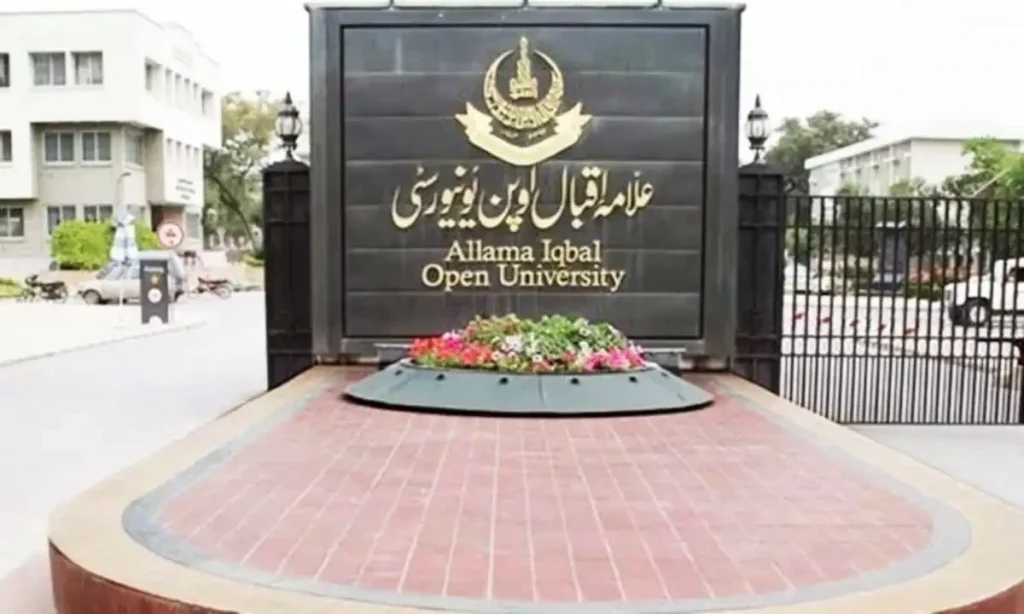
AIOU Schedules Inaugural Job Fair for August 20

ISLAMABAD — Allama Iqbal Open University (AIOU) is set to host its inaugural job fair on August 20, 2023, at the university’s Science Block. The event aims to connect students and graduates with leading organizations from both the public and private sectors, offering opportunities for employment, internships, training programs, and professional development. What Happened The job fair, a first for AIOU, is designed to bridge the gap between academia and industry by providing a platform where students can meet potential employers directly. Scheduled to take place at the Science Block of the university, the event will feature numerous organizations seeking to recruit fresh talent. According to university officials, the fair will include representatives from various sectors, including technology, finance, education, and healthcare, among others. Dr. Zia Ul-Qayyum, Vice Chancellor of AIOU, emphasized the significance of the event, stating, “This job fair is a pivotal step in enhancing the employability of our students. By facilitating direct interaction with industry leaders, we aim to better prepare our graduates for the competitive job market.” The event is expected to attract hundreds of students and alumni, eager to explore diverse career opportunities. In addition to job placements, the fair will offer workshops and seminars focused on skill development and career planning. These sessions are intended to equip attendees with the necessary tools to navigate the job market effectively. The university has also arranged for career counseling services to be available throughout the event, providing personalized guidance to students. Background Allama Iqbal Open University, established in 1974, is one of the largest open universities in Asia, offering a wide range of undergraduate and postgraduate programs. The institution has long been committed to providing accessible education to students across Pakistan, particularly those in remote areas. Despite its extensive academic offerings, AIOU has recognized the need to enhance its students’ employability through practical exposure and industry engagement. In recent years, the job market in Pakistan has become increasingly competitive, with graduates facing challenges in securing employment. Initiatives like job fairs are part of a broader strategy by educational institutions to address these challenges by fostering stronger ties with industry and enhancing the practical skills of their students. Why It Matters The job fair at AIOU is significant for several reasons. Economically, it provides a direct avenue for students to transition from education to employment, potentially reducing the time and resources spent on job searching. This can lead to a more efficient labor market, benefiting both employers and job seekers. Socially, the event underscores the importance of integrating academic learning with practical experience. By facilitating interactions between students and industry professionals, the fair helps demystify the job market, making it more accessible to graduates from diverse backgrounds. This is particularly important in Pakistan, where students from rural or underprivileged areas may lack exposure to professional environments. Politically, the initiative aligns with national efforts to boost employment and economic growth. By equipping graduates with the skills and connections needed to succeed, educational institutions like AIOU play a crucial role in supporting government objectives related to workforce development and economic stability. Key Takeaways AIOU will hold its first-ever job fair on August 20, 2023, at the Science Block. The event aims to connect students with public and private sector organizations. Workshops and career counseling will be available to enhance employability skills. The initiative reflects broader efforts to integrate academic and industry experiences. The job fair supports national objectives for employment and economic growth. Source Attribution This article is based on official statements and public communications from Allama Iqbal Open University. Author: NEN Editorial Desk | Editor: NEN Newsroom | Fact Checked By: NEN Editorial Team Author: NEN Editorial Desk  |  Editor: NEN Newsroom  |  Last Updated: August 09, 2026  |  Source: NEN Reporter This article was produced by the NEN Editorial Desk in accordance with NEN Agency’s Editorial Policy and Fact-Checking Policy.

Pakistan

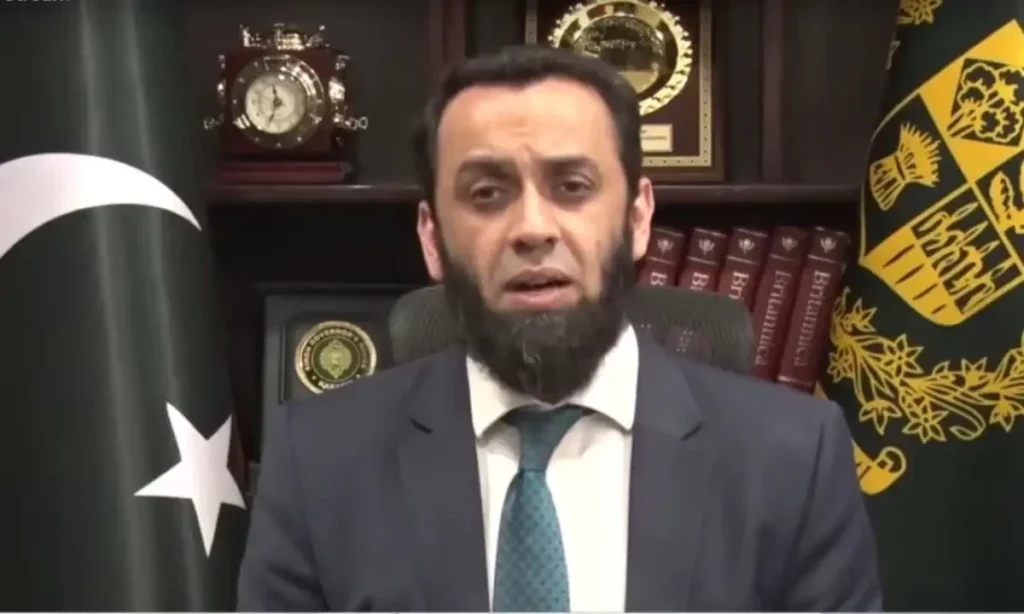
Minister Attaullah Tarar Expresses Condolences to PTV Reporter’s Family

ISLAMABAD — Federal Minister for Information and Broadcasting Attaullah Tarar expressed his heartfelt condolences on Sunday over the passing of Nasir Hussain, the elder brother of Naveed Azhar, a senior reporter at Pakistan Television (PTV) News. The minister conveyed his sympathies to the bereaved family, acknowledging the profound loss they are experiencing. What Happened In a message of condolence, Minister Attaullah Tarar shared his deep sorrow upon learning of the death of Nasir Hussain, emphasizing the impact of such a loss on the family. He expressed his support and solidarity with Naveed Azhar and his family during this difficult time. The minister’s message highlighted the importance of family and community support in moments of grief, underscoring the role of empathy and compassion in the healing process. The news of Nasir Hussain’s passing was met with an outpouring of sympathy from colleagues, friends, and the broader journalistic community. Naveed Azhar, known for his dedication and professionalism in journalism, received numerous messages of support and condolences from peers and well-wishers. The tragic event has brought attention to the personal challenges faced by those in the public eye, reminding the community of the human aspects behind professional roles. Background Attaullah Tarar, serving as the Federal Minister for Information and Broadcasting, has been a prominent figure in Pakistani politics. His role involves overseeing the country’s information dissemination and media relations, making him a key figure in maintaining governmental transparency and public communication. The minister’s gesture of condolence reflects the government’s acknowledgment of the contributions made by media professionals and their families. Pakistan Television (PTV) News is one of the country’s leading state-owned broadcasters, providing news and information to the public. Journalists like Naveed Azhar play a crucial role in delivering unbiased and timely news, often working under challenging conditions. The support extended by the minister highlights the government’s recognition of the media’s role in shaping public discourse and its commitment to standing by media personnel during personal hardships. Why It Matters The expression of condolences by a high-ranking government official such as Minister Attaullah Tarar underscores the importance of empathy and human connection within the political and media landscapes. It serves as a reminder of the interconnectedness of public service and personal lives, emphasizing the need for compassion in leadership roles. For the media community, the minister’s message is a significant acknowledgment of the sacrifices and challenges faced by journalists and their families. It reinforces the notion that the contributions of media professionals are valued and that their personal struggles do not go unnoticed. This gesture may inspire greater solidarity and support within the journalistic community, fostering a culture of mutual care and respect. On a broader scale, the minister’s actions reflect a positive example of leadership, where empathy and support are extended beyond professional obligations. This approach can enhance public trust in governmental figures, showing them as relatable and compassionate individuals who are attentive to the needs and emotions of citizens. Key Takeaways Federal Minister Attaullah Tarar expressed condolences for the passing of Nasir Hussain, brother of PTV News reporter Naveed Azhar. The minister’s message highlights the importance of empathy and support in times of personal loss. This gesture underscores the government’s recognition of the media’s role and the personal challenges faced by journalists. Such actions by public officials can enhance trust and demonstrate compassion in leadership. The event has prompted an outpouring of support from the journalistic community for Naveed Azhar. Source Attribution This article is based on official government statements, press releases, and public communications from relevant authorities. Author: NEN Editorial Desk | Editor: NEN Newsroom | Fact Checked By: NEN Editorial Team Author: NEN Editorial Desk  |  Editor: NEN Newsroom  |  Last Updated: August 09, 2026  |  Source: NEN Reporter This article was produced by the NEN Editorial Desk in accordance with NEN Agency’s Editorial Policy and Fact-Checking Policy.

Pakistan

SNGPL Intensifies Operations, Disconnects Five Gas Meters in Multan

MULTAN — The Sui Northern Gas Pipelines Limited (SNGPL) has escalated its efforts to curb gas theft by disconnecting five more gas meters in Multan. This action was part of the ongoing operations by the Unaccounted-for Gas (UFG) control task force, aimed at reducing illegal gas usage in the city. What Happened The SNGPL’s UFG control task force has been actively conducting door-to-door checks to identify and eliminate unauthorized gas connections. During their recent operation, they disconnected five gas meters in various areas of Multan. According to official reports, one of these meters had been previously removed by the consumer and later recovered by the task force. The remaining four meters were disconnected due to the illegal use of compressors to siphon gas. The use of compressors is a common method employed by some consumers to increase gas pressure and circumvent the regulated supply, leading to substantial losses for the gas company. An SNGPL official stated, “We are committed to taking strict actions against any form of gas theft, which not only affects the company’s revenue but also disrupts the fair distribution of resources.” This operation is part of a broader initiative by SNGPL to address the issue of UFG, which refers to the difference between the total amount of gas purchased and the amount sold to consumers. UFG losses are a significant concern for gas companies in Pakistan, impacting both financial performance and service delivery. Background SNGPL has been actively working to tackle the issue of gas theft, which has been a persistent problem in Pakistan. The company has implemented various measures, including the deployment of task forces and the use of advanced technology to detect and prevent illegal connections. The UFG control task force is a specialized unit within SNGPL dedicated to minimizing losses due to gas theft and leakage. Historically, gas theft has been a major challenge for Pakistan’s energy sector, resulting in billions of rupees in losses annually. The government and energy companies have been striving to implement stricter regulations and enhance enforcement to combat this issue. The disconnection of illegal gas meters is one of the many steps being taken to ensure compliance and protect the integrity of the gas distribution network. Why It Matters The disconnection of illegal gas meters by SNGPL is crucial for several reasons. Economically, gas theft leads to significant revenue losses for the company, which can affect its ability to invest in infrastructure and improve service delivery. By curbing illegal connections, SNGPL aims to enhance its financial stability and ensure a fair distribution of gas resources to legitimate consumers. Socially, illegal gas usage can lead to safety hazards, including gas leaks and explosions, posing a threat to public safety. By taking action against unauthorized connections, SNGPL is working to mitigate these risks and protect communities from potential dangers. Politically, the government’s support for SNGPL’s initiatives reflects its commitment to addressing energy sector challenges and ensuring the efficient use of resources. This aligns with broader national goals of improving energy security and reducing reliance on imported fuels. Internationally, reducing UFG losses can enhance Pakistan’s reputation as a responsible energy consumer and improve its standing in the global energy market. Effective management of domestic resources is essential for attracting foreign investment and fostering economic growth. Key Takeaways SNGPL disconnected five gas meters in Multan as part of its UFG control efforts. Illegal use of compressors for gas theft was a primary reason for the disconnections. Gas theft poses economic, social, and safety challenges for Pakistan’s energy sector. Reducing UFG losses is vital for financial stability and resource distribution. The government’s support for anti-theft measures underscores its commitment to energy security. Source Attribution This article is based on official government statements, press releases, and public communications from relevant authorities. Author: NEN Editorial Desk | Editor: NEN Newsroom | Fact Checked By: NEN Editorial Team Author: NEN Editorial Desk  |  Editor: NEN Newsroom  |  Last Updated: August 09, 2026  |  Source: NEN Reporter This article was produced by the NEN Editorial Desk in accordance with NEN Agency’s Editorial Policy and Fact-Checking Policy.
Pakistan

Ministry Allocates Rs10 Billion to Boost Export Sectors

ISLAMABAD — The Ministry of Commerce has sanctioned Rs10 billion to bolster Pakistan’s textile and apparel industry along with other export sectors. Federal Minister for Commerce Jam Kamal Khan announced the allocation, which is part of the Duty Drawback and Technology Upgradation Schemes, aimed at enhancing industrial liquidity and facilitating export growth. What Happened The Ministry of Commerce, under the leadership of Federal Minister Jam Kamal Khan, has approved a significant financial package of Rs10 billion. This allocation is intended to support the textile and apparel industry, as well as other key export sectors, through the Duty Drawback and Technology Upgradation Schemes. The announcement was made to address the liquidity challenges faced by these industries and to stimulate export growth. Minister Jam Kamal Khan emphasized the importance of this funding, stating, “The sanctioned amount will play a crucial role in strengthening our export sectors, which are vital for the country’s economic stability.” The funds are expected to provide much-needed relief to industries struggling with cash flow issues, thereby enhancing their competitiveness in international markets. The Duty Drawback Scheme is designed to refund duties paid on imported raw materials used in the production of export goods, thereby reducing production costs. Meanwhile, the Technology Upgradation Scheme aims to modernize the industrial base by providing financial assistance for the acquisition of new technologies and equipment. Background Pakistan’s export sectors, particularly textiles and apparel, have been facing significant challenges due to fluctuating global demand and rising production costs. Historically, the government has implemented various schemes to support these industries, recognizing their critical role in the national economy. The textile sector alone contributes over 8% to the country’s GDP and employs millions of workers. Previous initiatives, such as the Strategic Trade Policy Framework and the Export Enhancement Package, have aimed to increase the competitiveness of Pakistani exports. However, persistent issues such as energy shortages, outdated technology, and limited access to finance have continued to hinder growth. Why It Matters The allocation of Rs10 billion is a strategic move to address some of the longstanding issues plaguing Pakistan’s export sectors. By improving liquidity, the government aims to enable industries to manage their cash flows more effectively, reducing the financial strain that has often led to production slowdowns and job losses. Economically, this funding is crucial as it seeks to boost export revenues, which are essential for maintaining a healthy balance of payments. An increase in exports can lead to greater foreign exchange earnings, which in turn can stabilize the national currency and reduce the trade deficit. Socially, the support for the textile and apparel sectors is expected to secure jobs and potentially create new employment opportunities. Given that these industries are labor-intensive, any positive shift in their fortunes can have a direct impact on the livelihoods of millions of Pakistani workers and their families. Politically, the move demonstrates the government’s commitment to supporting key economic sectors and addressing the challenges faced by exporters. This could enhance the government’s standing both domestically and internationally, as it shows a proactive approach to economic management. Key Takeaways The Ministry of Commerce has allocated Rs10 billion to support export sectors. The funding targets the textile and apparel industries under the Duty Drawback and Technology Upgradation Schemes. The initiative aims to improve industrial liquidity and stimulate export growth. The textile sector is a significant contributor to Pakistan’s GDP and employment. The move is expected to stabilize the economy by boosting export revenues and securing jobs. Source Attribution This article is based on official government statements, press releases, and public communications from relevant authorities. Author: NEN Editorial Desk | Editor: NEN Newsroom | Fact Checked By: NEN Editorial Team Author: NEN Editorial Desk  |  Editor: NEN Newsroom  |  Last Updated: August 09, 2026  |  Source: Press Release from Ministry of Commerce This article was produced by the NEN Editorial Desk in accordance with NEN Agency’s Editorial Policy and Fact-Checking Policy.
Pakistan

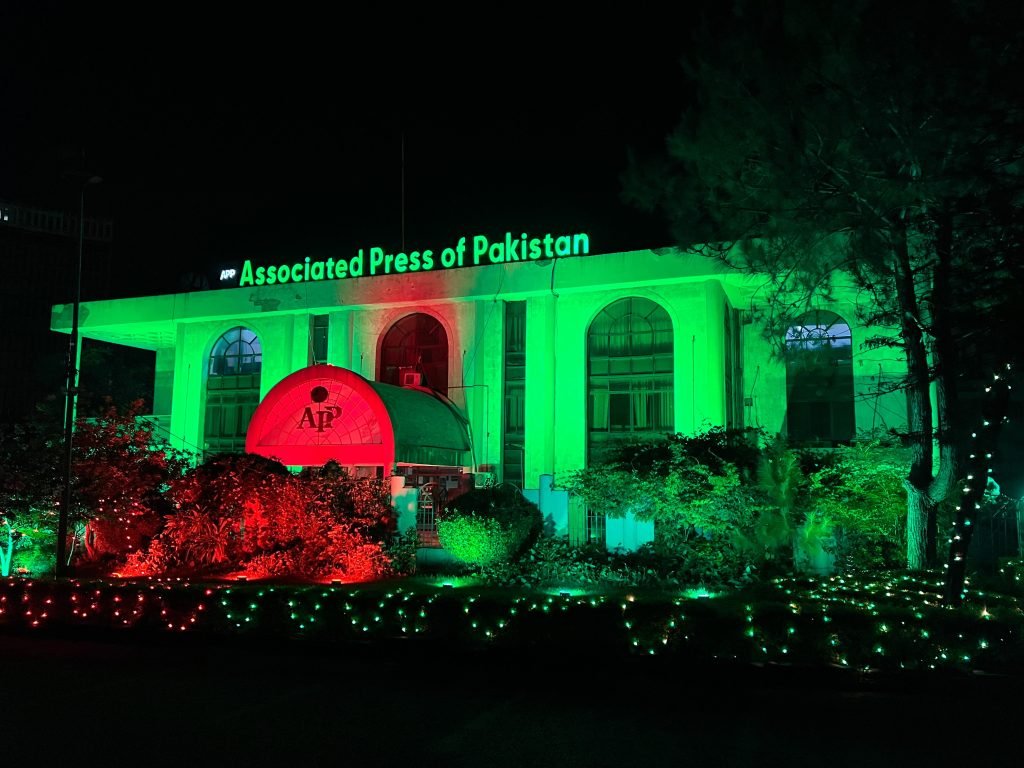
Islamabad Decorated to Celebrate Makkah Joint Defence Agreement

ISLAMABAD — The Federal Capital of Islamabad has been festively adorned with national flags, vibrant lights, and LED screens to celebrate the Makkah Joint Defence Agreement, a strategic pact signed by Pakistan, Saudi Arabia, and Turkiye on Friday. The decorations symbolize the unity and cooperation among the three nations, highlighting the significance of their collective commitment to regional security. What Happened The streets of Islamabad have been transformed into a vibrant display of lights and colors, featuring the national flags of Pakistan, Saudi Arabia, and Turkiye. This decorative effort marks the signing of the Makkah Joint Defence Agreement, an accord aimed at enhancing military cooperation and ensuring regional stability. The agreement was signed in Makkah, a city of immense religious and cultural importance, further underscoring the symbolic nature of this trilateral alliance. The agreement involves collaborative efforts in defense strategies, joint military exercises, and intelligence sharing among the three countries. Officials from the Ministry of Defence have emphasized the importance of this pact in strengthening ties and addressing common security challenges. “This agreement is a testament to our shared vision for peace and stability in the region,” stated a senior official from the Ministry of Defence. The celebrations in Islamabad are not only a visual spectacle but also a reflection of the deep-rooted diplomatic relations between these nations. The streets are lined with LED screens displaying messages of unity and cooperation, while public buildings are illuminated with colored lights, creating a festive atmosphere throughout the city. Background The Makkah Joint Defence Agreement is a continuation of the long-standing cooperation between Pakistan, Saudi Arabia, and Turkiye. Historically, these countries have maintained strong bilateral relations, often collaborating on matters of defense, trade, and cultural exchange. The agreement is seen as a formalization of these ties, providing a structured framework for future collaborations. In recent years, the geopolitical landscape of the Middle East and South Asia has necessitated stronger alliances to counter emerging threats. The Makkah pact is a strategic move to consolidate military capabilities and enhance preparedness against potential security challenges. This agreement follows previous bilateral defense pacts and joint exercises conducted among the signatory countries. Why It Matters The Makkah Joint Defence Agreement holds significant implications for regional security and international relations. By formalizing military cooperation, the pact aims to deter potential threats and ensure a collective response to crises. This is particularly important given the volatile security environment in the Middle East and South Asia, where conflicts and political instability pose ongoing challenges. For Pakistan, the agreement strengthens its strategic position and reinforces its alliances with key regional powers. Economically, the pact could lead to increased defense trade and technology transfers, boosting the local defense industry. Additionally, the enhanced military cooperation is likely to contribute to regional stability, which is crucial for economic growth and development. On a broader scale, the agreement reflects a shift towards multilateralism in addressing security concerns. By engaging in joint defense initiatives, the three countries are setting a precedent for collaborative security frameworks that could influence other regions facing similar challenges. The pact also sends a message to the international community about the commitment of these nations to peace and stability. Key Takeaways Islamabad is decorated with flags and lights to celebrate the Makkah Joint Defence Agreement. The agreement involves Pakistan, Saudi Arabia, and Turkiye, focusing on military cooperation. The pact aims to enhance regional security and address common defense challenges. It strengthens Pakistan’s strategic alliances and could boost its defense industry. The agreement reflects a trend towards multilateral approaches to security issues. Source Attribution This article is based on official government statements, press releases, and public communications from relevant authorities. Author: NEN Editorial Desk | Editor: NEN Newsroom | Fact Checked By: NEN Editorial Team Author: NEN Editorial Desk  |  Editor: NEN Newsroom  |  Last Updated: August 09, 2026  |  Source: NEN Reporter This article was produced by the NEN Editorial Desk in accordance with NEN Agency’s Editorial Policy and Fact-Checking Policy.
Pakistan

GPCCI Honors Khurram Dastgir Khan at Business Network Reception

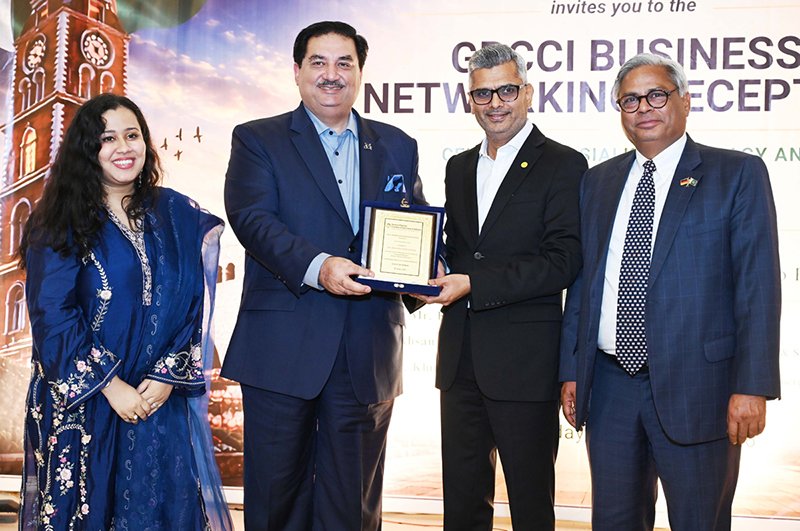
ISLAMABAD — Syed Nadeem Kazmi, President of the German-Pakistan Chamber of Commerce and Industry (GPCCI), presented a commemorative shield to Khurram Dastgir Khan, the former Federal Minister of Commerce, Energy, and Defense, during a reception held by the GPCCI. The event took place at the GPCCI Business Network Reception, celebrating the contributions of Khan to the bilateral trade relations between Germany and Pakistan. What Happened The GPCCI Business Network Reception was an event aimed at fostering stronger economic ties between Germany and Pakistan. Syed Nadeem Kazmi, who currently leads the GPCCI, honored Khurram Dastgir Khan for his significant contributions to enhancing trade and commerce between the two nations. The reception was attended by key figures from both the public and private sectors, including business leaders, diplomats, and government officials. In his address, Kazmi highlighted Khan’s efforts in strengthening the economic partnership between Germany and Pakistan during his tenure as a federal minister. He stated, “Khurram Dastgir Khan has played a pivotal role in advancing our trade relations with Germany, and his efforts have laid a strong foundation for future collaboration.” The shield presented to Khan was a token of appreciation for his dedication and service. Khan, in his response, expressed gratitude for the recognition and emphasized the importance of continued cooperation between the two countries. He remarked, “Germany has been a vital partner in Pakistan’s economic development, and it is imperative that we continue to build on this relationship to achieve mutual prosperity.” Background Khurram Dastgir Khan served as the Federal Minister of Commerce, Energy, and Defense at various points in his political career. During his tenure, he was instrumental in initiating several trade agreements and facilitating business exchanges between Pakistan and Germany. The GPCCI, established to promote bilateral trade and investment, has been a key player in fostering these economic ties. The GPCCI regularly organizes events such as the Business Network Reception to bring together stakeholders from both countries, aiming to create opportunities for collaboration and investment. The chamber’s efforts have been pivotal in addressing trade barriers and enhancing market access for Pakistani goods in Germany. Why It Matters The recognition of Khurram Dastgir Khan’s contributions underscores the importance of strong diplomatic and economic relations between Pakistan and Germany. Germany is one of Pakistan’s largest trading partners in Europe, and the continuation of this partnership is crucial for Pakistan’s economic growth and development. Strengthening trade relations with Germany can lead to increased foreign investment, technology transfer, and job creation in Pakistan. As the country seeks to diversify its export markets, enhancing ties with established economies like Germany is vital. This not only helps in boosting Pakistan’s economic indicators but also positions the country as a competitive player in the global market. Moreover, events like the GPCCI Business Network Reception play a significant role in facilitating dialogue and collaboration between businesses and policymakers. They provide a platform for discussing challenges and exploring new avenues for cooperation, which can lead to tangible economic benefits for both countries. Key Takeaways Syed Nadeem Kazmi, President of GPCCI, honored Khurram Dastgir Khan for his contributions to Pakistan-Germany trade relations. The GPCCI Business Network Reception was attended by key figures from the public and private sectors. Khan emphasized the importance of continued cooperation between Pakistan and Germany for mutual prosperity. Germany is a significant trading partner for Pakistan, and strengthening ties is crucial for economic growth. Events like the GPCCI reception facilitate dialogue and collaboration between businesses and policymakers. Source Attribution This article is based on official statements and public communications from the German-Pakistan Chamber of Commerce and Industry and other relevant authorities. Author: NEN Editorial Desk | Editor: NEN Newsroom | Fact Checked By: NEN Editorial Team Author: NEN Editorial Desk  |  Editor: NEN Newsroom  |  Last Updated: August 08, 2026  |  Source: Press Release from Government of Pakistan This article was produced by the NEN Editorial Desk in accordance with NEN Agency’s Editorial Policy and Fact-Checking Policy.

Pakistan

Khurram Dastgir Khan Addresses GPCCI Business Network Reception in Sialkot

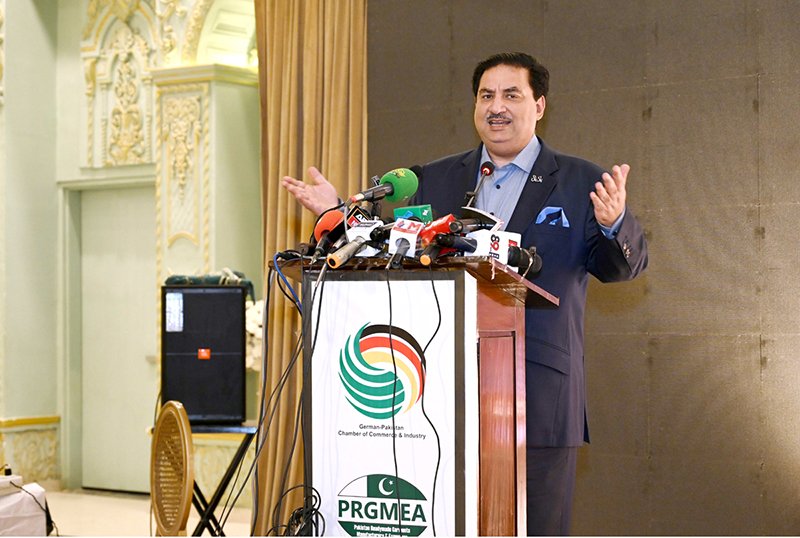
SIALKOT — Former Federal Minister of Commerce, Energy, and Defense Khurram Dastgir Khan addressed the German Pakistan Chamber of Commerce and Industry (GPCCI) Business Network Reception in Sialkot on Thursday. The event, which brought together business leaders and officials, focused on strengthening economic ties between Pakistan and Germany and exploring new avenues for collaboration. What Happened Khurram Dastgir Khan, a prominent figure in Pakistan’s political and economic landscape, delivered a keynote speech at the GPCCI Business Network Reception. The event was attended by key stakeholders from various sectors, including trade, industry, and government. During his address, Khan emphasized the importance of enhancing bilateral trade relations between Pakistan and Germany, highlighting the potential for increased economic cooperation. “Germany is one of Pakistan’s most important trading partners in Europe,” Khan stated. “We must continue to build on this relationship to foster economic growth and development in both countries.” He further elaborated on the need for Pakistan to diversify its export base and improve its industrial capabilities to meet international standards. The reception also featured presentations from other notable figures, including Syed Nadeem Kazmi, President of GPCCI, who presented a shield to Khurram Dastgir Khan in recognition of his contributions to Pakistan’s commerce and industry sectors. The event provided a platform for networking and discussions on potential business opportunities and challenges facing the two countries. Background Khurram Dastgir Khan has held various ministerial positions in Pakistan, including Commerce, Energy, and Defense. His tenure has been marked by efforts to enhance Pakistan’s trade relationships and improve its energy infrastructure. The GPCCI, established to promote trade and investment between Germany and Pakistan, plays a crucial role in facilitating dialogue and collaboration between the two nations. Historically, Germany has been a significant trading partner for Pakistan, with bilateral trade reaching approximately €2.5 billion annually. Key exports from Pakistan to Germany include textiles, leather goods, and agricultural products, while Germany exports machinery, chemicals, and vehicles to Pakistan. The GPCCI aims to further these trade relations by organizing events and initiatives that bring together business leaders and policymakers. Why It Matters The strengthening of economic ties between Pakistan and Germany holds substantial significance for both countries. For Pakistan, Germany represents a gateway to the European market, offering opportunities to expand its export base and attract foreign investment. Enhanced trade relations can lead to job creation, technological advancement, and increased competitiveness in global markets. Economically, Pakistan stands to benefit from Germany’s expertise in industrial technology and renewable energy. Collaborations in these areas could help Pakistan address its energy challenges and improve its manufacturing sector. Politically, strong bilateral relations with Germany can enhance Pakistan’s standing in the European Union, potentially leading to more favorable trade agreements and increased diplomatic support. For Germany, Pakistan offers a growing market for its products and services. With a population of over 220 million, Pakistan presents opportunities for German companies to expand their presence in South Asia. Additionally, Pakistan’s strategic location provides access to neighboring markets in the Middle East and Central Asia, further enhancing the appeal of economic cooperation. Key Takeaways Khurram Dastgir Khan addressed the GPCCI Business Network Reception, emphasizing the importance of Pakistan-Germany trade relations. The event highlighted opportunities for economic cooperation and the need for Pakistan to diversify its export base. Germany is a key trading partner for Pakistan, with bilateral trade reaching approximately €2.5 billion annually. Strengthening ties with Germany can lead to economic growth, job creation, and technological advancement in Pakistan. For Germany, Pakistan offers a growing market and strategic access to the South Asian region. Source Attribution This article is based on official government statements, press releases, and public communications from relevant authorities. Author: NEN Editorial Desk | Editor: NEN Newsroom | Fact Checked By: NEN Editorial Team Author: NEN Editorial Desk  |  Editor: NEN Newsroom  |  Last Updated: August 08, 2026  |  Source: Press Release from Government of Pakistan This article was produced by the NEN Editorial Desk in accordance with NEN Agency’s Editorial Policy and Fact-Checking Policy.

Pakistan

Gold Prices Surge By Rs2,200 Per Tola In Pakistan’s Local Market

ISLAMABAD — Gold prices in Pakistan’s local market experienced a significant increase on Saturday, with the price of 24-karat gold per tola rising by Rs2,200 to reach Rs456,536. This change in price was reported by the All Pakistan Sarafa Gems and Jewellers Association, reflecting fluctuations in the international gold market. What Happened The price of gold in Pakistan saw a sharp rise on Saturday, marking a notable change in the local bullion market. According to the All Pakistan Sarafa Gems and Jewellers Association, the price of 24-karat gold per tola increased by Rs2,200, settling at Rs456,536. This adjustment is indicative of the broader trends in the global gold market, where prices have been influenced by various economic factors, including currency fluctuations and international demand. The association’s report highlights that the increase is part of a continuing trend of volatility in the gold market, which has been subject to rapid changes due to economic uncertainties and geopolitical tensions. The rise in gold prices is often seen as a response to inflationary pressures and a hedge against currency devaluation, which are prevalent concerns in the current economic climate. Local jewellers and traders have noted that such fluctuations have a direct impact on consumer behavior, with potential buyers either rushing to purchase gold before prices rise further or holding off in anticipation of a price drop. This dynamic adds a layer of complexity to the market, affecting both the supply chain and retail sales. Background Gold has long been considered a stable investment and a traditional store of value in Pakistan. The local market for gold is influenced by both domestic economic conditions and international market trends. Historically, gold prices in Pakistan have mirrored global movements, with local factors such as currency exchange rates and import duties also playing a significant role. In recent years, the gold market has experienced increased volatility due to a combination of global economic uncertainties, including trade tensions, fluctuating oil prices, and shifts in monetary policies by major economies. These factors contribute to the unpredictability of gold prices, impacting both investors and consumers. The Pakistani rupee’s performance against the US dollar is another critical factor influencing gold prices. As the rupee depreciates, the cost of importing gold increases, leading to higher prices in the local market. This relationship underscores the interconnectedness of global and local economic factors in determining gold prices. Why It Matters The rise in gold prices has significant implications for Pakistan’s economy and its citizens. For consumers, particularly those planning weddings or other significant events, the increase in gold prices can lead to higher costs and potential financial strain. Gold is a traditional component of bridal dowries and gifts, making it an essential purchase for many families. Economically, the fluctuation in gold prices affects the broader financial market. Investors often turn to gold as a safe-haven asset during times of economic uncertainty, leading to increased demand and higher prices. This trend can impact other investment avenues, as funds may be diverted from stocks or real estate into gold. On a macroeconomic level, rising gold prices can reflect broader inflationary trends, signaling potential challenges for economic stability. Policymakers and financial institutions closely monitor these trends to assess their impact on the economy and to make informed decisions regarding monetary policy and financial regulation. Internationally, changes in gold prices can affect Pakistan’s trade balance, as gold imports are a significant component of the country’s import bill. A rise in gold prices can lead to increased import costs, impacting the overall trade deficit and exerting pressure on foreign exchange reserves. Key Takeaways Gold prices in Pakistan rose by Rs2,200 per tola, reaching Rs456,536. The increase reflects global market trends and local economic conditions. Fluctuations in gold prices impact consumer behavior and market dynamics. Rising gold prices have significant economic and social implications in Pakistan. International factors and currency exchange rates play a crucial role in determining local gold prices. Source Attribution This article is based on official statements and public communications from the All Pakistan Sarafa Gems and Jewellers Association and other relevant authorities. Author: NEN Editorial Desk | Editor: NEN Newsroom | Fact Checked By: NEN Editorial Team Author: NEN Editorial Desk  |  Editor: NEN Newsroom  |  Last Updated: August 08, 2026  |  Source: NEN Reporter This article was produced by the NEN Editorial Desk in accordance with NEN Agency’s Editorial Policy and Fact-Checking Policy.

Pakistan

SECP Refers Blink Capital Fraud Case to FIA for Investigation

ISLAMABAD — The Securities and Exchange Commission of Pakistan (SECP) has escalated its probe into M/s Blink Capital Management (Private) Limited by referring the case to the Federal Investigation Agency (FIA) for further investigation. The company is alleged to have committed a fraud amounting to Rs. 446.6 million, prompting the SECP to take decisive action to protect investors and uphold the integrity of the nation’s capital markets. What Happened The SECP has identified significant irregularities in the operations of Blink Capital Management, leading to the suspicion of fraudulent activities. The alleged fraud involves a substantial sum of Rs. 446.6 million, which has raised concerns about the management practices at the firm. In response to these findings, the SECP has formally referred the matter to the FIA, entrusting them with the task of conducting a comprehensive investigation and taking appropriate legal action. According to official statements, the SECP’s decision to involve the FIA underscores its commitment to maintaining transparency and accountability within Pakistan’s financial sector. The agency has been vigilant in monitoring financial entities to ensure compliance with regulatory standards, and this referral is part of its broader strategy to deter financial misconduct. An SECP spokesperson stated, “We are committed to safeguarding investors’ interests and ensuring that the capital markets operate with integrity. This referral to the FIA is a testament to our zero-tolerance policy towards financial fraud.” The spokesperson further emphasized the importance of swift and thorough investigations to restore investor confidence. Background The SECP is the apex regulatory body overseeing Pakistan’s capital markets, tasked with ensuring that financial entities operate within the legal framework. Over the years, the SECP has been proactive in identifying and addressing irregularities in the financial sector. The referral of Blink Capital Management’s case to the FIA is part of a series of actions taken by the SECP to clamp down on fraudulent activities. Blink Capital Management, a private limited company, has been under scrutiny for its financial dealings. The SECP’s investigation revealed discrepancies that warranted further examination by the FIA, which has the mandate to investigate and prosecute financial crimes under Pakistan’s legal system. Why It Matters The referral of this case to the FIA is significant for several reasons. Economically, it highlights the SECP’s role in protecting the investments of individuals and institutions, which is crucial for maintaining investor confidence in Pakistan’s financial markets. The alleged fraud, involving a substantial amount, could have far-reaching implications for the financial stability of stakeholders involved. Socially, the case reinforces the need for robust regulatory frameworks to prevent financial misconduct. It serves as a reminder of the potential risks associated with investment firms and the importance of due diligence by investors. The SECP’s actions are likely to reassure the public that regulatory bodies are vigilant and responsive to potential threats to financial integrity. Politically, the case underscores the government’s commitment to combating corruption and financial fraud, aligning with broader national efforts to enhance transparency and accountability. The involvement of the FIA, a key agency in tackling financial crimes, signals a coordinated approach to addressing such issues at the national level. Key Takeaways The SECP has referred Blink Capital Management’s case to the FIA over an alleged Rs. 446.6 million fraud. This move is part of the SECP’s ongoing efforts to maintain transparency and integrity in Pakistan’s capital markets. The FIA will conduct a detailed investigation to determine the extent of the fraud and take appropriate legal action. The case highlights the importance of regulatory oversight and investor protection in the financial sector. The government’s coordinated response reflects its commitment to combating financial fraud and corruption. Source Attribution This article is based on official government statements, press releases, and public communications from relevant authorities. Author: NEN Editorial Desk | Editor: NEN Newsroom | Fact Checked By: NEN Editorial Team Author: NEN Editorial Desk  |  Editor: NEN Newsroom  |  Last Updated: August 08, 2026  |  Source: NEN Reporter This article was produced by the NEN Editorial Desk in accordance with NEN Agency’s Editorial Policy and Fact-Checking Policy.

Scroll to Top