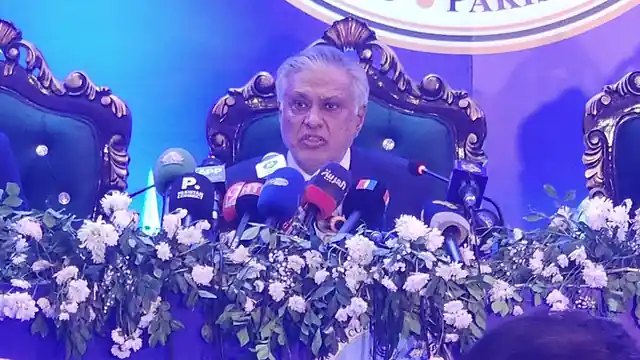
ISLAMABAD, November 16 – NEN: Member states of the Economic Cooperation Organization (ECO) have adopted a new ten-year roadmap, the “Strategic Goals of Economic Cooperation 2035”, at the 30th meeting of the ECO Council of Ministers held in Islamabad. Deputy Prime Minister and Foreign Minister Ishaq Dar, who led the session as Pakistan takes up the chair, called the document an important milestone for the direction of the organisation over the coming decade.
Addressing ministers and delegates on Monday, Mr Dar said the region’s geographic closeness should be turned into “greater connectivity and economic cooperation”. He said working transport corridors, smoother procedures at border crossings and predictable rules for businesses were needed to make that happen. He described regional cooperation as a central pillar of Pakistan’s foreign policy and said ties among members should rest on sovereign equality, mutual respect, non-interference and mutually beneficial engagement.
Mr Dar said the 2035 goals, read together with the Islamabad Communiqué, give members a shared framework for regional priorities and practical cooperation. He also said Pakistan would keep up its diplomatic efforts in support of dialogue, de-escalation and lasting stability in the region.
Pakistan’s chairmanship will run under the theme “Reviving Regionalism for a Resilient ECO”. The priorities it has listed are wider market access and stronger regional value chains, a bigger role for the private sector, especially small and medium-sized enterprises, better transport and transit links between Central Asia, South Asia and Pakistan’s Arabian Sea ports, a more inclusive and digitally enabled trade framework, and cooperation on climate resilience and human development.
On the opening day, Mr Dar met ECO Secretary General Dr Asad Majeed Khan, who praised Pakistan’s arrangements and hospitality for the meeting. Pakistan reaffirmed that it will host the ECO Summit in 2027, and both sides agreed to coordinate closely on carrying out the initiatives agreed during Pakistan’s term.
Background
ECO was founded in 1985 by Iran, Pakistan and Turkey. It grew to ten members in 1992, when Afghanistan, Azerbaijan, Kazakhstan, Kyrgyzstan, Tajikistan, Turkmenistan and Uzbekistan joined. Pakistan was elected to chair the Council of Ministers for 2026-27. NEN reported the run-up to the session in ECO Council of Ministers Meeting Opens in Islamabad on Sunday With Dar in the Chair.
What This Means for Pakistan
Pakistan sits between the landlocked Central Asian states and the Arabian Sea, so better road, rail and transit links within ECO would give its ports more cargo and its traders a shorter route to markets in the north. For exporters, simpler border procedures can mean lower costs and faster deliveries. The 2035 goals now give member states a fixed target date against which progress can be measured, while hosting the 2027 summit keeps Pakistan at the centre of the bloc’s agenda.
The next major milestone is the ECO Summit, which Pakistan will host in 2027. Until then, Pakistan and the ECO Secretariat are expected to work together on putting the agreed initiatives into practice.
Direct report by Yasir A. Zubairi for NEN from the 30th ECO Council of Ministers meeting in Islamabad. Photos by Faisal Nadeem for NEN.
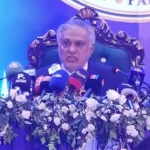
Featured image: Deputy Prime Minister and Foreign Minister Ishaq Dar speaks to the media at the ECO Council of Ministers meeting in Islamabad. Photo: Faisal Nadeem / NEN Agency