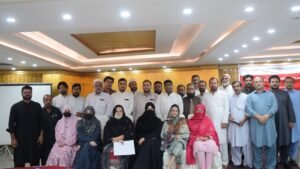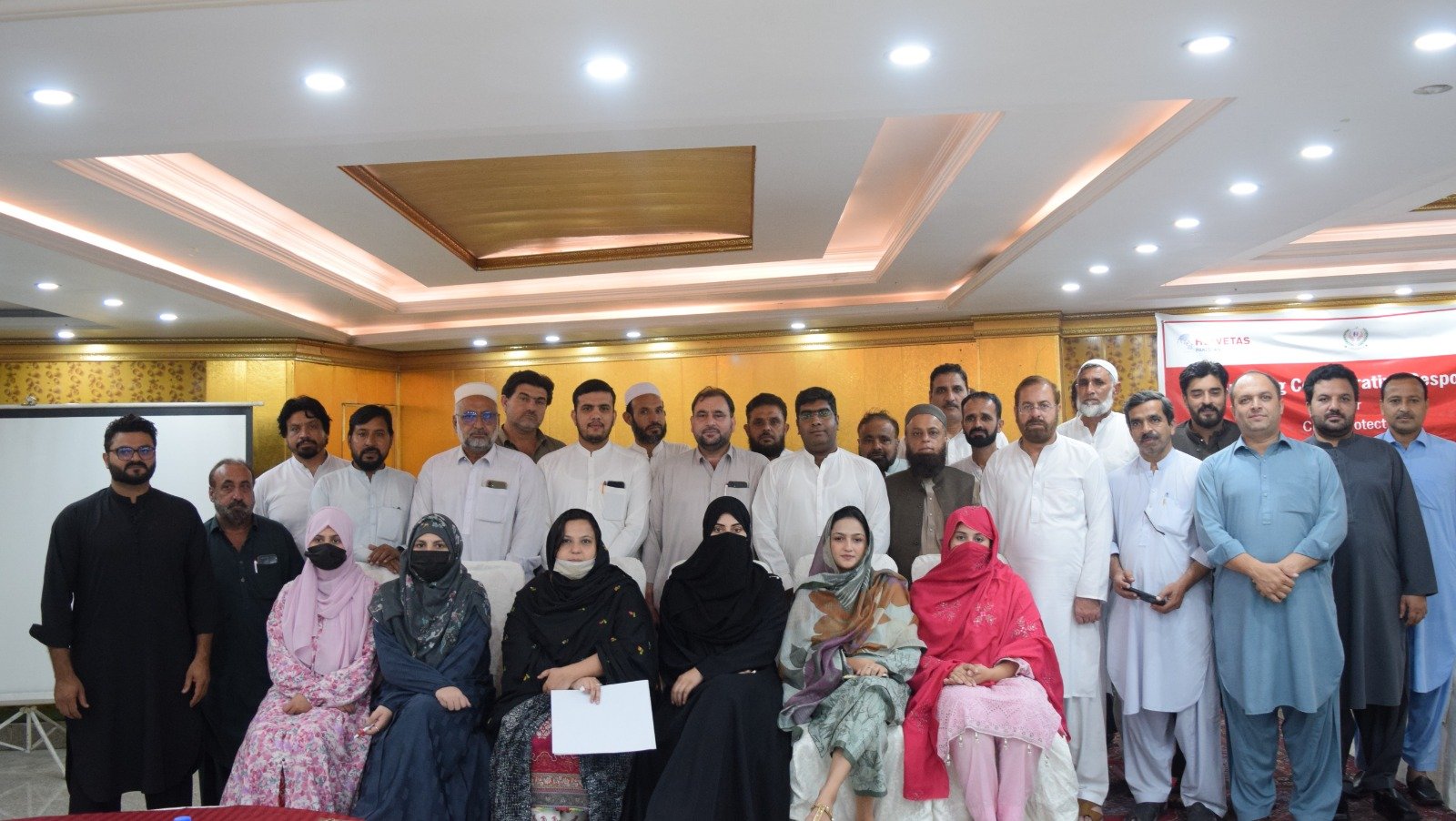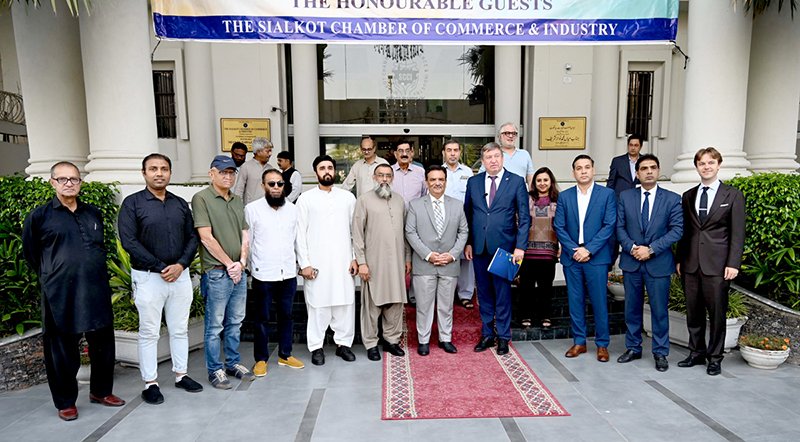
SIALKOT — EU Ambassador to Pakistan Raimundas Karoblis met with key business leaders at the Sialkot Chamber of Commerce and Industry (SCCI) to discuss enhancing trade relations between the European Union and Pakistan. The meeting, held on Thursday, included President of the SCCI Syed Ahtisham Gilani and President of the Women’s Chamber of Commerce Dr. Maryam Noman, among other prominent business community members.
What Happened
The EU Ambassador’s visit to Sialkot highlighted the European Union’s ongoing commitment to strengthening economic ties with Pakistan. During the meeting, Ambassador Karoblis emphasized the importance of Sialkot as a hub for Pakistan’s export industry, particularly in sectors such as sports goods, surgical instruments, and leather products. The discussions focused on exploring new avenues for collaboration and increasing the volume of trade between the EU and Pakistan.
President Syed Ahtisham Gilani expressed optimism about the potential for growth in trade relations, citing the EU’s Generalised Scheme of Preferences Plus (GSP+) status, which allows Pakistani products duty-free access to European markets. “The GSP+ status has been instrumental in boosting our exports, and we are keen to further capitalize on this opportunity,” Gilani stated.
Dr. Maryam Noman highlighted the role of women entrepreneurs in driving economic growth and underscored the need for greater support and investment in women-led businesses. “Empowering women in business is crucial for sustainable economic development,” she noted.
Background
Sialkot is renowned for its export-oriented industries, contributing significantly to Pakistan’s economy. The city is a leading producer of sports goods, surgical instruments, and leather products, with a substantial portion of these goods exported to the European Union. The EU is one of Pakistan’s largest trading partners, and the GSP+ status has been a key factor in enhancing trade relations.
The GSP+ scheme, granted to Pakistan in 2014, aims to promote sustainable development and good governance by allowing duty-free access to the EU market for various products. This status has been pivotal in increasing Pakistan’s exports to the EU, making it a crucial component of the country’s trade policy.
Why It Matters
The meeting between the EU Ambassador and Sialkot’s business leaders is significant in several ways. Firstly, it reaffirms the EU’s commitment to maintaining strong economic ties with Pakistan, which is vital for the country’s export-driven economy. The EU is not only a major market for Pakistani goods but also a critical partner in terms of investment and development aid.
Secondly, the focus on Sialkot underscores the city’s role as a key player in Pakistan’s export sector. By engaging directly with local business leaders, the EU can better understand the challenges and opportunities faced by exporters, leading to more targeted and effective trade policies.
Furthermore, the emphasis on women’s entrepreneurship highlights the growing recognition of gender equality as a driver of economic growth. Supporting women-led businesses can lead to more inclusive and sustainable development, ultimately benefiting the broader economy.
The discussions also come at a time when global trade dynamics are shifting, with countries seeking to diversify their trade partners and reduce dependency on any single market. Strengthening ties with the EU can help Pakistan navigate these changes and secure its economic future.
Key Takeaways
- The EU Ambassador’s visit to Sialkot focused on enhancing trade relations with Pakistan.
- Sialkot’s export industries, particularly sports goods and surgical instruments, are key to Pakistan’s economy.
- The EU’s GSP+ status has significantly boosted Pakistani exports to European markets.
- Empowering women entrepreneurs is crucial for sustainable economic growth in Pakistan.
- Strengthening EU-Pakistan trade ties is vital amid shifting global trade dynamics.
Source Attribution
This article is based on official government statements, press releases, and public communications from relevant authorities.