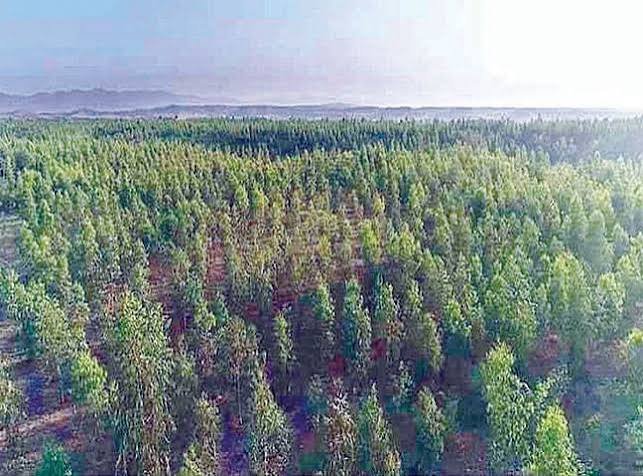
PESHAWAR — The Garhi Chandan plantation, initiated in 2014 as part of the Billion Tree Tsunami project, has witnessed a remarkable transformation, evolving from a mere three million saplings to an expansive forest of approximately 30 million trees over the span of 12 years.
What Happened
The Garhi Chandan plantation, located near Peshawar, was launched in 2014 under the Billion Tree Tsunami project, an ambitious initiative aimed at combating deforestation and climate change in Pakistan. Over the years, the plantation has transformed a previously barren landscape into a lush, green forest. Initially planted with around three million saplings, the forest now boasts an estimated 30 million trees, marking a tenfold increase in its tree population.
The project, spearheaded by the provincial government of Khyber Pakhtunkhwa, has been lauded for its success in increasing forest cover and contributing to environmental sustainability. The plantation’s growth is attributed to effective management practices, community involvement, and favorable climatic conditions that have facilitated the rapid expansion of tree cover.
Officials involved in the project have highlighted the importance of continued maintenance and protection of the forest to ensure its long-term sustainability. “The success of the Garhi Chandan plantation is a testament to the commitment and hard work of all stakeholders involved,” said a government official overseeing the project. “It serves as a model for similar afforestation efforts across the country.”
Background
The Billion Tree Tsunami project was launched by the Khyber Pakhtunkhwa government in 2014 as a response to the alarming rate of deforestation in the region. The initiative aimed to plant one billion trees across the province to restore degraded landscapes, enhance biodiversity, and mitigate the impacts of climate change. The project received international recognition and was later expanded into the Ten Billion Tree Tsunami Programme at the national level.
Historically, Pakistan has faced significant challenges related to deforestation and environmental degradation. Rapid urbanization, agricultural expansion, and illegal logging have contributed to the loss of forest cover, exacerbating the effects of climate change and increasing the vulnerability of local communities to natural disasters.
Why It Matters
The transformation of the Garhi Chandan plantation holds significant implications for Pakistan’s environmental and socio-economic landscape. By increasing forest cover, the project contributes to carbon sequestration, helping to mitigate the impacts of climate change. Forests play a crucial role in absorbing carbon dioxide, a major greenhouse gas, thus reducing the overall carbon footprint of the region.
Furthermore, the plantation serves as a vital habitat for local wildlife, promoting biodiversity and supporting ecological balance. The presence of a thriving forest ecosystem enhances the resilience of the region to climate-related challenges, such as floods and droughts, by regulating water cycles and preventing soil erosion.
Economically, the project has generated employment opportunities for local communities, particularly in tree planting and maintenance activities. This has contributed to poverty alleviation and improved livelihoods, fostering a sense of ownership and responsibility among community members towards environmental conservation.
On an international level, the success of the Garhi Chandan plantation underscores Pakistan’s commitment to global environmental goals, such as the United Nations’ Sustainable Development Goals (SDGs) and the Paris Agreement on climate change. It positions Pakistan as a proactive participant in global efforts to combat climate change and preserve natural resources for future generations.
Key Takeaways
- The Garhi Chandan plantation has grown from three million to 30 million trees in 12 years.
- Initiated under the Billion Tree Tsunami project, it aims to combat deforestation and climate change.
- The project has enhanced biodiversity, supported local wildlife, and improved ecological balance.
- It has generated employment opportunities, contributing to poverty alleviation in the region.
- The initiative aligns with global environmental goals, showcasing Pakistan’s commitment to sustainability.
Source Attribution
This article is based on official government statements, press releases, and public communications from relevant authorities.