
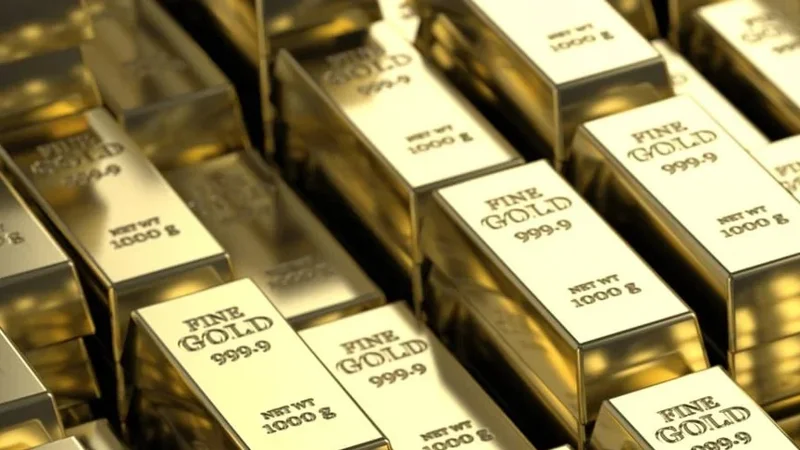
ISLAMABAD — The price of gold in Pakistan experienced a significant drop on Wednesday, with the rate for 24-karat gold per tola decreasing by Rs5,200 to settle at Rs419,636. This adjustment in prices was reported by the All Pakistan Sarafa Gems and Jewellers Association, reflecting changes in the local market dynamics.
What Happened
The All Pakistan Sarafa Gems and Jewellers Association announced a notable reduction in gold prices, marking a decrease of Rs5,200 per tola. This shift brought the price of 24-karat gold to Rs419,636 per tola. The adjustment follows fluctuations in the international gold market, which often influences local pricing. The association’s rates serve as a benchmark for jewelers and traders across the country, impacting both consumer behavior and investment decisions.
The decline in gold prices is attributed to multiple factors, including changes in international gold rates, currency exchange variations, and local market conditions. The global gold market has been experiencing volatility due to economic uncertainties and shifting investor sentiments, which in turn affect local prices in Pakistan.
According to market analysts, the recent decline in gold prices could be linked to a stronger Pakistani rupee against the US dollar and a decrease in demand for gold as a safe-haven asset amid stabilizing economic conditions. As the rupee strengthens, the cost of importing gold decreases, leading to lower prices in the domestic market.
Background
Gold has traditionally been a popular investment and a symbol of wealth in Pakistan, often used in jewelry and as a hedge against inflation. The country’s gold market is influenced by both domestic and international factors, with prices fluctuating based on global market trends and local economic conditions.
Historically, gold prices in Pakistan have been subject to significant swings, driven by changes in international gold rates, currency exchange rates, and local demand. The All Pakistan Sarafa Gems and Jewellers Association plays a crucial role in setting the daily gold prices, providing guidance for traders and consumers alike.
In recent years, the gold market has seen increased interest from investors seeking to diversify their portfolios and protect against economic instability. This has led to heightened sensitivity to international market trends and economic indicators.
Why It Matters
The decline in gold prices holds significant implications for various stakeholders in Pakistan. For consumers, especially those planning weddings or purchasing gold jewelry, the reduced prices offer a more affordable opportunity to buy gold. This could lead to an increase in consumer spending, benefiting local jewelers and the broader economy.
For investors, the drop in gold prices may prompt a reassessment of investment strategies. Gold is often viewed as a safe-haven asset during times of economic uncertainty, and changes in its price can influence investment decisions. A sustained decrease in gold prices might encourage investors to explore alternative investment options, such as equities or real estate, depending on their risk appetite and market conditions.
Economically, the reduction in gold prices could impact Pakistan’s trade balance, as gold imports become cheaper. This might reduce the overall import bill, positively affecting the country’s foreign exchange reserves and current account deficit.
Politically, fluctuations in gold prices can influence public sentiment and perceptions of economic stability. A stable or declining gold price may be perceived as a sign of economic confidence, while sharp increases could raise concerns about inflation and economic uncertainty.
Key Takeaways
- Gold prices in Pakistan decreased by Rs5,200 per tola, settling at Rs419,636.
- The decline is influenced by international market trends and a stronger Pakistani rupee.
- Lower gold prices may boost consumer spending and impact investment strategies.
- Economically, reduced gold prices could benefit Pakistan’s trade balance.
- Gold price fluctuations can affect public perceptions of economic stability.
Source Attribution
This article is based on official government statements, press releases, and public communications from relevant authorities.














