
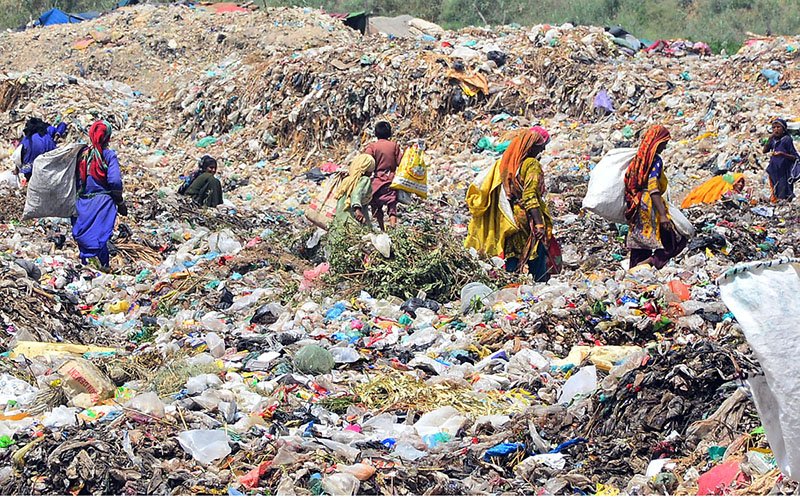
HYDERABAD — In Latifabad, Hyderabad, groups of gypsy women are rummaging through garbage heaps, searching for valuables under the intense summer sun. This activity highlights the socio-economic challenges faced by marginalized urban communities in Pakistan.
Challenges of Daily Life in Latifabad
Each day, gypsy women in Latifabad sift through refuse, seeking items to reuse or sell. As part of nomadic communities, they rely on scavenging as their primary livelihood. These mixed heaps of household waste offer potential income, with many women working alongside their children.
This practice poses significant health risks. The unsanitary conditions and hidden sharp objects in the trash endanger their well-being. Despite these dangers, economic necessity drives them to continue. One woman, who preferred anonymity, explained, “We have no other choice. This is how we feed our families.”
Local residents and shopkeepers in Latifabad are familiar with their presence. While some express sympathy, others worry about hygiene and the environmental impact of unmanaged waste.
Historical and Current Context of Gypsy Communities
Gypsy communities have long been present in urban areas like Hyderabad. Historically, they migrated across regions, settling temporarily in cities for work. In Pakistan, known as ‘Banjara’ or ‘Roma’, they face broader socio-economic issues such as poverty, a lack of education, and limited access to basic services.
The government has tried to improve urban waste management, but challenges persist. Inadequate infrastructure and underfunding hinder effective waste disposal, leaving many areas with unregulated garbage heaps. This issue disproportionately affects low-income communities living near these sites.
Implications for Pakistan and Required Policy Actions
The sight of gypsy women scavenging in Latifabad reveals broader issues of poverty and inequality in Pakistan. Comprehensive policies are needed to address the root causes of poverty in marginalized communities. These women are trapped in a poverty cycle difficult to break without targeted interventions.
Economically, the informal recycling sector, involving scavengers, significantly aids waste management. However, without formal recognition and support, these workers operate under uncertain conditions. Addressing this gap could enhance their livelihoods and lead to more efficient waste management practices.
Socially, the presence of gypsy communities in urban areas calls for increased inclusivity and support. Access to education, healthcare, and vocational training could empower these communities, reducing their reliance on scavenging.
Key Takeaways
- Gypsy women in Latifabad depend on scavenging through garbage for their livelihood.
- Their activities pose significant health risks due to unsanitary conditions.
- Marginalized communities in Pakistan face entrenched poverty and inequality.
- The informal recycling sector is vital but lacks formal support from authorities.
- Comprehensive policy interventions are essential to address these issues.














