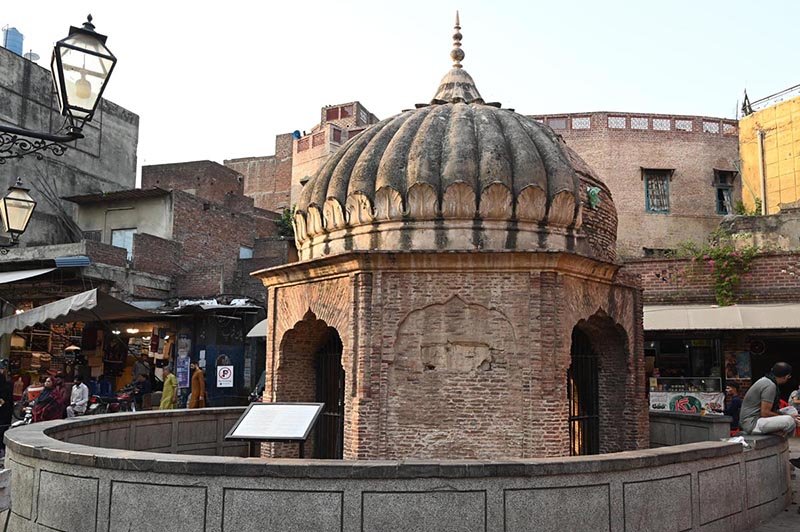
LAHORE — The historic Dina Nath Well, located inside the Delhi Gate of Lahore’s Walled City, stands as a testament to the rich architectural heritage of the region. Commissioned by Raja Dina Nath in the mid-19th century during the reign of Maharaja Ranjit Singh, the well is enclosed within a walled structure near the renowned Wazir Khan Chowk.
What Happened
The Dina Nath Well, a significant historical landmark, continues to draw attention due to its architectural and cultural value. Constructed in the mid-1800s, this well was part of the broader urban development initiatives undertaken during the reign of Maharaja Ranjit Singh, a period noted for its architectural advancements. Raja Dina Nath, a prominent figure in the Sikh Empire, commissioned the well as part of his efforts to enhance the infrastructure and public utilities within the Walled City.
The well is strategically located near Wazir Khan Chowk, an area known for its vibrant history and proximity to other historical sites such as the Wazir Khan Mosque. The enclosure of the well within a walled structure not only served a functional purpose but also reflected the architectural aesthetics of the time, characterized by intricate designs and robust construction methods.
Today, the well remains a point of interest for historians, architects, and tourists alike, offering insights into the urban planning and water management systems of the 19th century. Efforts to preserve such historical sites are crucial as they provide a window into the past and contribute to the cultural richness of Lahore.
Background
The Walled City of Lahore is a historical area that dates back several centuries, known for its narrow alleys, bustling bazaars, and numerous architectural marvels. During the reign of Maharaja Ranjit Singh, the city underwent significant development, with a focus on enhancing public amenities and infrastructure. Raja Dina Nath, a key official in the Sikh administration, played a pivotal role in these developments, commissioning several projects, including the Dina Nath Well.
The well itself is an example of the utilitarian structures built during this era, designed to meet the water needs of the growing population within the Walled City. The architectural style of the well reflects the blend of Mughal and Sikh influences, which is a hallmark of the period’s construction techniques.
Why It Matters
The preservation of the Dina Nath Well is vital for multiple reasons. Economically, heritage sites like this attract tourism, which is a significant source of revenue for the local economy. The well serves as a cultural touchstone, connecting present-day residents and visitors with the city’s rich history and traditions.
Socially, such sites foster a sense of identity and pride among the local population, reinforcing the cultural narrative of Lahore as a city of historical significance. The well’s preservation also highlights the importance of sustainable urban development practices that respect and integrate historical structures into modern city planning.
Politically, the conservation of historical sites like the Dina Nath Well underscores the government’s commitment to preserving national heritage. It reflects broader efforts to maintain Pakistan’s cultural legacy and promote it on international platforms, enhancing the country’s image as a custodian of historical treasures.
Key Takeaways
- The Dina Nath Well is a mid-19th century structure commissioned by Raja Dina Nath during Maharaja Ranjit Singh’s reign.
- Located inside Lahore’s Delhi Gate, the well is an example of the era’s architectural and urban planning advancements.
- Preservation of such sites is crucial for economic, social, and cultural reasons, contributing to tourism and local identity.
- The well reflects the historical blend of Mughal and Sikh architectural influences in Lahore.
- Conserving the well aligns with governmental efforts to preserve and promote Pakistan’s cultural heritage.
Source Attribution
This article is based on official government statements, press releases, and public communications from relevant authorities.