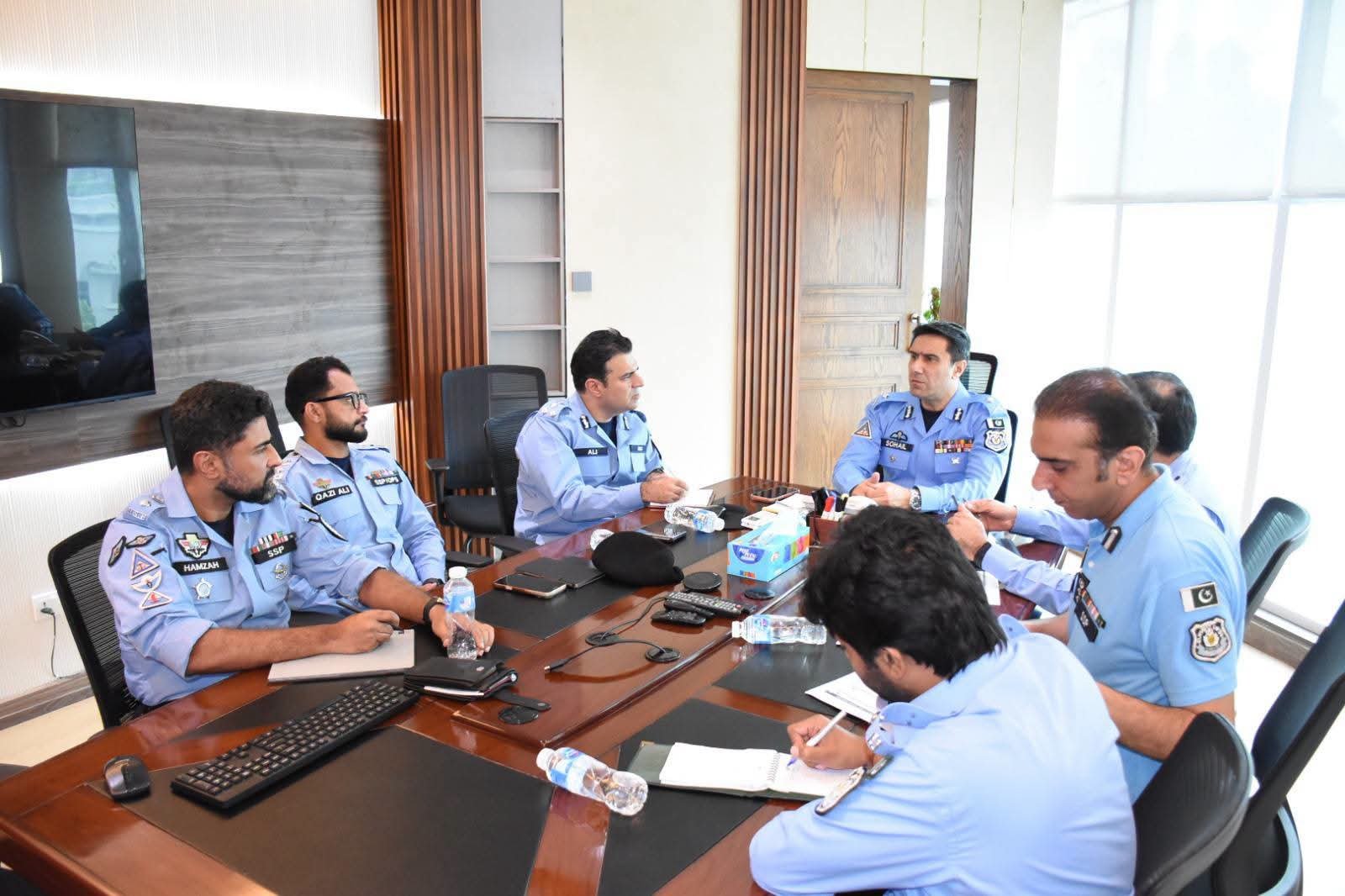
ISLAMABAD — Inspector General of Islamabad Capital Territory Police Muhammad Sohail Chaudhry convened a meeting with senior police officers on Tuesday to evaluate strategies for crime control and public service enhancement in the federal capital.
What Happened
Inspector General (IG) Muhammad Sohail Chaudhry led a crucial meeting with senior officers of the Islamabad Capital Territory (ICT) Police to discuss and set priorities for maintaining law and order, controlling crime, and improving public services. The meeting, held on September 15, aimed to address the pressing issues facing the federal capital and to strategize on effective policing measures.
During the meeting, IG Sohail emphasized the importance of proactive policing and community engagement to curb criminal activities. He instructed officers to enhance surveillance and intelligence-gathering efforts, particularly in areas identified as crime hotspots. “Our focus must be on preventive measures and swift action to ensure the safety and security of our citizens,” said IG Sohail, according to an official present at the meeting.
The discussions also covered the integration of advanced technology in policing methods, with a focus on improving response times and service delivery. The IG highlighted the need for a robust communication system within the police force to ensure efficient coordination during operations.
Public service improvement was another key agenda item. IG Sohail urged officers to adopt a citizen-centric approach, ensuring that the police force is approachable and responsive to the needs of the community. He stressed the importance of transparency and accountability in police operations to build public trust.
Background
The Islamabad Capital Territory Police has been under pressure to address rising crime rates and enhance public service delivery. Previous efforts have included the implementation of community policing initiatives and the introduction of technology-driven solutions such as the Safe City Project, which employs surveillance cameras and data analytics to monitor and deter criminal activities.
In recent years, the ICT Police have faced challenges in addressing organized crime, traffic management, and public grievances. The force has been working to improve its operational capabilities and engage more effectively with the community to address these issues.
Why It Matters
The meeting chaired by IG Sohail is significant as it underscores the ongoing efforts by the Islamabad police to tackle crime and improve public services. The capital city, being the administrative hub of Pakistan, requires a robust security framework to ensure the safety of its residents and the smooth functioning of governmental activities.
Effective crime control measures are crucial for maintaining public confidence in law enforcement agencies. By focusing on preventive policing and community engagement, the ICT Police aim to reduce crime rates and enhance the quality of life for citizens. This approach not only addresses immediate security concerns but also contributes to long-term stability and development in the region.
Moreover, the emphasis on public service improvement reflects a broader trend within law enforcement agencies to become more transparent and accountable. This shift is essential for fostering trust between the police and the communities they serve, which is vital for effective policing and social cohesion.
Key Takeaways
- IGP Muhammad Sohail Chaudhry held a meeting with senior officers to discuss crime control and public service strategies.
- The meeting focused on proactive policing, community engagement, and the use of technology to enhance policing efforts.
- Improving public service delivery and building public trust were highlighted as key priorities.
- The ICT Police aim to address crime hotspots with enhanced surveillance and intelligence-gathering efforts.
- The meeting reflects ongoing efforts to improve security and service delivery in Islamabad.
Source Attribution
This article is based on official government statements, press releases, and public communications from relevant authorities.