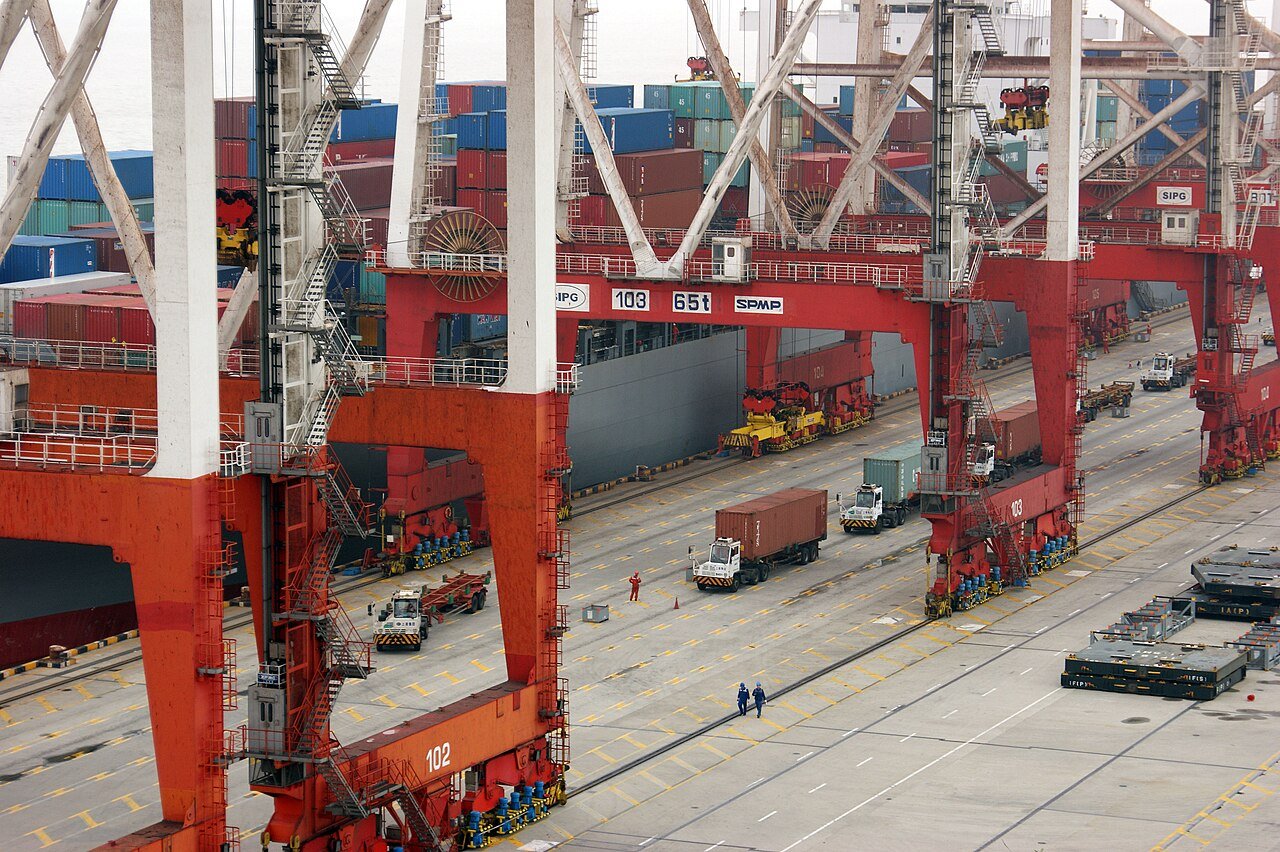
BEIJING, November 28 – NEN: Pakistan exports to China came into focus as Planning Minister Ahsan Iqbal met China’s Vice Minister of Commerce, Yan Dong. Official reports on Saturday said the talks covered ways to sell more goods. The two sides also discussed faster work on special economic zones.
The Figures Behind the Talks
Mr Iqbal put Pakistan’s yearly exports to China at about $3 billion. China, meanwhile, imports goods worth about $3 trillion each year. As a result, Pakistan holds only about 0.1 percent of that market.
The talks also covered the special economic zones of the China-Pakistan Economic Corridor, known as CPEC. In particular, the focus was on investment in industries that make goods for export.
In addition, the meeting covered help for Pakistani business delegations. Such support would help them join trade fairs and business meetings in China.
The government also aims to promote industrial investment under CPEC 2.0 and the URAAN Pakistan plan. Higher exports and new jobs are further goals.
Background
A special economic zone is a set area that helps firms with land and services. States use such zones to draw in new plants. Therefore, they can help a country make more goods to sell abroad.
CPEC 2.0 is the name for the next phase of the corridor. Meanwhile, trade fairs let sellers show products and meet buyers face to face.
On Friday, Mr Iqbal also raised a request for zero-tariff access to the Chinese market. He spoke of lifting yearly exports to between $20 billion and $25 billion.
What This Means for You
Simple arithmetic shows the size of the chance. One percent of a $3 trillion market equals $30 billion. That is ten times Pakistan’s current sales to China.
Similarly, a share of just 0.2 percent would equal about $6 billion. In other words, a small gain in share would double the present figure.
Exporters and small manufacturers can start with basic homework. First, find out which of your products Chinese buyers want. Next, study the quality, packing and labelling rules. Then follow announcements about trade fairs and delegations.
For workers, growth in export factories can create demand for skills. For example, machine operation, quality control and the Chinese language can all be useful.
Overseas Pakistanis with business links in China can also help. They can share market knowledge with relatives and partners at home.
Before you ship, check the full cost of a sale. For example, add up the price of making, packing and moving the goods. Then compare that total with what a buyer will pay. This step shows if a deal makes sense.
It also helps to start small. A firm can first test one product with one buyer. After that, it can use what it learns to plan larger orders.
Finally, keep clear records. Save each price quote, order and payment slip, because buyers may ask for them later.
What Happens Next
The agenda points to work in two areas. One is investment in the economic zones, and the other is closer contact between businesses. The goal behind both is a larger Pakistani presence in China’s market.
Source: NEN News Desk.
Featured image: Photo: Bruno Corpet (Quoique) / Wikimedia Commons, CC BY-SA 3.0