
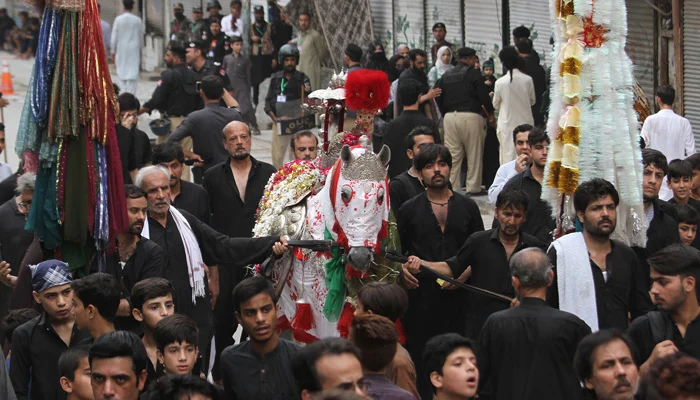
ISLAMABAD — Pakistan observed Youm-e-Ashura with deep reverence and solemnity on June 26. Citizens, religious leaders, and political figures paid tribute to the martyrs of Karbala through peaceful processions and gatherings across the country, highlighting the event’s spiritual devotion and historical significance.
Significance of Youm-e-Ashura
Youm-e-Ashura, the 10th day of Muharram, holds profound significance in the Islamic calendar. It commemorates the martyrdom of Imam Hussain, the grandson of Prophet Muhammad, and his companions at the Battle of Karbala. In Pakistan, the day was marked by processions, majalis (religious gatherings), and prayers as people united to honor the sacrifices for truth and justice.
Major Cities Observance
In major cities such as Karachi, Lahore, Islamabad, and Quetta, large processions took place under stringent security measures to ensure participants’ safety. Law enforcement agencies were present in significant numbers, with local volunteers assisting in maintaining order. The processions featured elegies and sermons emphasizing Imam Hussain’s teachings and legacy.
Role of Leaders and Scholars
Religious scholars delivered speeches on the values of sacrifice, resilience, and justice, central to Ashura’s observance. Political leaders participated, underscoring unity and solidarity among Pakistan’s diverse communities during this occasion.
Historical Background
Pakistan has a long history of Ashura observance, with a public holiday allowing citizens to engage in religious activities. The 680 AD Battle of Karbala symbolizes the struggle against tyranny and injustice. Imam Hussain’s refusal to pledge allegiance to the Umayyad caliphate symbolizes a stand for Islamic principles and justice.
Traditions in Pakistan include reenacting the battle through processions and narrating Karbala’s events. These activities remind participants of Imam Hussain’s sacrifices and their relevance to contemporary justice and human rights issues.
Importance of Peaceful Observance
The peaceful observance of Ashura in Pakistan highlights the nation’s ability to manage large-scale religious events effectively, showcasing coordination between government authorities and community leaders. Such conduct is crucial in a country that has faced sectarian tensions, reflecting progress in fostering interfaith harmony.
Economically, Ashura boosts local communities, benefiting small businesses and vendors who support the events. Socially, it reinforces unity and resilience as diverse groups come together to commemorate a shared history.
Internationally, Pakistan’s peaceful Ashura is a model for other Muslim-majority countries, demonstrating religious freedom and the right to peaceful assembly, enhancing Pakistan’s image as a nation respecting its diverse heritage.
Key Takeaways
- Pakistan observed Ashura with peaceful processions and gatherings nationwide.
- Security measures ensured participant safety in major cities.
- The event highlights the historical and spiritual importance of Imam Hussain’s sacrifice.














