
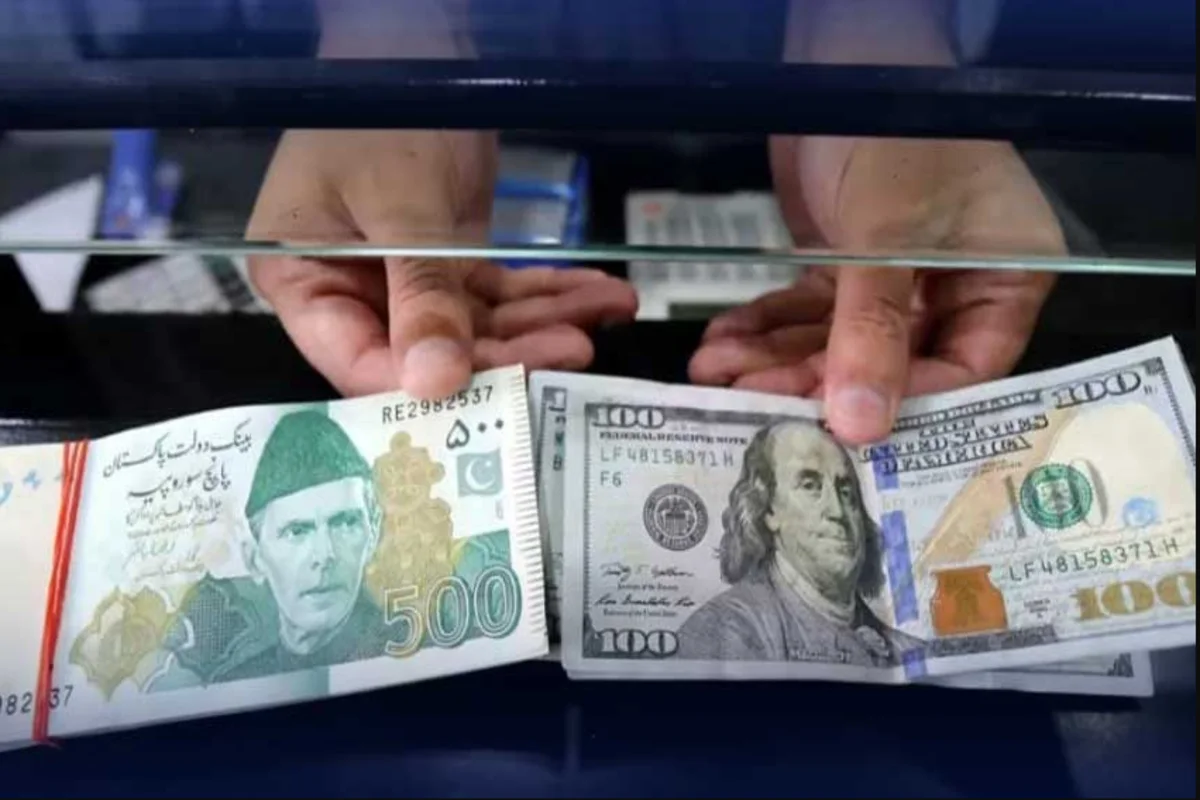
KARACHI — The State Bank of Pakistan released the latest exchange rates for major foreign currencies on July 2, 2026, reflecting fluctuations in the global currency market. These rates are crucial for businesses and individuals engaged in international trade and travel, providing a benchmark for currency conversion and financial planning.
What Happened
On July 2, 2026, the State Bank of Pakistan announced updated exchange rates for several major currencies against the Pakistani Rupee. The US Dollar (USD) is now being sold at 279.94 PKR and bought at 276.94 PKR. The British Pound (GBP) is selling for 372.02 PKR and buying at 367.63 PKR, while the Euro (EUR) is available at a selling rate of 318.71 PKR and a buying rate of 314.96 PKR. The Japanese Yen (JPY) stands at 1.7234 PKR for selling and 1.7032 PKR for buying. The Saudi Riyal (SAR) and the UAE Dirham (AED) are selling at 74.55 PKR and 76.23 PKR, respectively, with buying rates at 73.67 PKR and 75.31 PKR.
Additionally, the London Interbank Offered Rate (LIBOR) for calculating interest on special USD bonds has been updated. The LIBOR for one month is 3.6641%, for three months is 3.7502%, and for six months is 3.8675%. These rates are significant for financial institutions and investors dealing with USD-denominated bonds.
The State Bank also provided indicative Forward Buying and Selling Rates (FBP) for the US Dollar, Euro, and British Pound. These rates are used for forward contracts, which are agreements to exchange currency at a future date at a pre-agreed rate. The indicative rates for the USD range from 276.71 PKR for sight transactions to 262.33 PKR for six-month forward contracts. The Euro’s forward rates range from 315.20 PKR for sight to 301.02 PKR for six months, while the GBP ranges from 367.69 PKR to 348.67 PKR.
Background
The exchange rate is a critical economic indicator for Pakistan, influencing inflation, trade balance, and foreign reserves. Pakistan’s economy is heavily reliant on imports, making exchange rate stability vital for maintaining manageable import costs. Historically, the Pakistani Rupee has faced depreciation pressures due to trade deficits, external debt obligations, and fluctuating global oil prices.
The State Bank of Pakistan regularly updates exchange rates to reflect market conditions and ensure transparency in currency transactions. These updates are essential for businesses involved in import and export activities, as well as for individuals planning international travel or remittances.
Why It Matters
The release of updated exchange rates holds significant implications for Pakistan’s economic landscape. For businesses, these rates determine the cost of importing goods and services, impacting pricing strategies and profit margins. Companies involved in exports benefit from favorable exchange rates, which can enhance competitiveness in international markets.
For the general public, exchange rates influence the cost of foreign travel and education, as well as the value of remittances sent by Pakistanis working abroad. A stronger Rupee can reduce the cost of living for citizens by lowering import prices, while a weaker Rupee can increase inflationary pressures.
On a macroeconomic level, the exchange rate affects Pakistan’s trade balance and foreign exchange reserves. A stable or appreciating Rupee can help reduce the trade deficit by making exports more competitive and imports less costly. Conversely, a depreciating Rupee can strain foreign reserves and increase the cost of servicing external debt.
Internationally, exchange rates are a barometer of economic stability and investor confidence. Fluctuations in the Rupee’s value can influence foreign investment decisions, impacting economic growth and development prospects.
Key Takeaways
- The State Bank of Pakistan has updated exchange rates for major currencies as of July 2, 2026.
- The US Dollar is selling at 279.94 PKR and buying at 276.94 PKR.
- LIBOR rates for USD bonds have been updated, with one-month LIBOR at 3.6641%.
- Exchange rates impact import costs, inflation, and foreign exchange reserves.
- Stable exchange rates are crucial for economic stability and investor confidence.
Source Attribution
This article is based on official government statements, press releases, and public communications from relevant authorities.














